
Related videos:
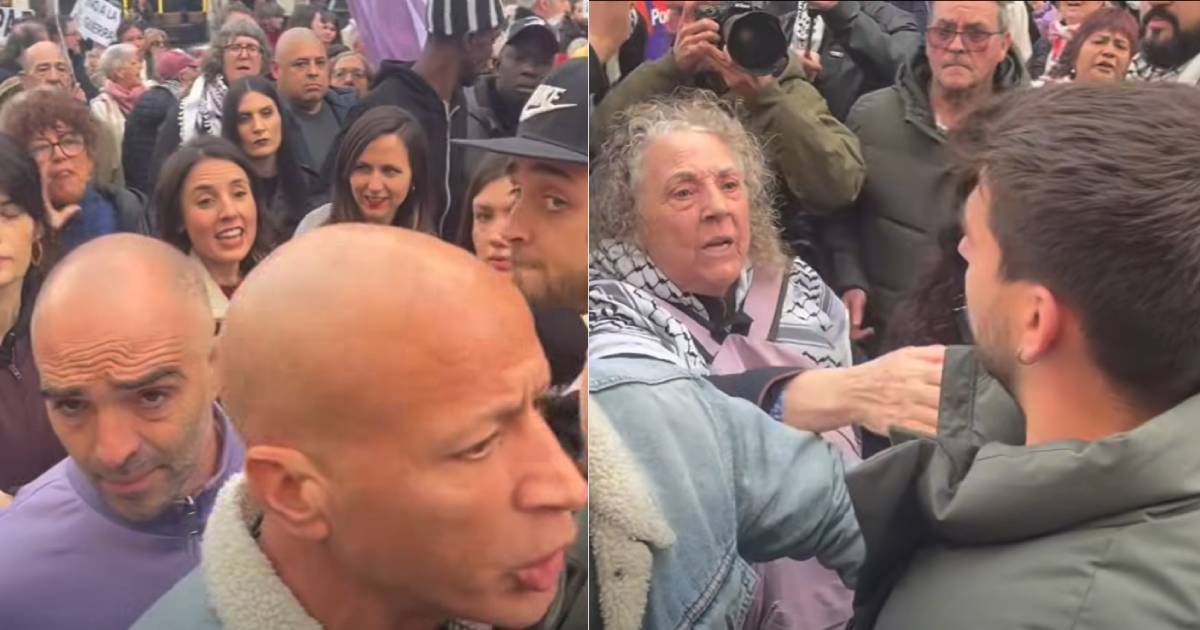
What started as an awkward question ended in blows. Journalist Tate Barceló, from the Spanish outlet EDATV, reported having been assaulted while trying to confront Irene Montero about a topic that is becoming increasingly controversial: the defense of the Cuban government from positions of privilege.
"They have kicked us, they have hit us, but we continue," wrote the reporter himself on social media, alongside a video showing him surrounded by protesters, being pushed and attacked in the middle of the street.
According to his testimony, everything happened when he asked Montero about the "social justice" they were talking about, while Pablo Iglesias was staying in a luxury hotel in Havana as part of a "humanitarian convoy" of left-wing radicals. The question, which highlighted the contrast between political rhetoric and the reality of Cubans, went unanswered. Instead, tensions escalated quickly.
The images show shouts, struggles, and ultimately physical aggression against the press team. The media outlet EDATV claimed that even the photographer was attacked.
The episode does not happen in a vacuum. In recent days, Iglesias' stay at a five-star hotel in Havana has sparked a wave of criticism, both in Spain and among Cubans inside and outside the island.
The Spanish influencer Marta Ojeda described him as “despicable” for commenting on the situation in Cuba from a privileged environment. “How despicable do you have to be to go to Cuba, stay in a luxury hotel, and say that the situation there is not as bad as they want to sell it to us,” she questioned, referring to the statements made by the former leader of Podemos, who claimed that the crisis on the island “is difficult, but not as it is described from the outside.”
Reactions from Cubans were immediate. On social media, activists and citizens denounced that such assessments overlook daily life on the island, which is characterized by power outages, food shortages, a lack of medications, and difficulties accessing water.
The activist Ariel Maceo Téllez was one of those who responded harshly, pointing out that Iglesias would have recorded his statements from a room in the Gran Hotel Bristol in Old Havana, a place inaccessible to most Cubans. “One cannot speak about the reality of the country from comfort,” summarized many of the comments.
For those living in Cuba, the controversy goes beyond a visit or a statement. It is an open wound: the gap between those who express opinions from luxury hotels and those who confront the daily crisis in their homes.
In that context, the aggression against the journalist adds another troubling element. A question about Cuba —about its inequalities, about its reality— ended up being silenced through violence.
And it leaves a growing question: why is it so uncomfortable to talk about what Cubans really experience?
Filed under: