
Related videos:
For the first time in Cuba, the Multiple Indicator Cluster Survey (MICS7) will include direct water quality testing in randomly selected households across the country, aiming to detect fecal contamination.
The National Office of Statistics and Information (ONEI) announced this Tuesday through its official Twitter account that data collection began in November 2025 and will last for four months across the country, with progress already reported in provinces such as Ciego de Ávila.
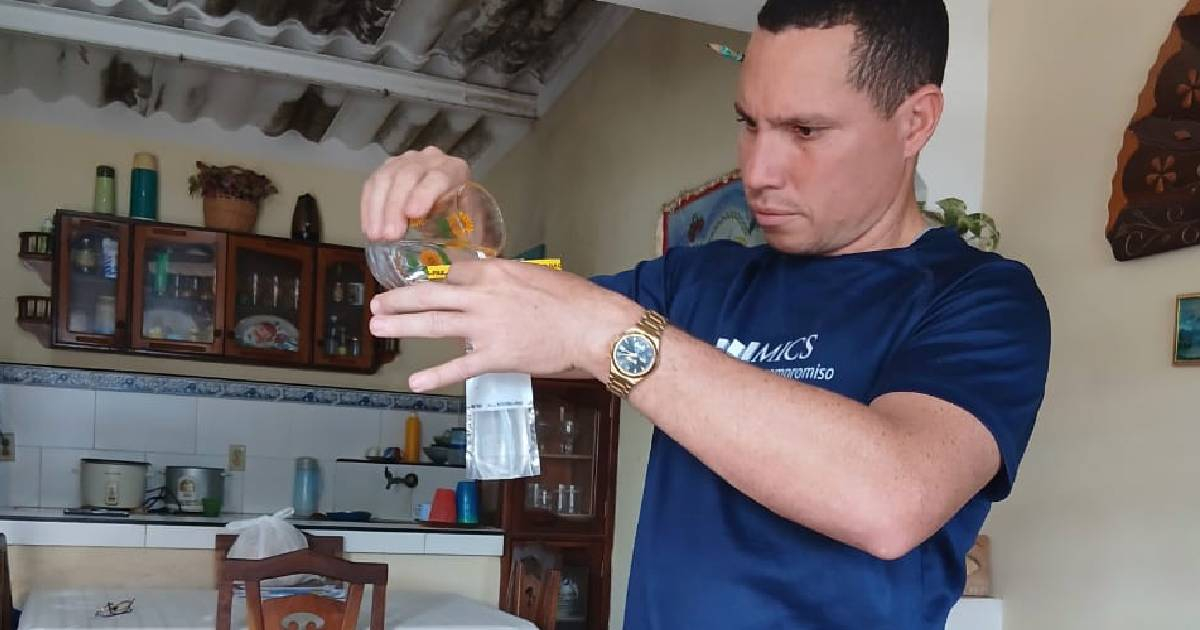
The procedure involves trained surveyors —referred to as "measures"— collecting two water samples from each visited household.
According to ONEI itself: "The measurers, members of our properly trained team, collect water samples: one from a glass that is typically used for drinking by household members and another that is taken directly from the water source used for drinking."
Once collected, the samples are incubated for between 24 and 36 hours. The appearance of blue or green colonies indicates the presence of Escherichia coli (E. coli), a bacterium that indicates contamination by fecal matter.
"This test will detect whether the water is contaminated with Escherichia coli, which indicates the presence of fecal matter. This will provide a national overview of the quality of water that people drink in their homes and its source," the organization specified.
This project is being carried out with technical and financial support from UNICEF, it was emphasized. This is the seventh international round of the MICS program and the fifth to take place in Cuba, following previous editions in 2000, 2005, 2010, 2014, and 2019.
This initiative is particularly significant in light of the serious water supply crisis facing Cuba.
According to data from 2025-2026, only 61.2% of the population has access to water services deemed "low risk" according to the standards of the World Health Organization (WHO), a progress of just 1.6% compared to 2023.
Provinces such as Santiago de Cuba, Matanzas, Guantánamo, Holguín, Las Tunas, and Havana are reporting prolonged outages, breaks in networks, leaks that remain unrepaired, and the use of unsafe water sources.
The situation in some areas is critical. In Santiago de Cuba, UNICEF warned about 50 inoperative water supply systems and the use of contaminated water by residents. In Guantánamo, over 180,000 people are affected by issues with water pumping and quality. In their desperation, many Cubans turn to the informal water truck market, where prices in provinces like Las Tunas and Santiago range between 7,000 and 15,000 Cuban pesos.
In Matanzas, the situation is equally alarming: all municipalities report water breaks for months, while residents have resorted to d digging wells in sidewalks and yards to alleviate the shortage. In Havana, water issues extend beyond power outages, according to recent analyses.
The water crisis in Cuba is structural: the deterioration of hydraulic networks, blackouts that paralyze water treatment plants, and a shortage of supplies have accumulated after decades of neglect and insufficient investment. For the first time, MICS7 will provide a standardized national diagnosis that is comparable internationally regarding the actual quality of the water that Cubans consume in their homes, beyond mere formal access to the service.
In addition to water testing, MICS7 introduces other updates compared to previous rounds: modules on mental health and expanded data on violence against women. The survey measures approximately 200 indicators related to health, education, water, sanitation, childhood, adolescence, and women. Its results will guide the public policies of the new UNICEF Country Program for Cuba for the period 2026-2030.
Filed under: