
Related videos:
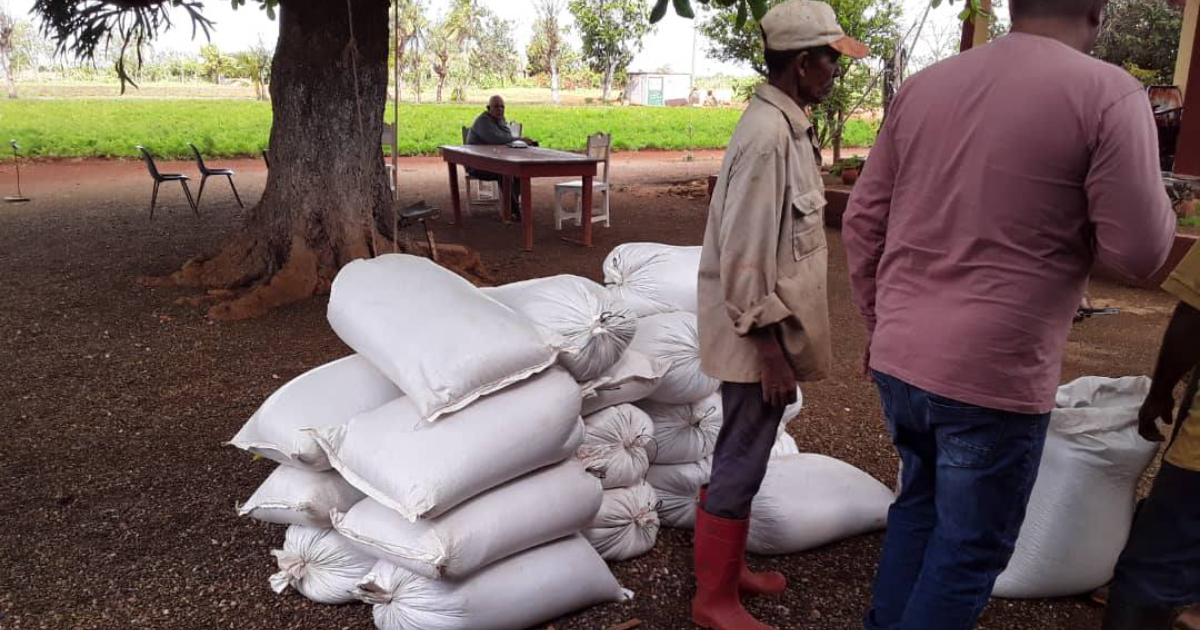
The Cuban regime has begun selling nationally produced beans at 285 Cuban pesos (CUP) per pound in the municipality of Güira de Melena, Artemisa, amid the ongoing food supply crisis in the country.
According to information released by local authorities, the product will be distributed gradually, with an initial allocation of two pounds per household. Sales are conducted under state control to limit the amount purchased by each buyer and are implemented in stores across different areas of the municipality.
The authorities specified that the bean is not part of the regulated family basket, so it is sold as an additional offer outside of the supply booklet.
The product, sourced from local production, reaches the retail network after being managed by state entities, in a context where access to basic food items remains irregular and characterized by partial or delayed deliveries.
The commercialization occurs amidst a sustained productive crisis, with low levels of agricultural supply. Although the price is lower than that of the informal market, it remains high compared to the average monthly salary in Cuba, which is around 6,830 CUP.
Recent experiences in other territories reflect a similar pattern. On the Isle of Youth, for example, a pound of beans began to be sold per person for 280 CUP through the supply booklet, an amount that barely lasts a few days.
The restrictions are also evident in other basic products. In Las Tunas, the distribution of sugar for February was limited to one pound per consumer, with a partial delivery in municipalities such as Manatí, Las Tunas, and Colombia, where dozens of stores were still waiting to receive the product.
The discomfort over these amounts was evident on social media. "One pound, what does that solve?" questioned a user. Another commented, "1 pound? Haha, come on, aren't you embarrassed? That doesn't even last for 5 days."
In the case of eggs, the situation is similar. On the Isle of Youth, distribution was limited to four units per person at a price of 50 CUP each, with an initial delivery of just over 46 thousand units and subject to product availability.
Coffee has also seen high prices under controlled schemes. In Las Tunas, a 125-gram bag was sold for 300 CUP, with one unit per household and regulated by the rationing booklet, which sparked criticism among consumers.
Meanwhile, official announcements about improvements in distribution have been met with skepticism. In Imías, Guantánamo, users questioned the truthfulness of the announced offers and reported that they do not match what is arriving at the stores.
The accumulation of these episodes reflects a sustained deterioration in access to basic food in Cuba, characterized by reductions in the quantities allocated, high prices, and irregular distribution across different territories of the country.
Filed under: