
Related videos:
The sale of the so-called "liberated coffee" in Las Tunas sparked a wave of criticism and ridicule among consumers after the state product was sold for 300 pesos for a 125-gram bag and was regulated by the rationing system.
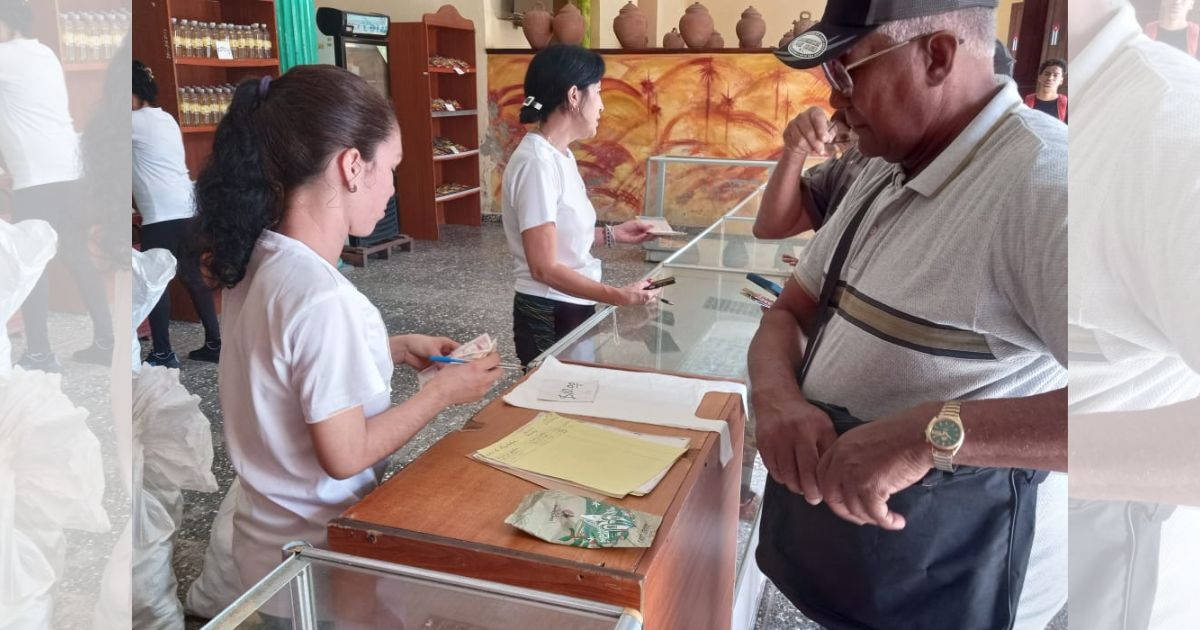
According to the provincial broadcaster on its Facebook profile “Tiempo21Cuba”, the Retail Trade Company of Las Tunas municipality started this week the sale of coffee in the El Serrucho and La Reguladora markets, associated with ten bodegas.
Customers can purchase only one bag per household by presenting the ration book, despite the sale being announced as "liberated."
The report indicated that other units will be added soon, including the La Unión market in the Buena Vista neighborhood, which will serve stores in nearby areas.
Local authorities stated that they are "organizing the distribution" in order to extend sales to the rest of the municipalities.
However, the measure sparked outrage on social media, where Cubans denounced the exorbitant price of the product and the contradiction between the term "liberated" and the demand for state control.
“Is it then liberated or regulated?” ironized Yarlenis Milanés Pompa, one of the internet users who reacted to the Tiempo21 post.
Other users questioned the government's lack of sensitivity towards retirees and workers, who claim that the new price makes coffee a luxury.
"We retirees can no longer have coffee. It costs 300 pesos for four ounces, 1,200 for a pound. With the prices of rice, beans, and pork, a retiree earning 4,000 pesos can eat for a week and then has nothing left," wrote Eladio Cabrera.
Several commentators described the measure as "a state scam" and "a mockery of the population."
“Liberated by the ration book is like being repressed with freedom. If you are not registered, controlled, or restricted, you cannot buy,” expressed Felo Triana, while others compared the price to that of the informal market, where a pound of coffee costs between 550 and 600 pesos, but without the need to show the ration book.
"They tell us that the people can drink pure coffee, but this is for a news report, not for real life. It's extremely expensive and no one trusts the quality," commented Yusimy Acosta, who described the measure as “another absurd invention by the State.”
Most comments agreed that the regime's economic policy has made basic products like coffee, sugar, and grains inaccessible, while wages remain stagnant.
“We, the retirees with a pension of three thousand pesos, cannot afford to buy even a package of chicken, coffee, or anything else. It doesn't stretch to provide food for even a week,” lamented Libia Santiesteban, a resident of the province.
Dissatisfaction with coffee prices adds to the long list of criticisms regarding the management of domestic trade, in a context of uncontrolled inflation and devaluation of the Cuban peso.
The measure, presented as an attempt to "liberate" coffee sales, ended up having the opposite effect: highlighting the contradiction between a government that promises to free prices and markets while continuing to control every product through the ration book.
Filed under: