
Related videos:
Denis Hernández Ramírez, a protester from 11J residing in San Antonio de los Baños, in the province of Artemisa, was returned to prison this Tuesday following the revocation of his parole, becoming the seventh case of a released prisoner in January 2025 to return to a cell.
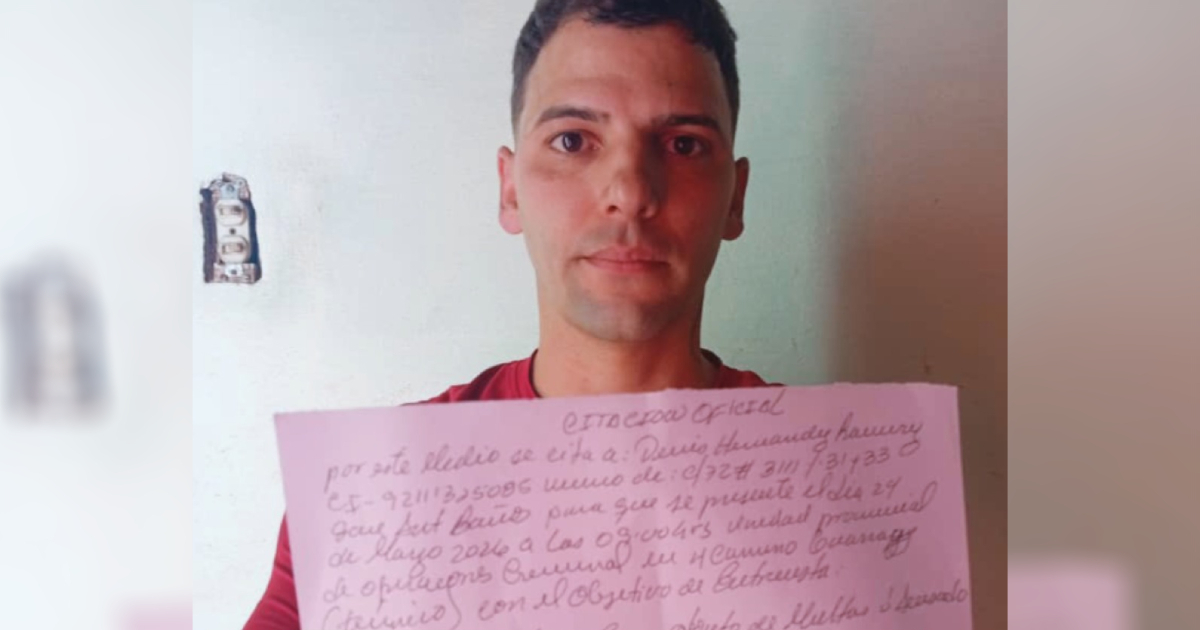
This was confirmed by relatives of Hernández Ramírez to the independent organization Justicia 11J and to the digital newspaper CubaNet, which cited audio recordings of the young man before his arrest in its report.
Hernández Ramírez was sentenced to six years of imprisonment for the alleged offenses of contempt and public disorder after participating in the protests on July 11 and 12, 2021. He was released in January 2025 as part of the agreement negotiated between the Cuban government and the Vatican, which included the release of 553 individuals, and he was listed in the 35th position on the official list of released prisoners.
The summons was delivered to her mother on Monday afternoon, with barely 12 hours' notice, requiring her to appear at 8:00 a.m. on March 24 at the Provincial Unit of Criminal Operations of Minint, known as Técnico de Cuatro Caminos, in Guanajay.
The document, handwritten, summoned him "for the purpose of an interview" and warned: "Failure to appear will result in fines or being sought for disobedience."
Before going, Hernández Ramírez sent audio messages to CubaNet in which he anticipated that it was "very likely" he would be held "for no reason." He also reported the violation of the established deadline for the citation: "I understand it is three business days, and they did it with barely 12 hours' notice."
His mother confirmed what he feared with a message collected by Justicia 11J and Martí Noticias: "They revoked my boy without any explanation." According to information received by the family, the Provincial Prosecutor's Office reportedly ordered the measure.
The reason for the revocation, according to Justicia 11J and independent journalist José Raúl Gallego, was Hernández Ramírez's posts on social media, where he reported the surveillance, harassment, and threats from the political police following his release from prison.
After being released from prison, "he has been subjected to summons, threats, and harassment by State Security," Gallego reported.
The revocation of the measure, "when not even the 51 new releases announced by the Cuban regime this month have been completed, is yet another demonstration of the fragility of these types of agreements and the futility of basing negotiations with the dictatorship solely on these controlled releases that are then reversed while new political prisoners continue to be fabricated," warned the Cuban journalist, referring to the announcement made by the Castro government on March 12 to "release 51 individuals sentenced to imprisonment in the coming days."
The Cuban Observatory of Human Rights (OCDH) emphasized that "this case highlights the fragility of releases in Cuba, which are subject to restrictive conditions and decisions that can be reversed without guarantees or transparency."
She denounced such practices as "forms of control over individuals released from prison for political reasons," while demanding the release of all political prisoners in Cuba.
Filed under: