
Related videos:
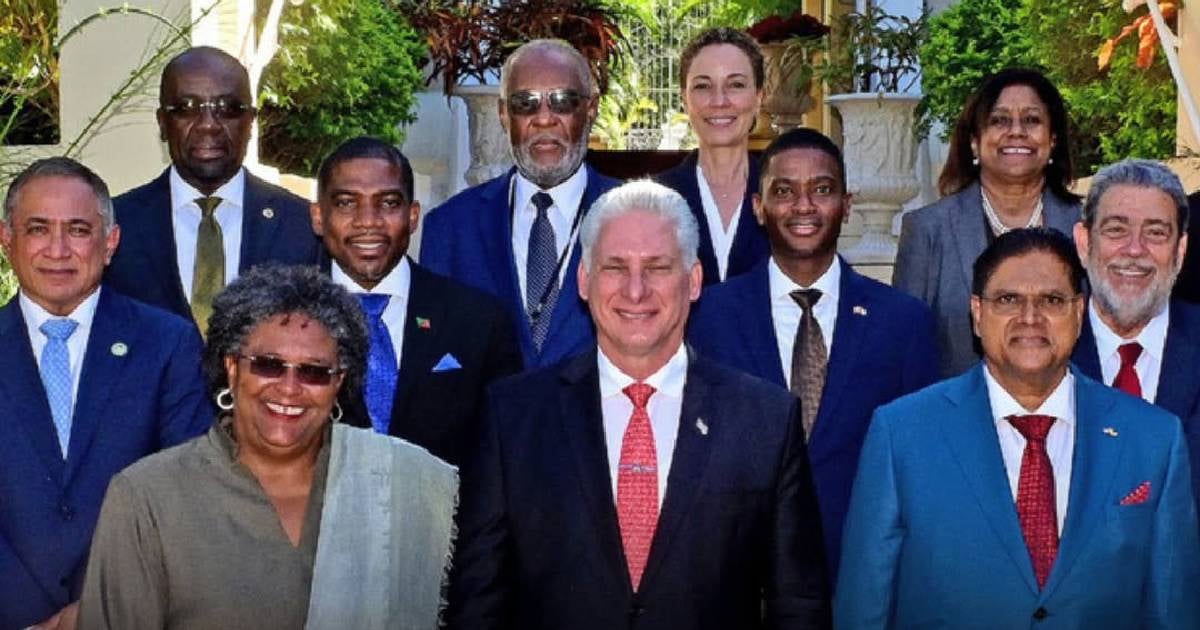
The Caribbean Community (CARICOM) announced this Tuesday the shipment of humanitarian supplies to Cuba, in compliance with a decision made during the 50th Ordinary Meeting of the Conference of Heads of Government held in Basseterre, St. Kitts and Nevis, last February.
The formal announcement was published by the Secretariat of the regional bloc, based in Georgetown, Guyana.
The initiative, coordinated by the CARICOM Secretariat, is supported by the Government of Mexico, which has identified local suppliers and will offer free shipping from Mexican ports to Cuba.
Among the items to be purchased on behalf of the Member States are powdered milk —including baby formula—, beans, wheat flour, rice, canned goods, basic medical supplies, solar panels, batteries, and water tanks.
It was the CARICOM president and Prime Minister of St. Kitts and Nevis, Dr. Terrance Drew, who announced the decision during the regional summit, with the goal of "designing the necessary mechanisms to assist the people of Cuba."
The Secretary General of the bloc, Carla Barnett, had urged in that same meeting to move "beyond words" to concrete actions, in the context of the crisis in Cuba, where the regime clings to power despite announcing talks with the United States.
At that summit, Caribbean countries advocated for collective action in support of Cuba. St. Vincent and the Grenadines confirmed its participation on March 3, and Jamaica, under Prime Minister Andrew Holness, also supported the collective action.
Aid arrives amid an unprecedented energy and humanitarian crisis on the island.
After the capture of Venezuelan President Nicolás Maduro on January 3, 2026, the flow of oil that Venezuela was sending to Cuba — between 32,000 and 35,000 barrels daily, equivalent to 30% of the country's energy needs — was abruptly interrupted.
Shipments fell to just 9,528 barrels per day, a 63% decrease compared to 2023.
The situation worsened on January 29, when the Trump administration issued an executive order imposing tariffs on any country that sells or supplies oil to Cuba, in an effort to force a regime change that would ultimately benefit the island's population.
The result has been a historic electrical collapse: deficits of up to 1,924 megawatts, power outages lasting up to 30 hours in some provinces, and more than 90% of Havana without electricity during the most critical moments of March. Satellite images show a 50% decrease in nighttime electricity consumption in the Caribbean nation.
The massive scarcity of food, water, and medicine has pushed the population to the brink.
Protests and pot-banging have been reported since March 7 in Havana and other provinces. Francisco Pichon, the UN resident coordinator in Cuba, given the seriousness of the situation.
The regime has continued to suppress protests and keeps several Cubans who have come out to demonstrate and demand changes in prison.
Filed under: