
Related videos:
A Cuban who spent over a year stranded in southern Mexico without documents or options decided to set out on foot. He didn’t do it for adventure or the American dream. He did it for his family.
“I left for my children,” is the reason that summarizes the decision of Joandri Andrés Velázquez, 40 years old, who left his wife and two children in Cuba amidst blackouts and shortages.
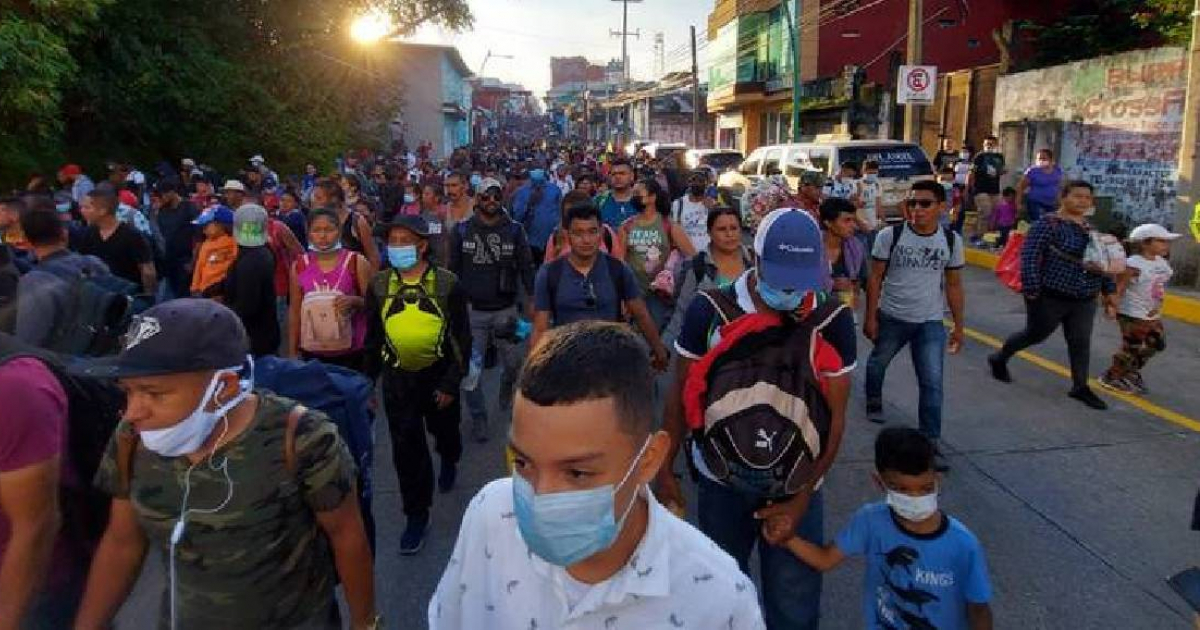
After more than a year stranded in Tapachula, Chiapas, he joined a caravan of hundreds of migrants moving through southern Mexico in search of an opportunity that they did not find in the immigration processes.
“Here, without papers, there is no opportunity, and we, the migrants, feel like prisoners in Tapachula,” denounced the Cuban, as reported by Latinus.
Her story reflects the limbo in which thousands of Cubans in Mexico live. Velázquez arrived in August 2024 and tried to secure an appointment through CBP One to apply for asylum in the United States, but she was never successful. With the cancellation of the program following Donald Trump's rise to power, that route was closed off.
He then tried to regularize his status in Mexico. He was also unsuccessful. His asylum application was denied, even after requesting a review of his case.
The migrant recounted that he spent about a year and seven months waiting for a response from the Mexican authorities before deciding to leave.
Without papers, without a job, and with no prospects, he chose to join the so-called "Genesis 2026" caravan, made up of about 500 migrants who left Tapachula to demand solutions and seek better opportunities in other parts of the country.
Many no longer attempt to reach the United States. Their goal now is more urgent: to leave southern Mexico, where they claim to live in precarious conditions, hungry and without access to work.
“It would be better if they granted us a transit permit to work legally without so many requirements,” Velázquez claimed, according to Diario de México.
The caravan moves forward while Mexican authorities observe without intervening, in a region marked by overwhelming migration, slow processes, and reports of abuse.
For many Cubans, Mexico has become an endless wait. And when that wait is finally over, it breaks like this: by walking.
Because, as in Joandri's case, it is no longer about reaching a country, but about finding any way to support those who were left behind.
Filed under: