
Related videos:
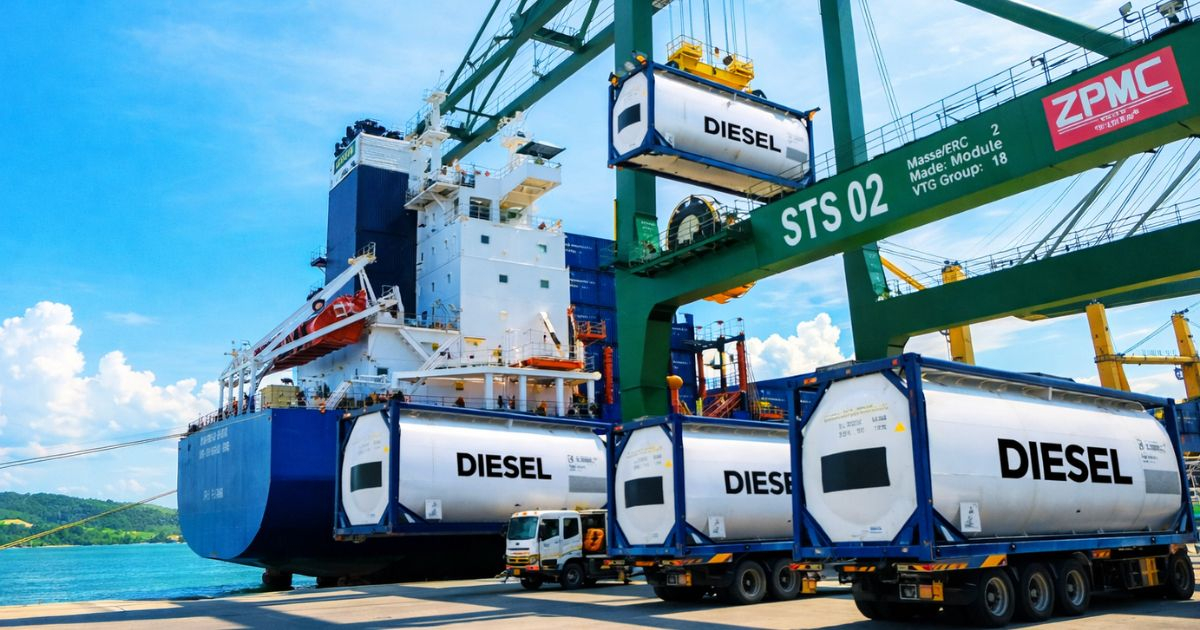
The United States has sent approximately 30,000 barrels of fuel to the Cuban private sector since early February. The figure, confirmed by Reuters, has sparked a debate that merges two completely distinct conversations—and it’s important to separate them.
What the fuel is indeed resolving
The Cuban private sector has, by default, become the real food distribution system in Cuba. When the State can no longer guarantee flour or bread, it is the small and medium-sized enterprises (mipymes) that effectively feed a large part of the population: private bakeries, wholesalers supplying small markets, transporters, refrigeration services. Ensuring that these businesses have diesel to operate is not a minor political issue—it is a concrete humanitarian matter.
The energy crisis affects 96.4% of the 8,904 registered micro, small, and medium enterprises (mipymes) in Cuba. Any relief on this front has a direct impact on the food supply chain for millions of Cubans. Discussing whether "the dictatorship takes its cut" is valid, but it cannot overshadow the fact that these companies are working, producing, and reaching families that would otherwise have no access to basic goods.
What cannot be resolved
The national electrical system is a completely distinct dimension. The thermal power plants — Soviet machines over 40 years old operating at 34% of their capacity — are not fueled by diesel tanks arriving in container ships. They require large volumes of heavy fuel oil, large-scale port infrastructure, and above all, an investment of between $6.6 billion and $10 billion to be rehabilitated or replaced. Cuba has experienced six total collapses of the electrical grid in a year and a half. No private export scheme can solve that.
The scale says it all: a total of 30,000 barrels in almost two months translates to about 500 barrels per day. Historically, Cuba needed 100,000. Fuel for the private sector accounts for 0.5% of that requirement. It is oxygen for the informal economy to breathe — it is not the solution to the blackout.
The distinction that matters
The error of public debate is treating both things as if they were the same. Those who criticize Washington's policy for "indirectly propping up the regime" are correct in pointing out the risks of diversion. Those who defend it are right in saying that small and medium-sized enterprises (mipymes) are now the backbone of the Cuban food supply and need fuel to function.
But neither side should mislead the reader: the daily power outages lasting 20 hours that are destroying the everyday life of Cubans require a solution of a different magnitude — political, financial, and structural — that goes far beyond what any private export scheme can offer.
The regime has spent decades building a dependent, centralized, and irretrievable electrical system that cannot be fixed without massive investment. Thirty thousand barrels won't address that. What those barrels can do is sustain the small and medium-sized enterprises that, in the absence of the State, put food on the table for many Cubans. And that, in the current context of Cuba, is no small feat.
Filed under:
Opinion piece: Las declaraciones y opiniones expresadas en este artículo son de exclusiva responsabilidad de su autor y no representan necesariamente el punto de vista de CiberCuba.