
Related videos:
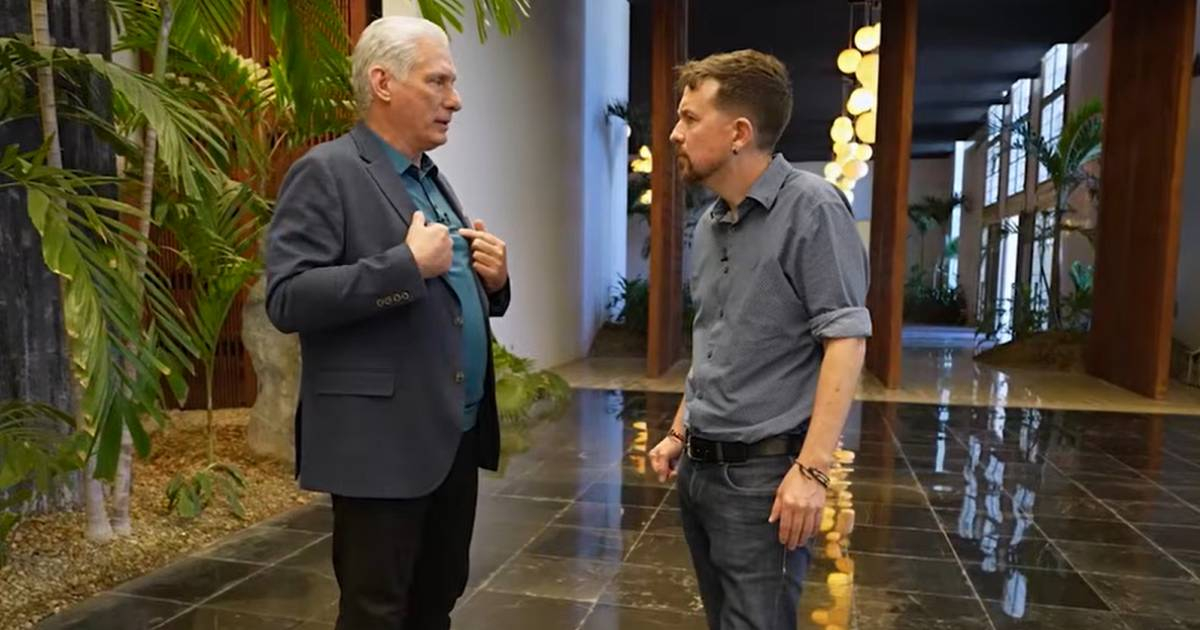
Miguel Díaz-Canel promoted on social media his recent conversation with Spanish politician Pablo Iglesias, in a message that quickly drew criticism for the contrast between the official discourse and the reality faced by Cubans on the island.
"It was a pleasure to meet @PabloIglesias in person and talk with him for over an hour about the energy blockade and other issues facing #Cuba," wrote the leader on X, also inviting others to watch the interview on state media.
The tone of the message, more akin to a promotional piece than an acknowledgment of the internal crisis, aligns with the content of the exchange itself, where Díaz-Canel focused much of his narrative on blaming the United States for the country's situation.
During the interview, the leader insisted that the current crisis is primarily due to external factors. “The situation we have today is one that has been building up and is further exacerbated by the Trump administration,” he stated, highlighting the tightening of the embargo as a “turning point” for the Cuban economy.
However, one of the most striking moments of the dialogue was when he acknowledged the direct impact of the crisis on the everyday lives of citizens. “Having to sleep without electricity, children sleeping uncomfortably,” he described, referring to the blackouts that affect a large part of the country.
He also acknowledged the deterioration of the healthcare system: “We have more than 120,000 people on a waiting list for surgeries, and there are children and cancer patients for whom we have difficulty guaranteeing medication.”
Despite this data, the leader avoided taking direct responsibility and reiterated that it is “not the State,” but the embargo, that is the main cause of the shortages.
At another moment, Díaz-Canel attempted to strengthen the notion of closeness with the population: "I am part of the people, we are part of the same people," he said, a statement that stands in stark contrast to the growing social discontent and criticisms of the ruling elite.
The interview also included a speech about resistance and political epic, in which he stated that Cuba is facing an "economic war" and defended the country's ability to overcome difficulties, appealing to what he called "creative resistance."
But beyond the content, the active promotion of the material by the leader himself has been interpreted by many as an attempt to reinforce his international narrative, especially among sympathetic audiences in Europe, while the island continues to face blackouts, food shortages, and an unprecedented migration crisis.
The contrast between the triumphant tone of the speech and the admissions of shortcomings within the interview highlights a communication strategy that insists on blaming external factors, even as internal problems become increasingly apparent to the Cubans themselves.
Filed under: