
Related videos:
The U.S. Secretary of State, Marco Rubio, declared this Friday in Paris that the military operation in Iran will end "within weeks" and urged other countries "to get more involved" to ensure that navigation in the Strait of Hormuz "is safe."
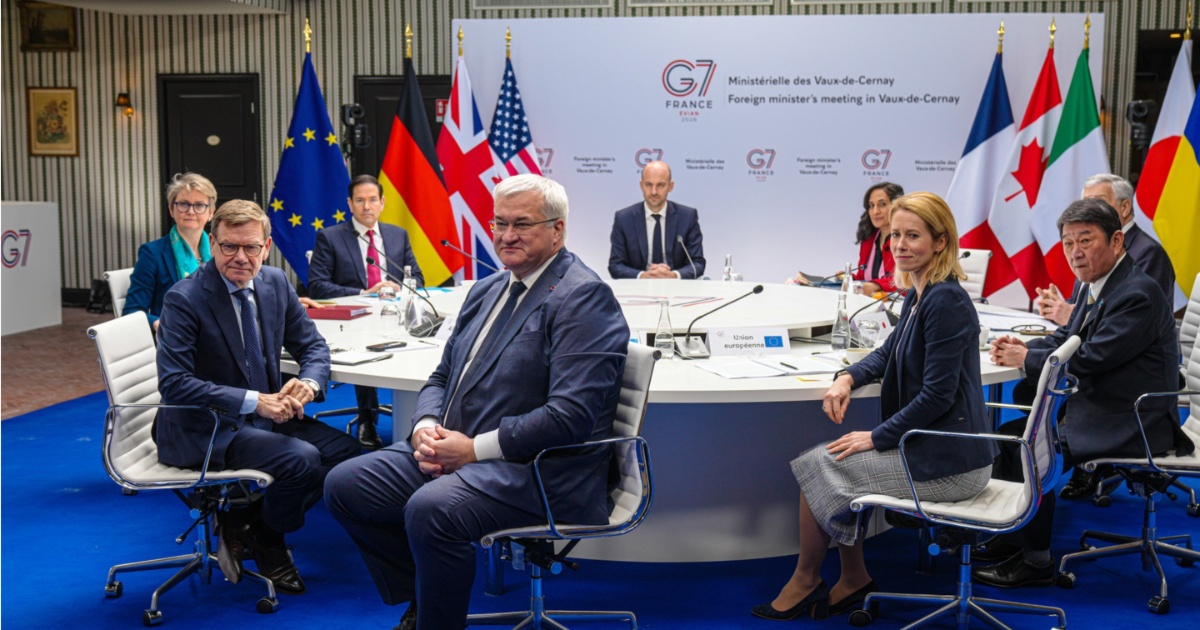
The statements were made during the G7 foreign ministers' meeting, held at the Abbey of Vaux-de-Cernay, near Paris, under the French rotating presidency, and which brought together the heads of diplomacy from the United States, the United Kingdom, France, Germany, Italy, Canada, Japan, and the European Union, with additional participation from representatives of Ukraine, Saudi Arabia, India, Brazil, and South Korea.
Rubio was straightforward with his partners: the narrow "can reopen tomorrow if Iran stops threatening global maritime transport", labeling the blockade as "a violation of international law".
The Secretary of State argued that "very little" of the U.S. oil passes through the Strait of Hormuz, and urged Europe and Asia to take greater responsibility for its reopening, as both regions rely on that energy route more than the United States.
Meanwhile, Rubio posted on his account on the social network X that "our mission is clear: Iran will never obtain a nuclear weapon," and reiterated to the G7 ministers the need for "maximum contributions from partners" to face the situation.
The official also noted that there have been advances in indirect negotiations mediated by Pakistan, with intermediary countries "conveying messages" between the parties.
However, Washington's position faced resistance from its European allies: several G7 countries declined the Trump administration's requests for support, arguing that the conflict was initiated without consulting the allies.
The head of foreign policy for the European Union, Kaja Kallas, emphasized the need to "promote de-escalation in the Middle East."
A pause in the tensions
This Thursday, President Donald Trump extended a new ten-day pause on attacks on Iranian energy infrastructure, until April 6, in connection with subtle diplomatic advancements.
The pause comes after Trump issued a 48-hour ultimatum to Iran on March 22 to reopen the strait, which he then postponed by five days on March 23 following talks deemed "very positive and productive."
Iran, for its part, rejected a U.S. proposal of 15 points and presented five of its own conditions to end the war, including recognition of its sovereignty over the Strait and reparations for war damages.
The Iranian Foreign Minister, Abás Araqchí, appeared this Friday before the UN Human Rights Council in Geneva to accuse the United States and Israel of acting with a "clear intention to commit genocide," while the Iranian Revolutionary Guard warned that any vessel crossing the strait "will face serious consequences."
Trump, for his part, summed up the situation with a striking phrase: "Most of the people who make all the decisions in Iran are no longer there".
Filed under: