
Related videos:
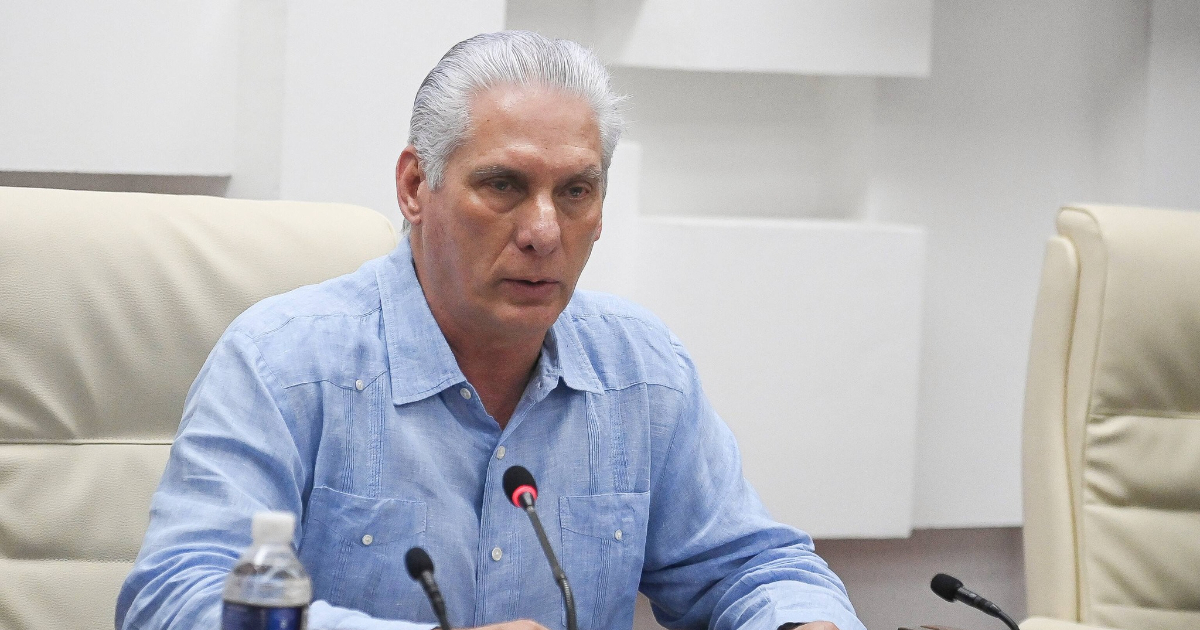
The Cuban leader Miguel Díaz-Canel once again criticized the United States in an interview granted to the Mexican newspaper La Jornada, where he accused Washington of acting with a “fascist” logic and maintaining an alleged historical policy of aggression against the island.
In the conversation, Díaz-Canel stated that there is a “resurgence of fascism” in the international context and pointed directly to the United States as responsible for an increasingly “irrational and aggressive” policy towards Cuba. “I believe we are experiencing a resurgence of fascism,” he assured.
The president attributed the bilateral tensions to the alleged "colonial appetite" of the United States and asserted that the "anger" from that country is a response to the fact that "in 67 years of revolution, Washington has not been able to take control of the Caribbean nation," as he stated in the interview published by La Jornada.
In that regard, he stressed that U.S. pressure is rooted in a historical logic of domination. "The desire of the United States has always been to seize control of Cuba," he stated, while denouncing a policy of "economic, political, diplomatic pressure, and media manipulation."
Díaz-Canel once again blamed the embargo for the severe internal crisis and stated that "80 percent of the Cuban population has lived their entire lives under the dictates of the blockade," reiterating the official narrative amid prolonged blackouts, fuel shortages, and a deterioration of basic services.
The hardening of the rhetoric comes days after a verbal escalation with the U.S. administration. President Donald Trump termed Cuba a "failed nation" and claimed that he could "take" the island, while Secretary of State Marco Rubio stated that the Cuban system "doesn't work" and demanded changes in leadership.
In response, Díaz-Canel accused Washington of attempting to "seize the country, its resources, properties, and even the economy itself” and condemned what he described as a “fierce economic war” against the island.
This exchange of statements occurs concurrently with discreet negotiations between the two governments, which the president himself confirmed, although he insisted that they must take place "on the basis of respect for sovereignty."
The speech of the Cuban leader contrasts with the serious internal situation of the country, which he himself described by acknowledging that "life is very tough" and that there are areas experiencing "more than 30 to 40 hours of blackouts."
Despite this, he defended the political model by asserting that Cuba has managed to maintain “a just society” even under adverse conditions, and he spoke of a “creative resistance” in the face of external pressures.
He also described the energy blockade as “a flagrant violation of our human rights,” while insisting that the country will continue to seek alternatives to support its economic system.
During the interview, Díaz-Canel expressed his gratitude for the support from the Mexican government and praised President Claudia Sheinbaum, highlighting "her firmness of convictions" and the ongoing support for Havana.
The leader summarized that relationship with the phrase “love is repaid with love,” emphasizing the historical alliance between Cuba and Mexico and the political support received during times of crisis. However, the overall tone of the interview was defined by an ideological and confrontational discourse, at a time when the regime is facing growing external pressure and an increasingly evident internal deterioration.
Filed under: