
Related videos:
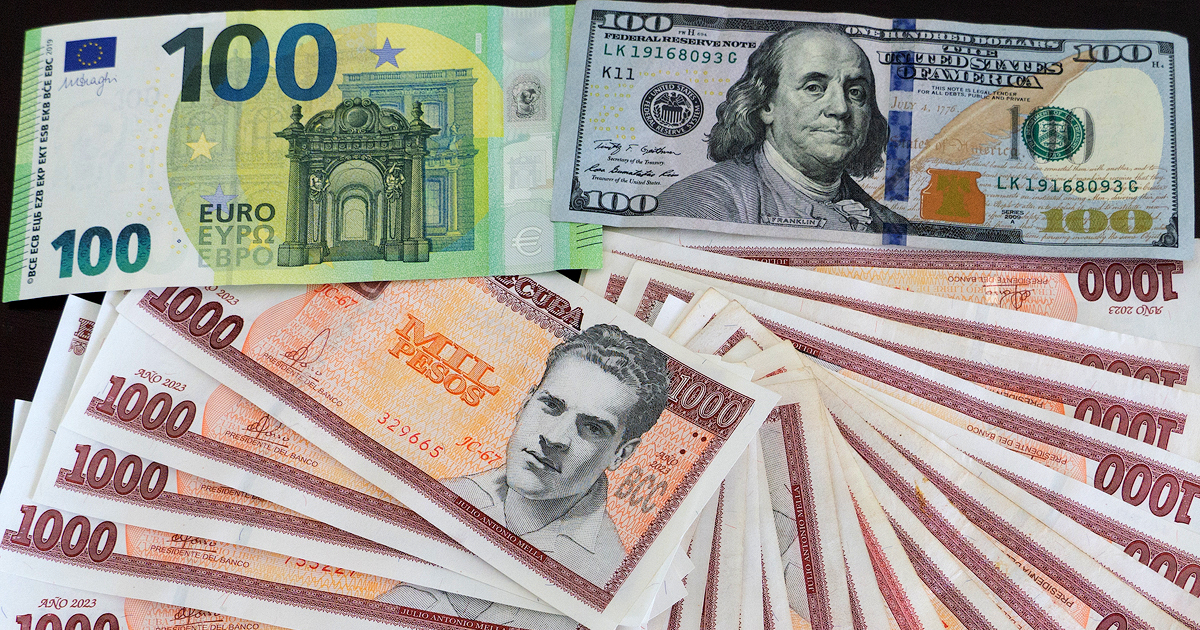
The official rates of the Central Bank of Cuba (BCC) continue to rise in their so-called Segment III of the currency exchange market, the mechanism that the government has introduced as a more flexible rate to bring the value of the Cuban peso closer to the real market conditions.
According to the current data for March 28, 2026, the BCC sets the US dollar at 480 CUP and the euro at 553.44 CUP within this segment. These values confirm the upward trend that the official rate has been experiencing in recent weeks.
The graphics published by the Central Bank clearly reflect this evolution. In the case of the dollar, the rate has risen from levels close to 465 CUP at the end of February to the current 480 CUP, following several incremental increases throughout March. This behavior demonstrates a policy of gradual adjustments aimed at narrowing the gap with the informal market.
The euro, for its part, has exhibited a more irregular behavior, with slight declines at the beginning of the month followed by subsequent recoveries. However, overall it also maintains an upward trend, now standing above 553 CUP, after fluctuating in a range close to 545 CUP for a significant part of the period.
These movements confirm that Segment III effectively operates as a semi-floating rate, with periodic variations that respond to both internal decisions and external factors, such as the evolution of the euro against the dollar in international markets.
Despite these adjustments, the gap with the informal market remains significant.
Currently, the dollar in the parallel market remains around 515 CUP, while the euro is around 580 CUP, which indicates that the official rates still do not fully reflect the real value of the Cuban peso in everyday economics.
The persistence of this difference is due to structural issues such as the shortage of foreign currency in the state banking system and the high demand for strong currency from the population.
As long as these conditions persist, the informal market will continue to serve as the main reference for the exchange rate in Cuba, even in light of adjustments to the Central Bank's "floating" rate.
Filed under: