
Related videos:
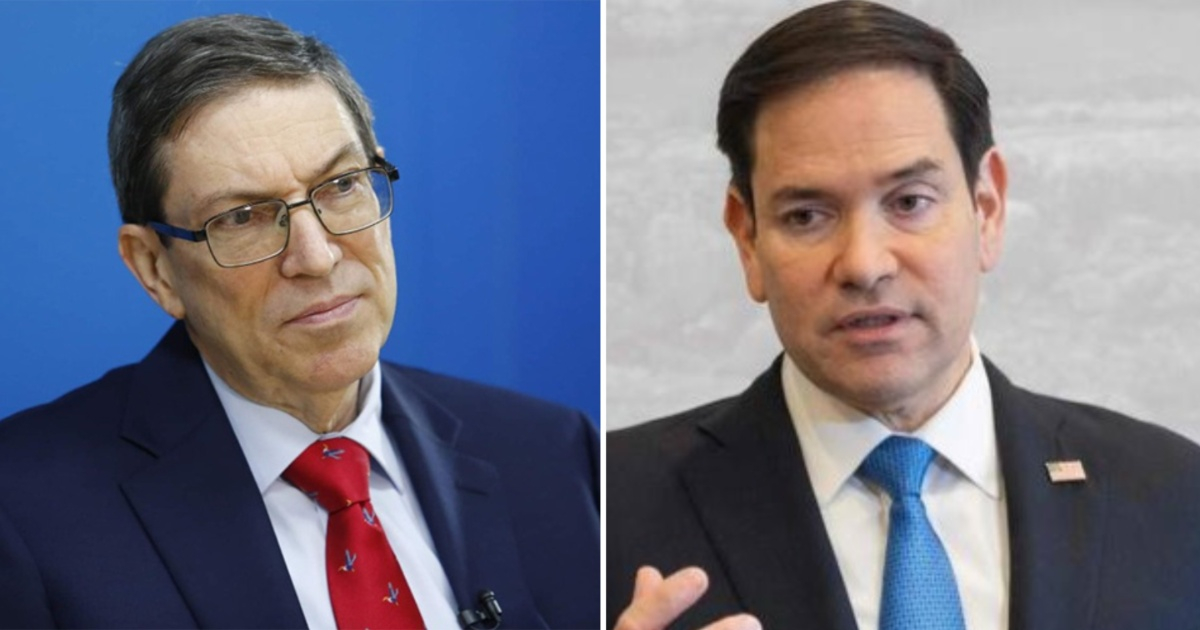
The Cuban regime's chancellor Bruno Rodríguez Parrilla accused the United States government this Saturday of shamelessly lying about the energy crisis in Cuba.
In a message posted on X that indirectly responded to the statements made by Secretary of State Marco Rubio in Paris, while not naming him at any point, Rodríguez pointed out that the "assertions of the U.S. government in Europe aim to create confusion" and that Washington contradicts its own regulations when it denies the existence of restrictions on fuel supply to the island.
"Just reading the Executive Order of January 29 and subsequent regulations from the Department of the Treasury proves that a brutal blockade of fuel supplies is being enforced as a way to expand and increase the collective punishment of Cubans," wrote the official.
The chancellor detailed that these measures include "threats of sanctions against third countries, foreign companies, and hostile acts against tanker ships," and he closed his message with a single word in capital letters: "LIES".
What Rodríguez omitted was equally striking: at no point did he mention Rubio by name, whose statements on Friday at the Le Bourget Airport in Paris, following a meeting of G7 Foreign Ministers, directly prompted his response.
Rubio had firmly rejected the Cuban regime's narrative: "There is no naval blockade around Cuba. The reason Cuba lacks oil and fuel is that they want it for free."
The Secretary of State attributed the crisis to the regime's historical dependence on Soviet and Venezuelan subsidies, and demanded a change of system: "Cuba's economy needs to change, and it cannot change unless its government system changes. It is an absurd system. It's that simple."
Rubio also asked rhetorically, "Who is going to invest billions of dollars in a communist country run by incompetent communists?"
Rubio's statements came a day after President Donald Trump asserted at the FII Priority Summit in Miami that Cuba will be next on his administration's agenda, in reference to military actions in the Middle East, although he ironically asked the media to ignore the comment.
The verbal exchange is set against an unprecedented escalation of energy pressure since January 2026, when Trump signed Executive Order 14380, which declared a national emergency and imposed tariffs on countries that supplied oil to Cuba.
Although a court ruling forced the removal of tariffs on February 20, the national emergency remained active along with maritime controls, and the Coast Guard intercepted at least seven tankers linked to shipments of Venezuelan crude oil to the island.
In mid-March, the Department of the Treasury updated a general license to explicitly prohibit Cuba from receiving Russian oil, impacting at least two ships in transit.
The crisis has caused blackouts of up to 25 hours daily in Cuba, and last Thursday the UN launched a humanitarian emergency plan of 94.1 million dollars to ensure fuel for critical services, warning of the risk of "loss of lives."
Trump confirmed this Friday that the U.S. is in contact with the Cuban regime and suggested that an agreement could be reached "very soon," although he clarified: "We are talking to Cuba, but we will deal with Iran before Cuba".
Filed under: