
Related videos:
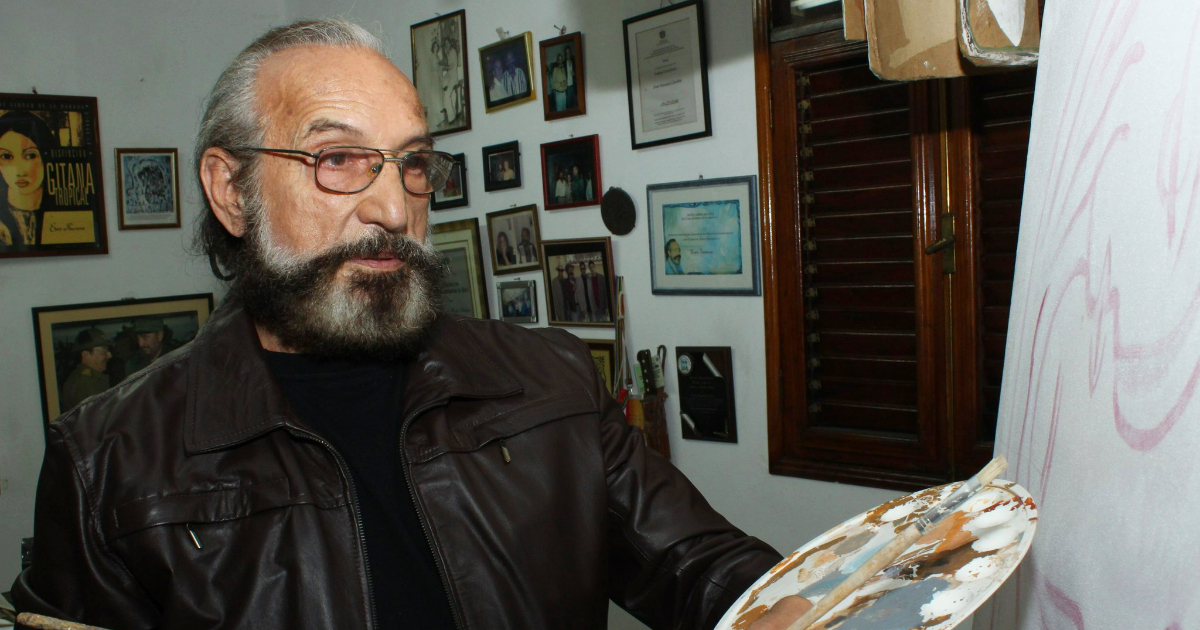
The Cuban painter Ever Fonseca (1938–2026), one of the most recognizable figures in contemporary island art, passed away on March 29, as reported on social media by the Ministry of Culture of Cuba. He was 87 years old.
Awarded the National Prize for Plastic Arts in 2012, Fonseca developed a body of work characterized by the poetic recreation of the Cuban rural world.
His canvases, filled with thatched houses, animals, and rural figures, crafted for decades a lyrical and serene depiction of the countryside, removed from explicit tensions and focused on identity and sensory experiences.
Born in Manzanillo, in the eastern part of the country, his artistic career solidified in the 1960s, when he became one of the first painters of his generation to hold a solo exhibition at the National Museum of Fine Arts in Havana.
Part of his work entered the permanent collection of that institution early on, and over time, his production would be exhibited in more than 25 countries and included in museums and collections in Europe and America.
Fonseca was also an influential educator. He was part of the faculty at the National School of Fine Arts since its inception in the 1960s and taught for more than two decades, leaving a lasting impact on several generations of Cuban artists.
According to the official statement, the painter participated in the revolutionary struggle in the Sierra Maestra and later served as an instructor for the Rebel Army, aspects that the authorities highlighted as part of his commitment to the Cuban political process.
Throughout his career, he maintained a stable presence in the country's cultural institutions, receiving honors such as the Alejo Carpentier Medal, the Raúl Gómez García Medal, and the National Culture Distinction.
Although his work avoided direct political commentary, critics have placed his production within an aesthetic line focused on the idealized evocation of the landscape and rural life, a choice that some interpret as a desire for protection in the symbolic realm, while others see it as an affirmation of an essential cultural identity.
A member of the Union of Writers and Artists of Cuba (UNEAC) and the International Association of Art Critics (AIAP), Fonseca leaves a legacy that is widely recognized both on and off the island.
His remains will be cremated and, according to authorities, his ashes will be interred in an intimate ceremony at the Pantheon of the Ministry of Culture in the Colón Cemetery in Havana.
With his death, a creator who transformed the Cuban countryside into a territory of memory and a lasting symbol of an artistic sensibility that defined an era disappears.
Filed under: