
Related videos:
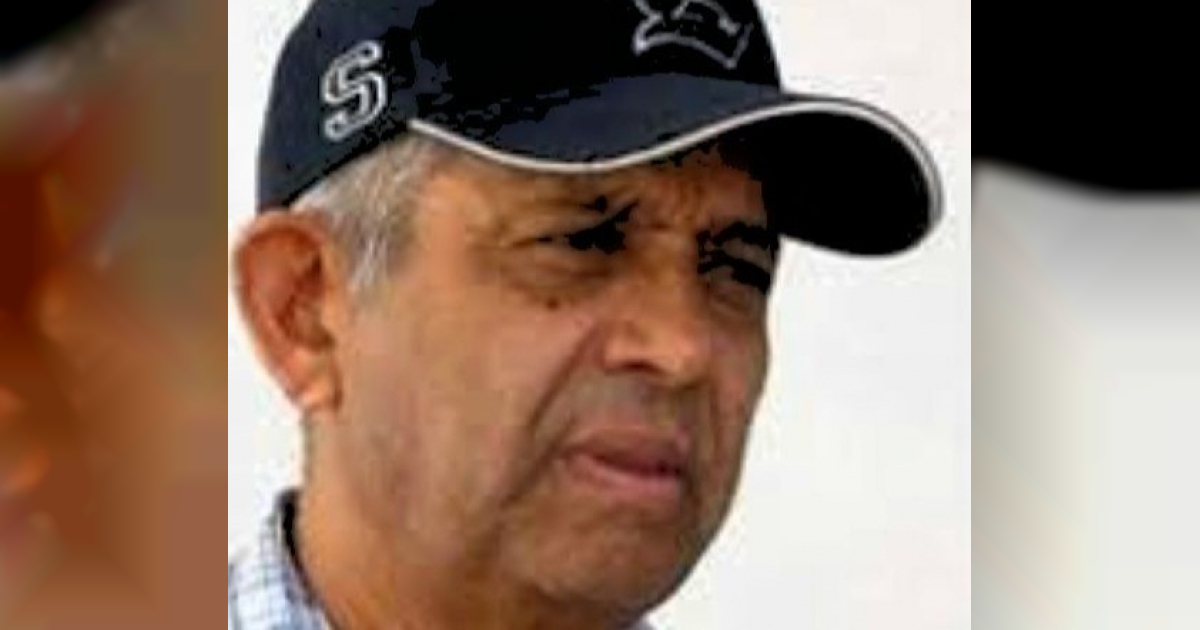
Cuban cinema bid farewell this Wednesday to Julio Simoneau Martínez, one of its most renowned cinematographers, who passed away at the age of 91 due to a heart attack, leaving behind an extensive body of work that shaped the audiovisual aesthetics of several generations.
The Cuban Institute of Cinematographic Art and Industry (ICAIC) expressed its sorrow at his death and highlighted his legacy within national cinema, emphasizing that his work "ennobled Cuban cinema" and will remain in the cultural memory of the country.
Simoneau was described by colleagues and institutions as "a legendary man," whose life was always connected to the camera and the creation of images that defined key moments in audiovisual history on the Island.
A life dedicated to cinema
Born in 1935, Simoneau studied Art History at the University of Havana and also pursued radio and television, fields in which he began to develop professionally at a young age.
Since the 1950s, he worked as a cameraman and editor, and following the revolutionary victory, he joined ICAIC, where he began a long career with the Latin American Newsreel and the Documentary Department.
Starting in 1961, he was promoted to director of photography, a role in which he participated in a wide array of documentaries and productions that are part of Cuba's audiovisual heritage.
His works include titles such as "And I Became a Teacher," "Death to the Invader," "Escambray," and "Forward," along with multiple subsequent productions that solidified his prestige.
He also left his mark on iconic Cuban films such as "Vampiros en La Habana," "La primera carga al machete," and "Páginas del diario de José Martí," serving both as a cameraman and as a director of photography.
Her career was not limited to the artistic field.
Simoneau was a war correspondent during the battles of Playa Girón, as well as in the conflicts in Vietnam, Angola, and Ethiopia.
He also dedicated part of his life to training new generations by teaching courses at the International School of Film and Video in San Antonio de los Baños.
Recognition and reality
Despite the institutional recognitions following his passing, his story—like that of many Cuban artists—is not without contrasts.
Behind the posthumous tribute emerges a reality that has been repeatedly denounced by workers in the sector: the precariousness in which many creators live after decades of dedication to art.
The case of his family starkly illustrates that situation.
In 2022, the son of the filmmaker, also a cameraman and director of photography, was compelled to work as a custodian due to the lack of job opportunities, while also taking care of his father, who was already ill and had suffered an amputation at that time.
The situation sparked a wave of indignation within the film industry, where numerous colleagues denounced the institutional neglect towards those who have supported the country's audiovisual production for years.
Industry professionals questioned how individuals with a prominent track record could end up in such difficult conditions, and criticized the lack of financial and social support.
A recurring problem
The case of the Simoneaus is not isolated. Various voices within the cultural world have raised concerns about a pattern in which artists, technicians, and creators who dedicated their lives to film, music, or theater face old age under vulnerable conditions.
Critics point to the lack of effective protection mechanisms for these professionals, as well as to insufficient pensions that do not cover basic needs.
In this context, the death of Julio Simoneau not only marks the loss of a key figure in Cuban cinema but also rekindles the debate about the treatment of those who have contributed to the country's culture.
A legacy that endures
Despite the difficulties, Simoneau's work remains a benchmark within Cuban audiovisual media.
Her gaze, her technique, and her commitment to the image left a deep mark on documentaries, films, and news broadcasts that are part of the collective memory.
Today, while institutions bid him farewell with honors, there is also a growing call for his story—and those of so many others—not to be repeated in silence.
Filed under: