
Related videos:
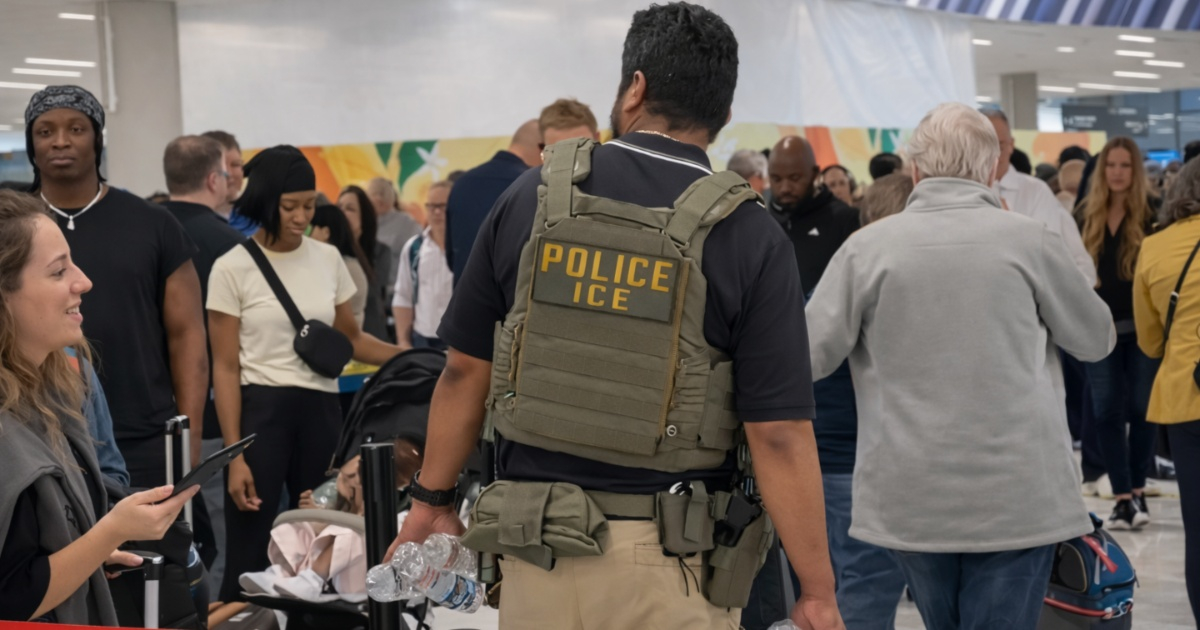
The border czar of the Trump administration, Tom Homan, warned this Sunday that agents from the Immigration and Customs Enforcement (ICE) will remain deployed at airports across the United States until their operations return to "100% normal," amidst the closure of the Department of Homeland Security (DHS) that has lasted 44 days.
"We will continue to have ICE present there until the airports are fully operational and can carry out operations normally," Homan stated on CBS's Sunday program "Face the Nation".
The closure of the DHS, which began on February 14, 2026, became this Sunday the longest in United States history, surpassing the 43 days of the 2019 shutdown.
The crisis originates from the disagreement between Democrats and Republicans over funding for ICE, which has left tens of thousands of Transportation Security Administration (TSA) agents without pay for more than 40 days.
At least 460 TSA agents have resigned during the shutdown, while the average daily absenteeism reaches 11% nationwide, with peaks exceeding 50% at some airports, according to the acting administrator of the agency warned Congress, Ha Nguyen McNeill.
Homan was straightforward about the consequences: "If fewer TSA agents return to work after the shutdown, that means more ICE agents will remain at the airports."
The official justified the deployment for security reasons and emphasized the supportive nature of the mission: "ICE is there to assist our brothers and sisters at TSA. We will be there as long as they need us, until they return to normal operations, if they want those airports to be safe."
The president Trump ordered on March 23 the deployment of at least 50 ICE agents per shift at 14 airports across the country, including O'Hare in Chicago, Atlanta Hartsfield-Jackson, JFK, LaGuardia, Newark, Philadelphia, Houston, and Luis Muñoz Marín in San Juan, Puerto Rico.
ICE agents do not operate magnetometers or X-ray machines; their role is limited to crowd control, monitoring lines, and verifying identifications before security areas.
The latest legislative attempt to resolve the crisis has failed: the Senate approved a bipartisan plan on Friday to fund the DHS while excluding ICE, but the House Republicans blocked it by insisting that the agency must be fully funded.
Facing the paralysis, Trump announced on Thursday an executive order directing the new Secretary of Homeland Security, Markwayne Mullin, to pay "immediately" to TSA agents, with payments expected to begin this Monday.
Both chambers of Congress have recessed until mid-April without resolving the impasse, leaving open the possibility that ICE's presence at airports will extend for weeks during the peak spring travel season.
Filed under: