
Related videos:
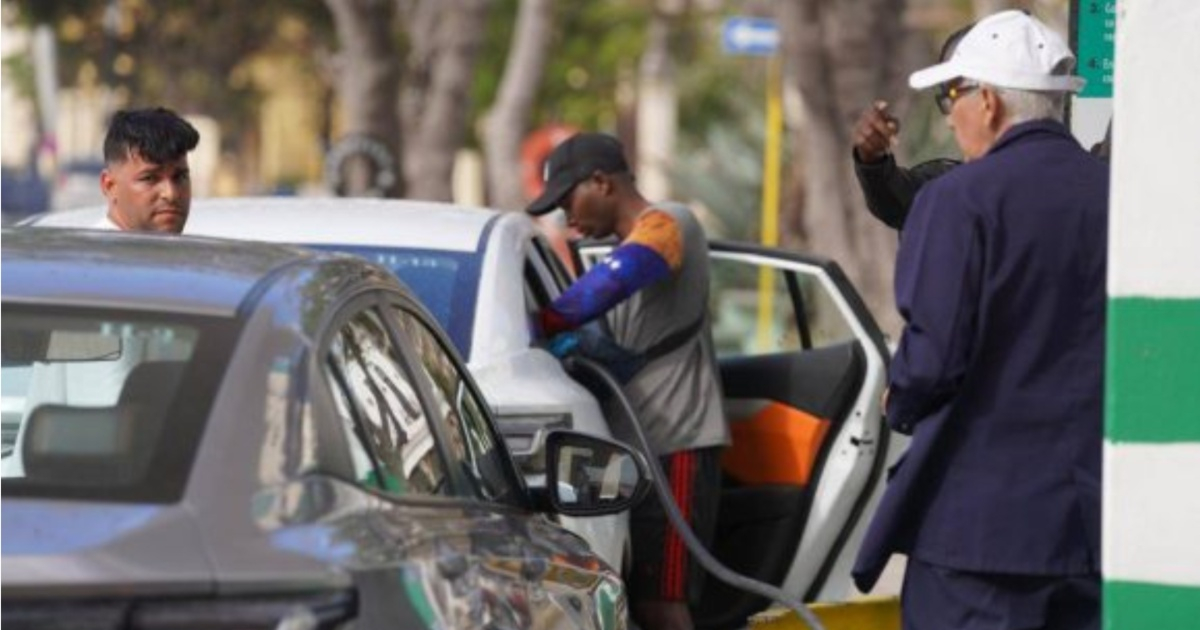
The Cuban police arrested 16 individuals during operations carried out at various Cupet service stations in the Havana municipalities of Playa and Plaza de la Revolución, dismantling a network engaged in the illegal sale of fuel rations and fuel hoarding.
According to the official media Cubadebate, the operations were focused on two locations: the Cupet service station located at 44 and 33 in the Playa municipality, where seven people were arrested; and the one at Línea between E and F in Plaza de la Revolución, where five people were detained and four others were captured for offering slots to tourist vehicles in exchange for 20 dollars.
One of the individuals involved in Plaza was found in possession of 62,000 Cuban pesos and 20 dollars in cash, the proceeds from the illegal sale of appointments.
The so-called "coleros" not only sold their spots in line, but also hoarded fuel to resell it on the black market at prices significantly higher than the established rates.
To simulate legality, those involved used vehicles rented from Transtur, which led that entity to implement internal controls such as mileage checks and fuel consumption assessments.
The operations take place just two days after the official media outlet Cubadebate reported last Thursday on the existence of this network through social media.
Cuba without fuel
The phenomenon is set against the serious fuel crisis that Cuba has been experiencing since late 2025, worsened by the suspension of Venezuelan oil shipments in December of that year and the interruption of Mexican supplies on January 9, 2026.
In that context of extreme scarcity, the price of gasoline in the informal market reached 4,000 Cuban pesos per liter in Havana during March 2026, while in other areas of the country it reached 5,000 pesos per liter, equivalent to about 100 dollars for ten liters.
Official sales at Cupet gas stations are limited to a maximum of twenty liters per person, only in dollars, with waits of up to 26 hours in line.
The phenomenon of "coleros" is not new in Cuba, but it has intensified with the current crisis. In 2022, authorities prosecuted over 16,500 people for activities related to "colería" and illegal resale across the country.
In February 2026, a similar operation was carried out in Santiago de Cuba, where containers of gasoline were seized from private homes.
Neighbors of Playa and Plaza acknowledged the effectiveness of the operations, although they noted that "there is still work to be done" and that these actions demonstrate that "there is no impunity for those who harm the community's access to fuel."
Filed under: