
Related videos:
Russia warned this Friday that its oil exporters could declare force majeure on shipments from the Baltic ports of Ust-Luga and Primorsk, following a series of Ukrainian drone attacks that began on March 23 and continued for at least four consecutive nights, according to Reuters.
The attacks represent, according to Reuters, "the worst disruption since 2022" in Russian oil exports, taking at least 40% of the country's export capacity offline, considering port shutdowns, pipeline disruptions, and seizures of tanker vessels.
Ust-Luga and Primorsk handle about 40% of Russia's crude oil exports, equivalent to approximately two million barrels per day.
Loading operations in Ust-Luga have been halted since March 25; market sources estimated that they would not resume until mid-April. Primorsk sustained damage but partially resumed operations on March 26.
What will happen?
The declaration of force majeure would exempt Russian exporters from their delivery contract obligations, adding a new layer of uncertainty to the global crude supply at a time when the Brent barrel closed this Saturday at $112.57, its highest level since July 2022.
The news comes at the worst possible time for Cuba, which has not received stable shipments of oil since January 2026, following the collapse of Venezuelan supplies — interrupted after the capture of Nicolás Maduro — and the suspension of shipments from Mexico on January 27 under pressure from the Trump administration.
The Cuban electrical system records generation deficits of up to 2,025 megawatts during peak hours, with blackouts affecting 64% of the country. on March 17, a total national blackout occurred, and the government itself admitted it did not know the exact cause.
Argelio Jesús Abad Vigoa, the first deputy minister of Energy and Mines in Cuba, acknowledged a "more complex scenario than before," while Díaz-Canel himself admitted that "life is very tough," although he blamed the embargo and alleged media manipulation.
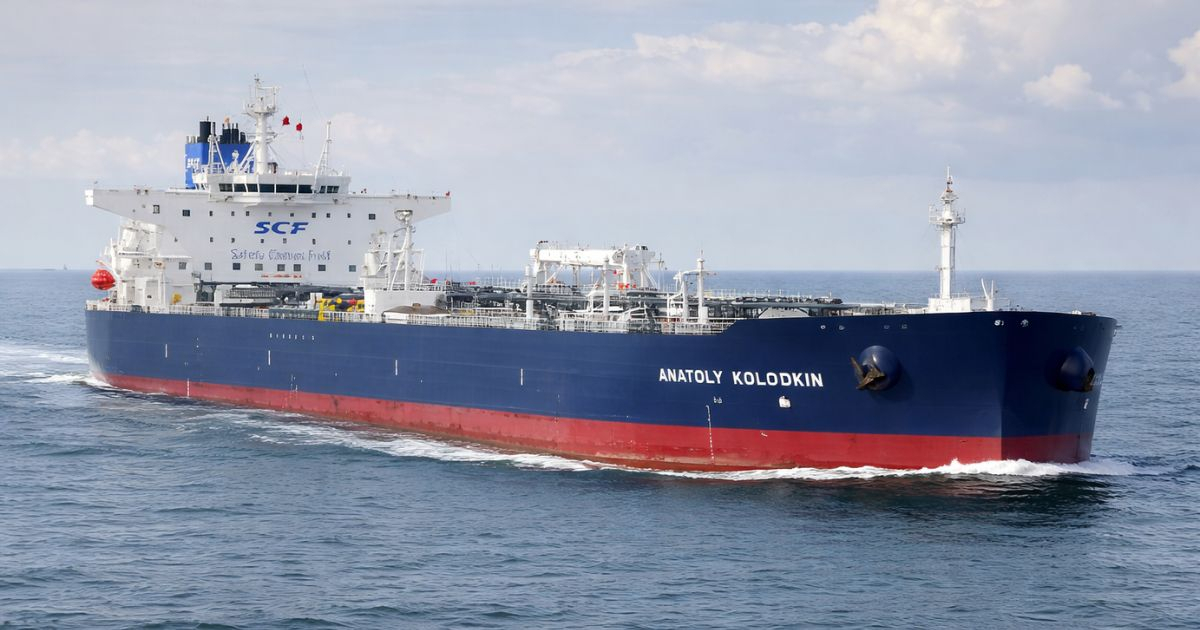
In this context, the Russian tanker Anatoly Kolodkin —which departed from Primorsk on March 8 with approximately 730,000 barrels of crude oil— is sailing towards the Caribbean as the main potential supply for Cuba in the coming months.
This Saturday, the ship was approximately 487 miles from Turks and Caicos, with an estimated arrival on Monday, March 30, according to satellite tracking data.
Will it arrive in Cuba?
However, the possibility of the shipment reaching the island faces multiple obstacles.
On March 20, the Office of Foreign Assets Control (OFAC) issued a license that explicitly prohibits the shipment of Russian oil to Cuba, excluding the island from the temporary sanction exemptions granted to other buyers in the context of the Strait of Hormuz crisis.
U.S. Coast Guard and naval vessels are actively operating in the Florida Straits, the Bahamas, and the eastern coast of Cuba, in what analysts interpret as active monitoring of the progress of Anatoly Kolodkin.
A previous oil tanker, the Sea Horse, carrying about 190,000 barrels of Russian diesel, diverted to Venezuela at the end of March due to pressures from Washington, without delivering its cargo to Cuba.
The Russian Minister of Energy, Sergei Tsivilev, labeled the shipment of the Anatoly Kolodkin as "humanitarian aid," but analyst Lawrence Gumbiner, former U.S. envoy to Havana, described it as "political theater" to test the boundaries of Washington's sanction policy.
Even if Anatoly Kolodkin managed to evade U.S. naval surveillance, disruptions at the Baltic ports — precisely where the ship set sail — could jeopardize future shipments for weeks or months.
Cuba consumes approximately 100,000 barrels of oil per day and relies on fossil fuels for over 95% of its electricity generation, but it lacks liquidity and access to financing to purchase crude oil in the international market at current prices.
Filed under: