
Related videos:
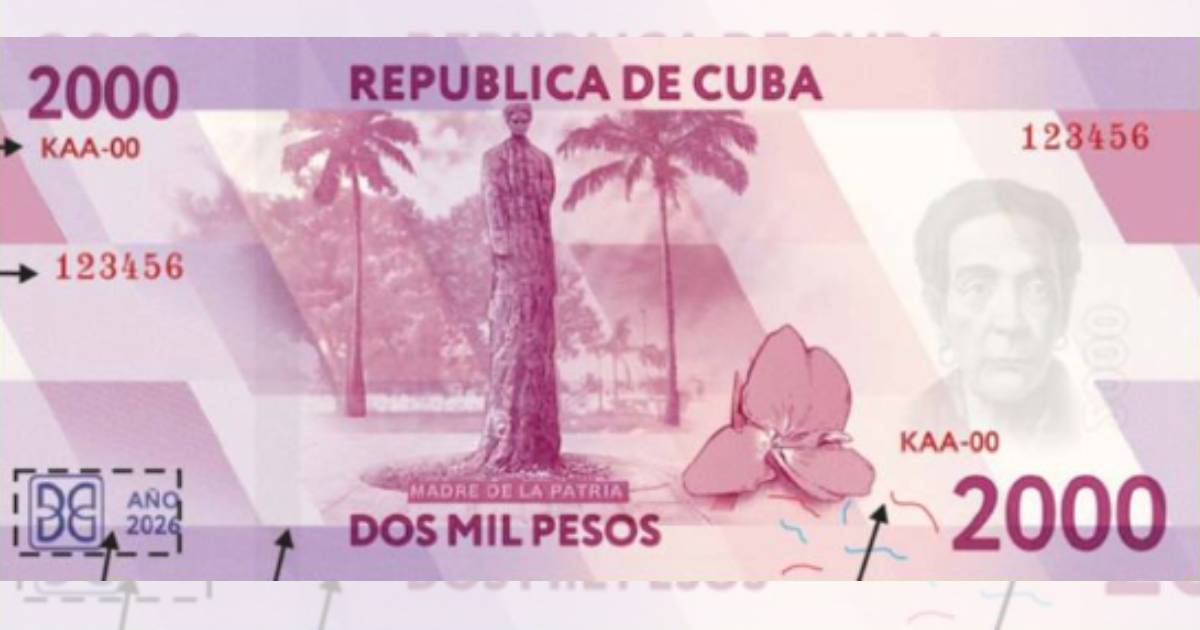
The introduction of the new 2,000 and 5,000 pesos bills in Cuba has not only confirmed the extent of the economic crisis but also unleashed a torrent of reactions on social media, where many Cubans have summed up their reality with a phrase that is both succinct and devastating: “My salary in one bill.”
The announcement from the Central Bank of Cuba comes amid sustained inflation and a rapid decline in the purchasing power of the peso, which is currently trading on the informal market at around 510 CUP per dollar. In this context, the measure has been interpreted by much of the population not as a solution, but as yet another sign of economic deterioration.
"The salary of a doctor reflected in a bill," wrote one user, while another joked, "And the salary of Cubans summed up in 1 or 2 bills." The prevailing sentiment is that money is becoming increasingly insufficient, even when it now fits on a single piece of paper.
Social media was filled with sarcasm, concern, and comparisons to other countries that have faced inflationary crises. "Welcome inflation," "That leads to more inflation," or "Higher denominations = higher inflation" were some of the most commonly repeated reactions.
For many, the issuance of these bills only confirms what they already feel in their daily lives: that prices are rising uncontrollably and the Cuban peso is constantly losing value. "Anyone with a basic understanding of economics knows where this is headed," commented another user, referring to experiences like those in Venezuela or Argentina.
Skepticism also blends with dark humor. “Buying bread with 5,000 pesos,” “With one bill of each denomination, I have a case of lager,” or “Now a month's salary fits in a single bill” are examples of how Cubans cope with the crisis through irony.
Beyond the mockery, there are concrete concerns. Many warn that the measure could exacerbate existing problems, such as the lack of cash, the rejection of low-denomination bills, or the growing dependence on the dollar. "Printing larger bills does not stop inflation; it is a consequence," stated a comment that summed up the sentiment of many.
Others point directly to the social impact: "This is going to further discourage workers when they see that they work an entire month for a single bill that isn’t even enough to eat for a week," lamented a user.
While the Central Bank defends the measure as necessary to "facilitate transactions" in a context of high cash circulation, the perception on the streets is different. For many Cubans, these new bills do not represent relief, but rather a tangible confirmation that the crisis continues to deepen.
And in the midst of that reality, the most recurring comment does not speak of the economy or politics, but of survival: the salary, the one that barely suffices, now fits in a single bill, yet still does not cover the cost of living.
Filed under: