
Related videos:
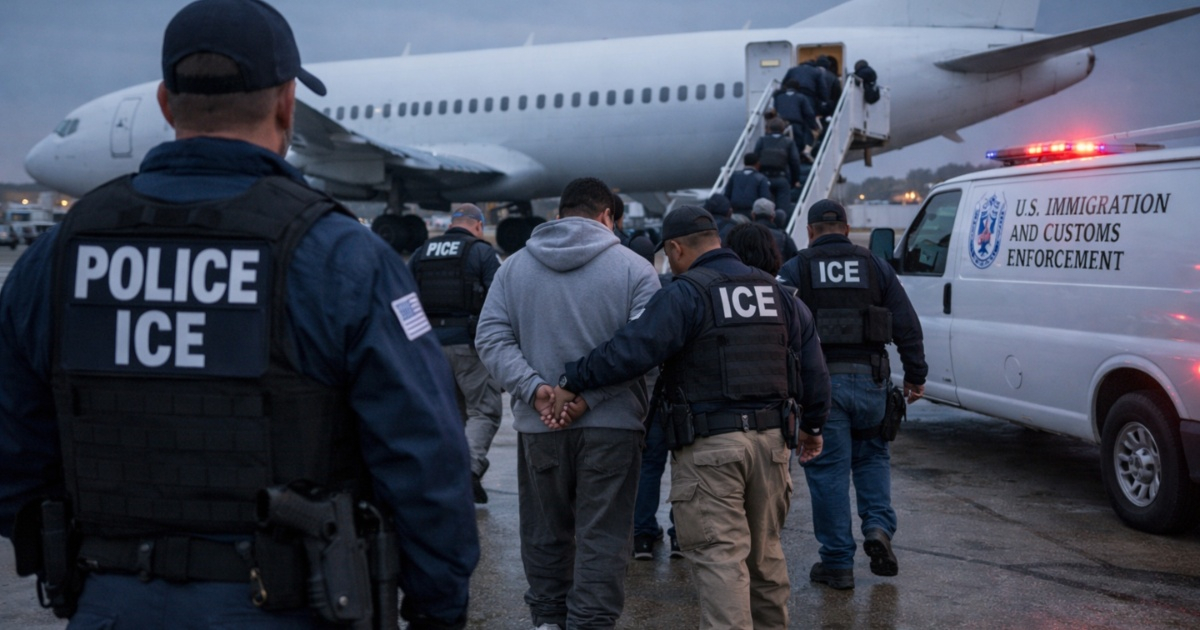
More than 13,000 migrants who were living legally in the United States and awaiting resolutions on their asylum applications have received deportation orders to countries with which most have no connections, according to data from the organization Mobile Pathways published this week.
According to AP, the policy driven by the Trump administration instructed attorneys from the Immigration and Customs Enforcement (ICE) to file "termination" motions that directly cancel asylum cases and allow the deportation of migrants to countries other than their own, without giving those affected the opportunity to challenge the transfer.
More than half of these orders are directed towards Honduras, Ecuador, or Uganda, with the remainder distributed among nearly three dozen countries.
The consequences for migrants are immediate and severe: loss of work permits, indefinite detention, and a legal limbo with no certainty about their final destination.
Sarah Mehta from the American Civil Liberties Union (ACLU) described the government's stance on these motions as follows: "We are dismissing this case entirely and proceeding to deport this person to another nation."
In mid-March, senior legal officials from ICE sent an email —reviewed by the Associated Press— to prosecutors at the Department of Homeland Security ordering them to halt the filing of new deportation motions to third countries related to asylum cases, without providing any explanation.
The Department of Homeland Security has not confirmed whether the suspension is permanent, and immigration attorneys warn that it could be a transition to other forms of deportation, not the end of the practice.
According to the tracker "Third Country Deportation Watch", operated by Refugees International and Human Rights First, less than 100 people have actually been deported under these orders despite the thousands of motions filed.
However, Mehta warned that this could change: "They have not been able to displace many people so far. I believe that will change. They are actively working on it."
The National Immigration Law Center points out that the tactic aims to pressure migrants to return voluntarily to their countries of origin, creating a climate of fear in immigrant communities across the country.
The impact on Cubans is especially well documented. At least four Cuban citizens have been deported to African countries —South Sudan and Eswatini— with no ties to those nations, where they remain confined in prisons without formal charges or access to legal assistance.
Roberto Mosquera del Peral, former leader of the Latin Kings in Miami, was deported to Eswatini on July 14, 2025, and in October of that year he began a hunger strike in Matsapha prison to demand legal representation and formal charges. The agreement between the United States and Eswatini was for 5.1 million dollars to accept up to 160 deportees.
This policy is part of the broader immigration agenda of Trump's second term, during which he signed deportation agreements with 27 countries and has frozen asylum applications for citizens from 39 nations deemed high-risk, including Cuba, Venezuela, and Haiti.
On February 27, 2026, a federal judge in Massachusetts declared the policy illegal for violating federal immigration law and the right to due process, even though the Supreme Court had temporarily authorized it in June 2025.
In total, 42,084 Cubans have final deportation orders in the United States, a figure that underscores the magnitude of the risk that this community faces in light of a policy whose actual scope is yet to be defined.
Filed under: