
Related videos:
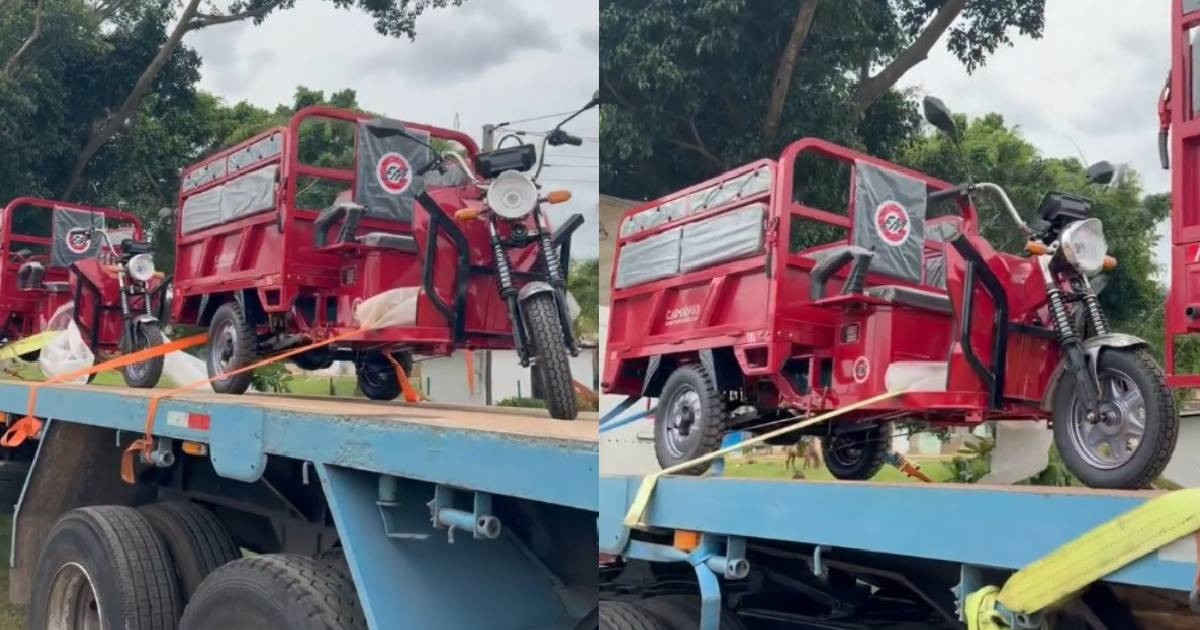
A cargo electric tricycle is being offered in Cuba for $3,800 through a video posted on Facebook, amid the worst fuel crisis the island has faced in decades and with public transportation virtually paralyzed throughout the country.
The announcement, shared on his Facebook profile by user José Luis Llanes Matos, includes detailed technical specifications: dimensions of 2,880 × 1,130 × 1,315 mm, loading box of 1,500 × 1,100 × 510 mm, and a nominal capacity of 300 kg.
The vehicle reaches a maximum speed of 35 km/h and a range of 70 to 80 km in eco mode, with a 60V 58AH battery and a 60V 1,200W motor that requires between six and eight hours for a full charge.
The price of $3,800 far exceeds the formal offers that the company Casalinda launched in January of this year: an economical model priced at $2,350 with a 500 kg load capacity and a reinforced model at $2,550 with an 850 kg capacity, both featuring similar autonomy.
The price difference reflects the markup imposed by the informal market due to skyrocketing demand caused by the collapse of public transport across the island, compounded by import costs—shipping, tariffs, and assembly—that can raise the final price by 50% to 100% over the original value from China.
Cuba produces only 40,000 barrels of oil daily but consumes more than 110,000, a structural deficit that in February 2026 paralyzed the bus system in Havana and left Ciego de Ávila with only two of 135 operational routes in March.
National trains operate every eight days, and the ferry to Isla de la Juventud runs only twice a week, which has turned electric tricycles, which do not rely on gasoline or diesel, into a basic necessity for thousands of Cubans who need to travel or transport goods.
It should be noted that the Caribe stores in Matanzas were already selling electric tricycles between 4,400 and 4,800 MLC, which illustrates how much this market has evolved.
The regime responded with partial measures when on February 19, it suspended imports of internal combustion vehicles and later that same month eased the requirements so that tricycles and electric motorcycles without registration could obtain transportation licenses until December 2026.
Russia sent a shipment of 100,000 tons of crude oil, which arrived on Monday at the bay of Matanzas, but the leader Miguel Díaz-Canel acknowledged that it was "temporary and insufficient."
Filed under: