
Related videos:
The Democratic congresswoman Pramila Jayapal posted a video on X this Monday after returning from a five-day visit to Cuba, in which she described her experience in the neonatal intensive care unit of a maternity hospital and compared the energy sanctions imposed by the Trump administration to a bombing of the island's infrastructure.
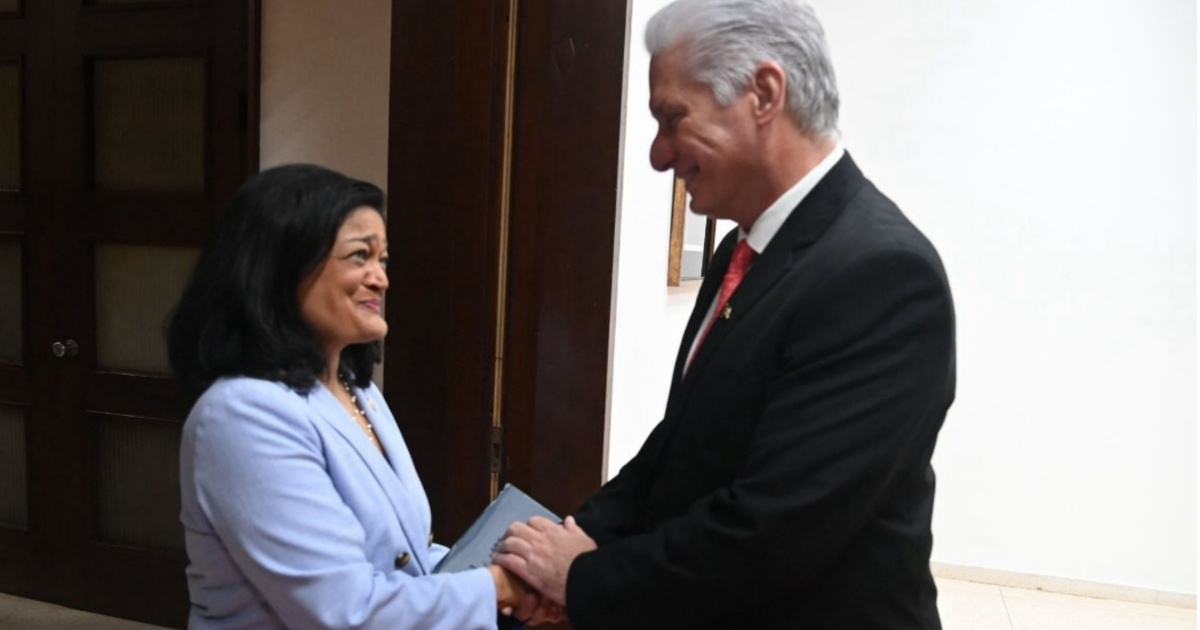
Jayapal, representative from Washington, traveled with Congressman Jonathan Jackson (Illinois) during the recess of the House of Representatives, marking the first documented in-person visit of U.S. lawmakers to Cuba in 2026.
"What broke my heart the most was going to the maternity hospital and entering the neonatal intensive care unit and seeing the low-birth-weight babies, the premature babies who are in incubators," the congresswoman stated in the video, part of remarks made to the regime-collaborating outlet Belly of the Beast.
The visit has sparked criticism within Cuban civil society, which denounces the whitewashing of these politicians regarding the regime's human rights violations and their exploitation of the Cuban people.
"These Democratic congresspeople went to visit Díaz-Canel. Did they ask for the release of this CHILD imprisoned in Ciego de Ávila? No. The visit was to whitewash the dictatorship and to criticize how bad Trump is. More participants in the circus. We will not forget who stands with the Cuban people and who serves the dictators," said journalist Mario J. Pentón, referring to the recent imprisonment of the minor Jonathan Muir.
"Was there a power outage at the hotel where he stayed? Probably not. Did he visit the prisons or the families of political prisoners? Probably not, because he wasn't interested," criticized journalist José Raúl Gallego.
In an official statement, Jayapal and Jackson denounced that the oil restrictions imposed by the Trump administration aimed to prevent a single drop of oil from entering Cuba, which, according to the legislators, amounted to a direct attack on the country's civilian infrastructure.
Energy sanctions would have managed to cut between 80% and 90% of the island's crude oil imports, exacerbating a crisis that was already impacting hospitals, transportation, and basic services.
During their stay, the congress members met with representatives of the Cuban regime. Miguel Díaz-Canel welcomed them and used the meeting to denounce the criminal damage caused by the embargo, in a meeting that drew criticism from Cuban activists and dissidents.
Filed under: