
Related videos:
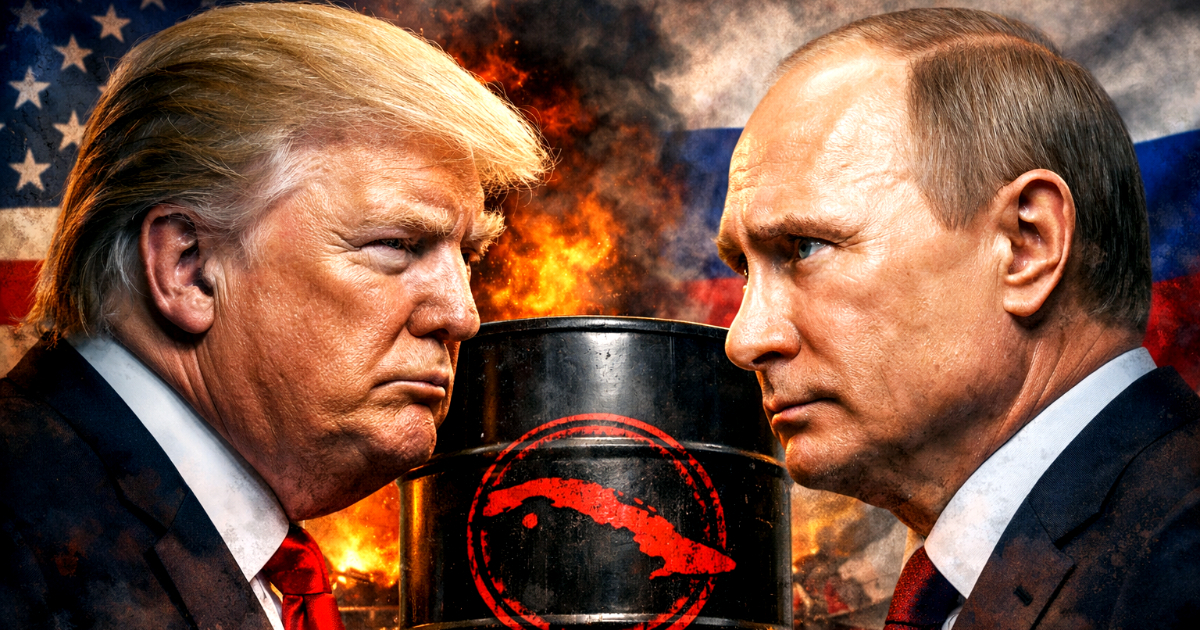
The decision by Washington to allow the Russian tanker Anatoli Kolodkin to arrive in Cuba, amidst an offensive to suffocate the regime economically, has raised an uncomfortable question: if the pressure aims to weaken Havana and accelerate changes, why tolerate a relief that Moscow is already touting as a victory and that could be repeated with a second shipment?
The context is clear. The United States has intensified pressure on the Cuban energy system in recent months, making it more difficult to access fuel through sanctions, financial restrictions, and pressure on third countries.
The goal is not a complete physical blockade, but a progressive strangulation that limits the State's ability to sustain the economy and internal control, while increasing the political cost of stagnation and pushing the regime towards concessions or eventual negotiation.
Ultimately, this pressure aims to open the door to economic and political changes on the island, even if it is not publicly presented as a regime change strategy.
In this context, the case of Anatoli Kolodkin is particularly revealing. It is a sanctioned vessel, linked to the so-called “ghost fleet” of Russia, which transported about 100,000 tons of crude oil —approximately 730,000 barrels— to Matanzas.
Its arrival, authorized on a case-by-case basis by Washington under humanitarian grounds, introduces an exception that strains the very framework of U.S. policy.
Because, although the shipment offers only a few days of energy relief in an island plagued by blackouts and shortages, its political impact is much greater. Russia has presented it as a break in the “energy blockade”, while the Cuban regime uses it as proof of resilience. Narratively, Havana and Moscow are benefitting.
What does the United States gain then? From the perspective of security, the answer lies in preventing an abrupt collapse. A total collapse of the Cuban system could trigger a migration crisis towards Florida, regional instability, and a scenario that would be difficult to control just 150 kilometers from its shores. Allowing for temporary relief does not save the regime, but it does reduce the risk of an overwhelming crisis.
Additionally, Washington maintains discretion. This is not a structural opening, but rather an exception. The overall pressure remains intact, and the message is that each shipment will be evaluated on a case-by-case basis.
However, the costs are evident. Russia is gaining symbolic space and repositioning itself as a significant player in the Caribbean. The Cuban regime is capitalizing on the narrative of resistance.
And, above all, an image of an ambiguous strategy is projected, where what is forbidden and what is allowed seems to depend on difficult-to-predict decisions.
The true turning point may lie in the next step. The Russian Minister of Energy, Serguéi Tsivilev, has already announced a second shipment. And there, the logic shifts. One shipment can be interpreted as a humanitarian exception; two start to seem like a tolerated channel.
If Moscow manages to establish a supply sequence, even if it's irregular, the strategic balance is disrupted.
This leads to the key question: Does the United States have alternatives?
In theory, yes. Washington has already authorized fuel exports to the Cuban private sector and could explore mechanisms for targeted aid, channeled through non-adversarial actors and under strict conditions. This would allow for alleviating the crisis without giving prominence to Russia.
But that option also comes with costs. It would involve taking on a more visible role in the energy support of the island, with internal political risks and the possibility of being seen as a lifeline for the very regime it is trying to pressure.
At its core, the U.S. strategy operates under a constant tension: to apply pressure without causing a collapse, to weaken without rescuing, to contain Russian influence without escalating the conflict. The case of Kolodkin is not an anomaly, but rather a reflection of that unstable balance.
The question is how long it can be sustained. Because if exceptions repeat, they cease to be exceptions.
And then Washington will have to decide whether to continue managing the crisis from a position of ambiguity or to redefine its strategy in order not to lose the initiative in a scenario where Moscow has already demonstrated that it can play its cards.
Filed under: