
Related videos:
The U.S. Embassy in Cuba published an Easter message yesterday in which its team wished "ordinary Cubans" a "Happy Easter" and expressed the hope that this time of hope and promise provides a better future for the island.
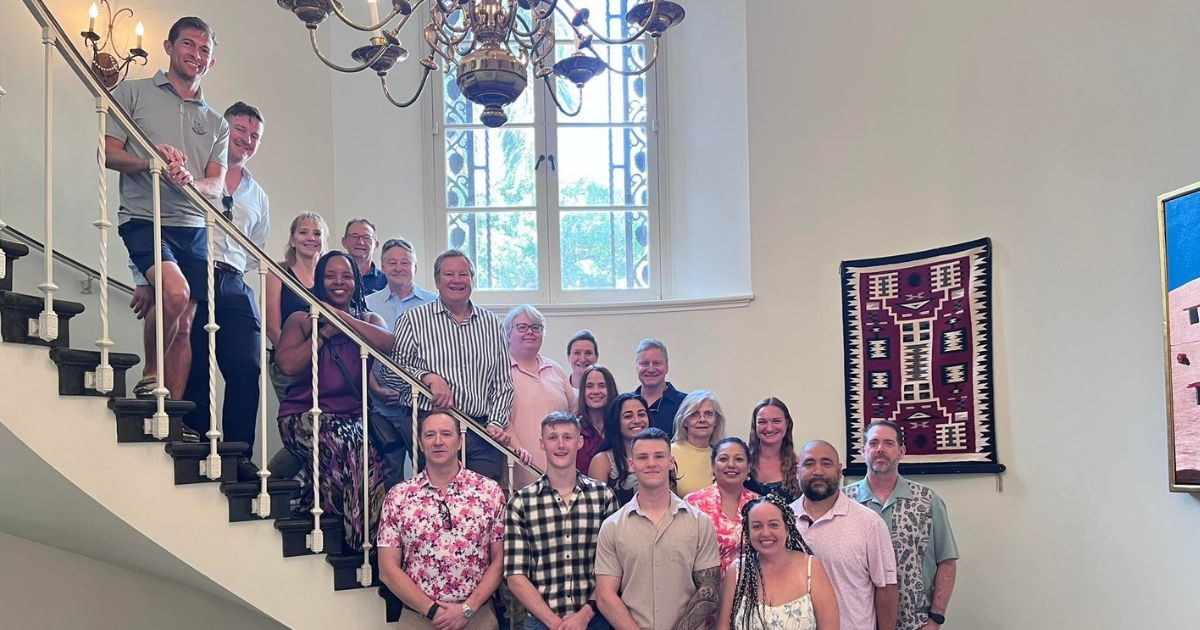
The message, accompanied by a group photograph of the diplomatic team of the mission in Havana, was shared on the official Facebook page of the embassy on Easter Sunday and is part of a sustained communication strategy under the chargé d'affaires Mike Hammer.
The desire for change is not new in U.S. diplomacy towards Cuba.
Last Palm Sunday, the deputy mission chief Roy Perrin attended services at the Basilica of San Francisco de Asís in Old Havana, and posted that "our thoughts are with the ordinary Cubans who seek a better future and all those who remain unjustly imprisoned."
Hammer intensified its activity during Holy Week.
On Friday, he visited the "Lavandería" gallery in Havana to demand freedom for the imprisoned artists Luis Manuel Otero Alcántara and Maykel Osorbo, and on Thursday he stated bluntly that "the dictatorship will end" in 2026.
Those words resonate strongly in the context that the island is experiencing.
Yesterday, while the embassy published its Easter message, the blackouts in Cuba reached nearly 1,800 megawatts during peak hours, with interruptions lasting up to 24 hours in some areas of the country.
The energy crisis is worsening due to the suspension of Venezuelan oil shipments following the capture of Nicolás Maduro, the reduction of Mexican supplies, and the national emergency declared by the Trump administration on January 29.
In that scenario, Cubans celebrated Holy Week with a dark Stations of the Cross and cooking at dawn to take advantage of intermittent electricity, while the regime deployed undercover agents from the Ministry of the Interior at Catholic pilgrimages to prevent protests.
The Cuban government attempted to project an image of openness by announcing on Thursday the pardon of 2,010 common prisoners as a "humanitarian gesture" for Holy Week, but explicitly excluded political prisoners.
Human rights organizations such as Prisoners Defenders account for over 1,214 political prisoners in Cuba, many of whom were imprisoned for the protests on July 11, 2021.
Senator Rick Scott demanded the complete list of those released and the immediate release of all Cuban political prisoners, emphasizing that the regime's gesture deceives no one while prisons remain full of dissenters.
Hammer, who in February predicted to the ABC network that 2026 could be a "historic turning point" for Cuba, has made the expression "ordinary Cubans" and the hashtag #ConCubanosDeAPie central to his public diplomacy, with visits to all provinces of the country during his 15 months in Havana.
Filed under: