
Related videos:
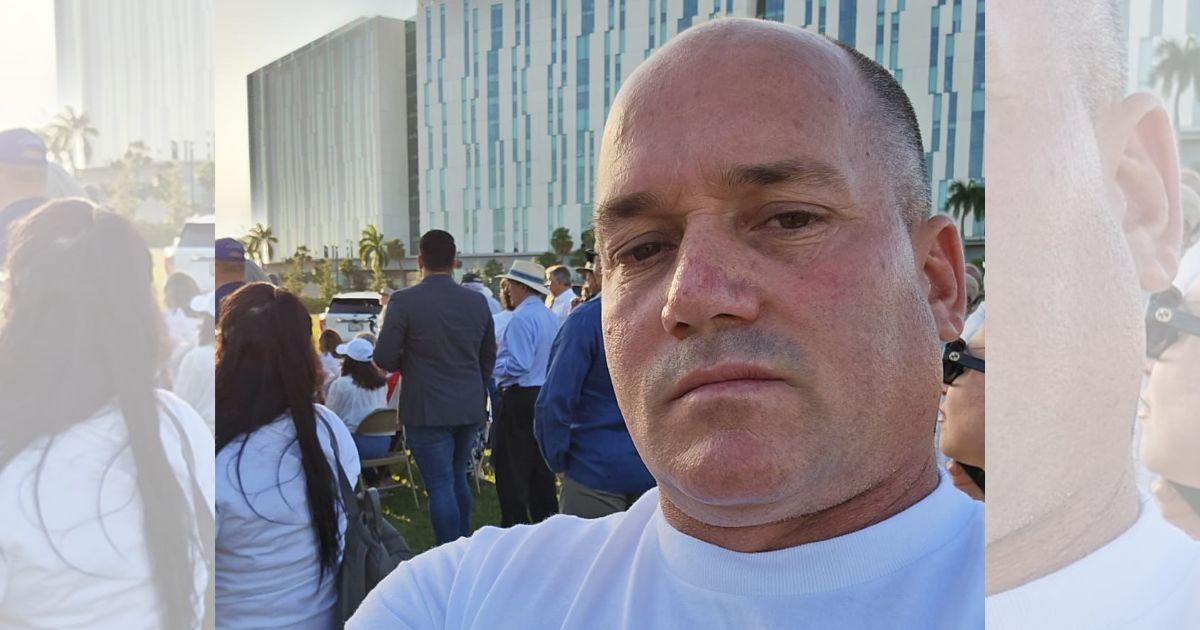
The Immigration and Customs Enforcement (ICE) released Elionay González Crespo, a Cuban opposition figure who had been detained for 10 months, and decided not to deport him to Cuba, reported journalist Javier Díaz.
González, a member of the Cuban Anticommunist Movement in exile, was arrested on June 16, 2025 immediately following a migration hearing in the Miami Immigration Court, where a judge dismissed his application for political asylum.
After his arrest, he was transferred without prior notice to a prison in Louisiana, passing through Texas.
His wife, Daraymis Nogueira, did not learn of his whereabouts until 11 o'clock that night, when she was allowed a call lasting just three minutes, as recalled by elTOQUE.
Nogueira also reported that ICE agents pressured her husband to sign his voluntary deportation order, something that the family outright rejected.
"It is not an option" to return to Cuba, stated the wife at that moment.
González had arrived in the United States in May 2022 through the southwest border and was initially released with form I-220A, a Supervision Order issued by ICE that allows individuals to remain free under certain conditions while their immigration case is processed, but does not grant legal status or allow them to benefit from the Cuban Adjustment Act.
In Cuba, González faced police summons, raids, and seizures in his automotive painting business by the regime's authorities. He also participated in the protests of July 11, 2021. From exile, he documented human rights violations on the island as part of his activism.
During the 10 months he was detained, his family was raising funds to cover the expenses of a lawyer.
The case of González is part of a broader wave of detentions of Cubans with I-220A forms that began in 2025 with the tightening of immigration policy by the Trump administration.
At least 18 Cubans with that document were detained in South Florida in March 2025 after attending routine supervision appointments.
Other Cubans in similar situations have achieved their freedom through different means.
Iván García Pérez was released in January after a habeas corpus petition and the payment of a $1,500 bond.
Daniel Alejandro Escobar Rodríguez was released in February after being detained for 80 days, when a federal court declared his detention illegal.
Cuba, for its part, has rejected the return of more than 42,000 Cubans with final deportation orders in the United States, further complicating the situation for thousands of people who remain in legal limbo.
Filed under: