
Related videos:
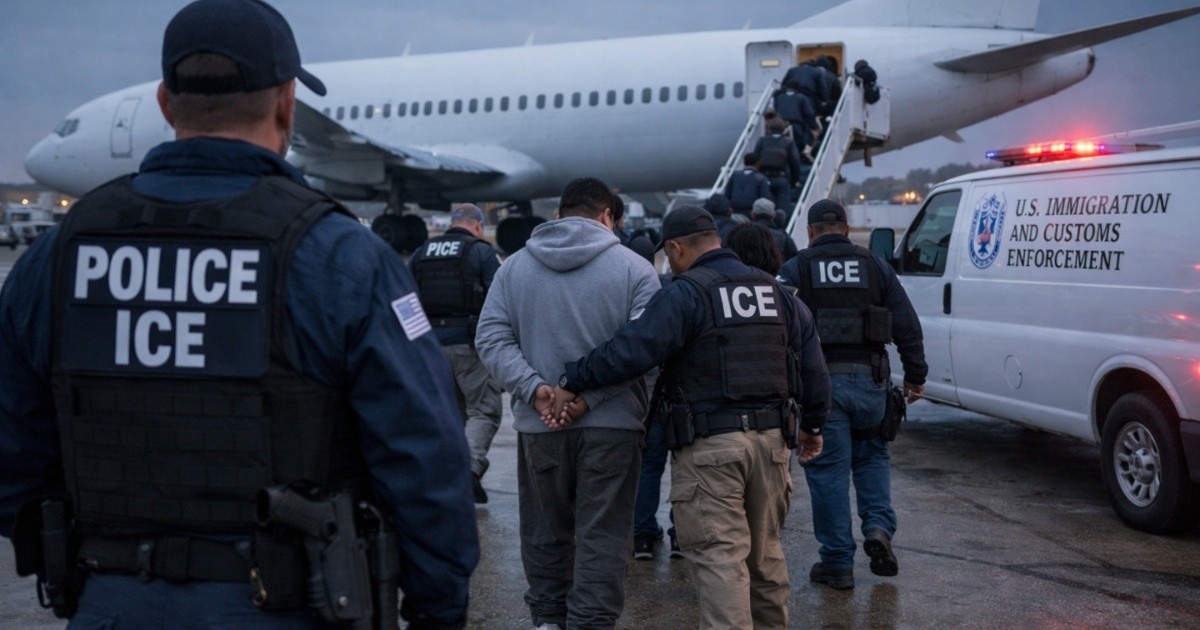
United States and the Democratic Republic of the Congo (DRC) announced this Sunday a deal for Kinshasa to receive deported migrants from third countries from U.S. territory, with the first transfers scheduled for this month of April.
The Congolese government described the mechanism as a "temporary reception device" in the capital that reflects "human dignity and international solidarity," and emphasized that it does not imply a permanent relocation or the externalization of migration policies.
According to the Ministry of Communication of the DRC, all logistical costs of the agreement will be covered by Washington, with no burden on the Congolese Treasury, and each case will be reviewed individually in accordance with Congolese legislation and national security requirements.
With this agreement, the DRC becomes the latest African country to join the third-country deportation program of the Trump administration, which already includes El Salvador, Eswatini, Ghana, Rwanda, Uganda, South Sudan, and Equatorial Guinea.
The program has proven to be extraordinarily costly and of limited scope: a Democratic report from the Senate Foreign Relations Committee published in February 2026 revealed that Washington spent at least 40 million dollars to deport around 300 people to countries other than their country of origin. In the case of Equatorial Guinea, the cost reached approximately 282,000 dollars per deportee, and the 29 migrants sent there were left stranded without access to asylum in a country without an international protection policy.
The tracker "Third Country Deportation Watch", operated by Refugees International and Human Rights First, documents that fewer than 100 people have been effectively deported under these orders. Sarah Mehta, from the American Civil Liberties Union (ACLU), warned that this could change soon: "They have not been able to expel many people so far. I believe that will change. They are actively working on it."
More than 13,000 migrants with pending asylum requests in the United States have received deportation orders to countries with which they have no connection, according to data from the organization Mobile Pathways. On February 27, 2026, Federal Judge Brian Murphy in Massachusetts declared this policy illegal for violating federal immigration law and the right to due process, although the program continues to operate under other modalities.
The agreement with the DRC occurs within the framework of a broader bilateral relationship: in December 2025, Trump signed a Strategic Partnership Agreement with Kinshasa that grants U.S. companies preferential access to critical minerals such as cobalt and copper. In April 2026, a U.S. company acquired copper and cobalt mines in the DRC for 700 million dollars. Analysts indicate that Kinshasa's willingness to accept deportees may be linked to these strategic and economic interests.
The impact on Cubans is particularly well documented. At least four Cuban citizens were deported to African countries—South Sudan and Eswatini—without any connection to those nations, where they remain detained without formal charges or access to legal assistance. Roberto Mosquera del Peral, deported to Eswatini on July 14, 2025, initiated a hunger strike in Matsapha prison in October of that year to demand legal representation and formal charges. In total, 42,084 Cubans have final deportation orders in the United States.
Filed under: