
Related videos:
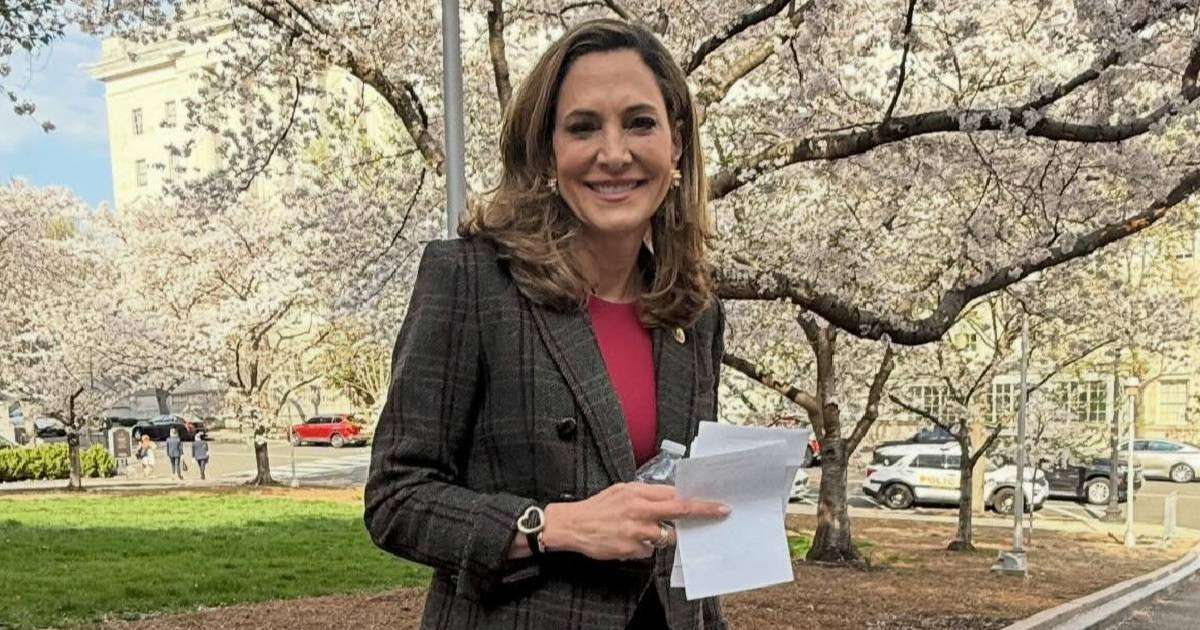
The Cuban-American Republican congresswoman María Elvira Salazar rejected this Friday the announcement from the Cuban regime about pardoning 2,010 incarcerated individuals, describing the measure as a propaganda maneuver and warning that they deceive no one.
The Cuban government announced the pardon on Thursday, and the first releases began today at the La Lima prison in Havana, benefiting those convicted of common crimes such as theft or bribery.
The decree explicitly excludes the so-called "crimes against authority" —sedition, public disorder, and contempt— which are precisely the charges under which the majority of Cuban political prisoners are incarcerated, including the protesters from July 11, 2021.
"This is something we have seen before. The regime releases a few for headlines while hiding the truth and keeping political prisoners behind bars," Salazar wrote on her X account.
The congresswoman was straightforward in pointing out the lack of transparency in the process: "Let's be clear: we don't even know who is supposedly being released, because the dictatorship lies."
In addition, he listed five high-profile political prisoners who will be excluded from the pardon: Maykel Osorbo, Félix Navarro, Saily Navarro, Miguel Díaz Bauzá, and Luis Manuel Otero Alcántara, "and the many political prisoners that they deny exist but keep in the dark."
All of them are emblematic figures of the regime's repression: Osorbo, a rapper from the Movimiento San Isidro, is serving a nine-year sentence; Otero Alcántara, founder of the same movement, has been imprisoned for five years and is recognized as a prisoner of conscience by Amnesty International.
On his part, Félix Navarro, aged 72, was arrested during the Black Spring of 2003 and again after the 11J; his daughter Saily is serving a six-year sentence for the same protests; and Miguel Díaz Bauzá, aged 81, is facing a 30-year sentence with serious health issues.
"This is not a humanitarian gesture. It is a tactic to cling to power and create headlines," the legislator stated.
Salazar is not alone in her skepticism. Republican Congressman Carlos A. Giménez also described the pardon as a "distraction" from the regime, according to Martí Noticias. The Cuban dissident Yunior García accused the regime of "simulating clemency" with the prisoners.
Human rights organizations have reported on the lack of transparency in the process. Prisoners Defenders estimated 1,214 political prisoners in Cuba as of February 2026, while Justicia 11J counts at least 760, of which 358 are from the 11J.
The Cuban Observatory of Human Rights demanded today that all political prisoners be included in the amnesty.
This is the fifth Cuban pardon since 2011, with over 11,000 beneficiaries accumulated in total, and the second of 2026: on March 13, the regime released 51 individuals following a dialogue with the Holy See, of which only 19 were political prisoners according to Prisoners Defenders.
"The real change means the freedom of all political prisoners and a path towards democracy. Until then, it is the same dictatorship," concluded Salazar.
Filed under: