
Related videos:
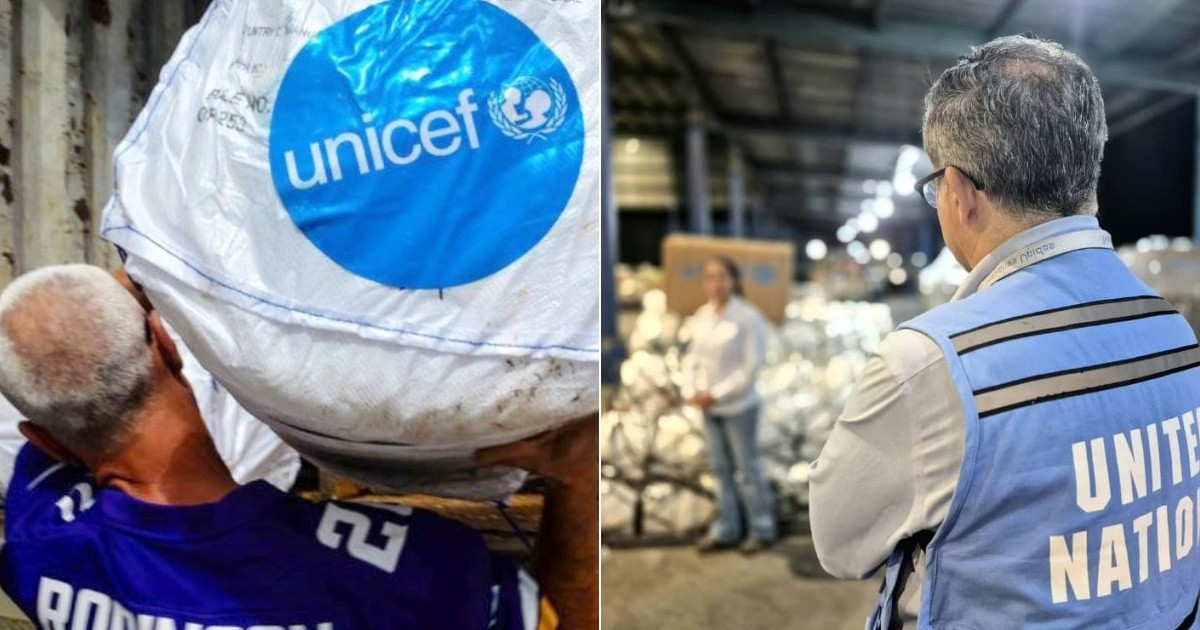
The energy crisis in Cuba has begun to have a direct impact on the distribution of humanitarian aid, to the extent that millions of dollars in essential supplies are being prevented from reaching the population.
This has been noted by the United Nations (UN), which describes an increasingly critical situation on the island, where fuel shortages are even paralyzing international assistance.
The UN resident coordinator in Cuba, Francisco Pichón, warned that "about 170 containers of essential humanitarian products that have already arrived in Cuba, amounting to around 6.3 million dollars, are not reaching the beneficiaries due to fuel shortages."
The situation, he explained, is not due to a lack of resources, but rather to the logistical impossibility of distributing them in a country that has been without sufficient energy supply for months.
In light of this blockade, the UN has been compelled to explore unusual alternatives.
“We are considering all options, including collaboration with the non-state sector or the private sector in Cuba,” Pichón stated, while confirming that there are “ongoing discussions” with representatives from the U.S. to try to facilitate the entry of fuel necessary to implement the humanitarian plan.
A "systemic and increasingly severe" crisis
Beyond the suspension of aid, the United Nations warns of a widespread deterioration of living conditions in Cuba.
In a , the organization described how the energy crisis is affecting virtually all aspects of daily life.
"The energy crisis is having a systemic and increasingly severe humanitarian impact, affecting all aspects of daily life in Cuba: health, water and sanitation, food systems, education, transportation, and telecommunications," said Pichón.
The official also emphasized that the country has "gone more than three months without sufficient fuel," which has progressively worsened the situation.
Although limited supplies have recently been received—including a shipment of oil from Russia—these barely suffice to meet basic needs for a few days.
Still, the UN representative himself insisted that "the humanitarian needs in the country remain very urgent and persistent," and warned that "the humanitarian consequences, as expected, continue to worsen each day."
An expanded plan, but without sufficient funding
In this context, the United Nations has revised its action plan in Cuba, expanding its scope. The new strategy aims to assist around two million people in 63 municipalities across eight provinces, double the number initially anticipated.
Access to energy has become the central focus of the humanitarian response. Proposed solutions include solar-powered irrigation systems, the installation of solar panels in hospitals and schools, and the strengthening of water infrastructure through renewable sources.
However, the implementation of these measures faces a key obstacle: the lack of funding.
According to the UN, $94 million is needed to implement the plan, but the current deficit is around $60 million.
Meanwhile, in their daily lives, the Cuban population is trying to adapt as best they can.
From the use of charcoal as an improvised alternative to fuel to household solutions for dealing with blackouts, citizens are striving to survive amid a crisis that, according to the United Nations itself, continues to deepen.
Collapsed hospitals, unvaccinated children, and reduced classes
The data provided by the UN paints a particularly concerning picture in vulnerable sectors.
More than 96,000 surgeries have been postponed in the country, including those of about 11,000 children.
This is compounded by the situation of 32,000 pregnant women at risk due to instability in prenatal services, and nearly 3,000 minors who are behind on their vaccination schedule.
The impact also extends to the education system.
Almost half a million children and adolescents are forced to attend reduced class hours due to power outages and a lack of basic resources.
In parallel, around one million people currently depend on water supply via tanker trucks, as a result of failures in the electric pumping systems.
The elderly population, particularly large in Cuba, is among the most affected.
"It is about people who depend on the proper functioning of the systems and who need doctors to attend to health centers," warned Pichón.
The fuel, at the heart of the problem
The worsening of the energy crisis is directly linked to the decline in oil supplies.
According to the UN, the situation worsened further after Washington blocked oil shipments to the island at the end of January.
Pichón noted that Cuba has recently received a shipment from Russia, estimated at about 100,000 tons—equivalent to roughly 700,000 barrels—an amount sufficient for just "12 or 13 days."
Additionally, he confirmed that supplies from Venezuela have not arrived, while other countries, such as Mexico, have attempted to mediate to ensure access to oil for humanitarian purposes.
In this context, the White House has chosen to evaluate the authorization of oil tankers to Cuba on a "case-by-case" basis, adding uncertainty to the already precarious energy situation in the country.
Filed under: