
Related videos:
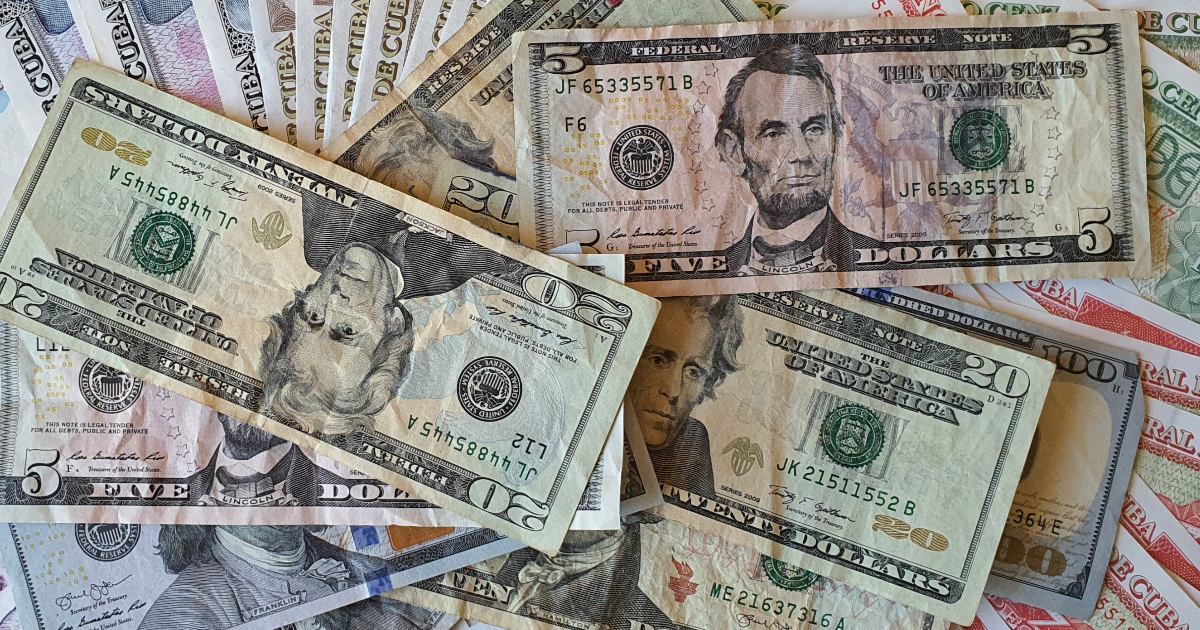
Fincimex announced this Tuesday that remittances sent from abroad can be collected in cash in dollars directly at the offices of the Currency Exchange House (Cadeca), in what the regime presents as a expansion of options for Cubans receiving money from abroad.
The measure, however, is not a gesture of openness. It is the latest reconfiguration of a state monopoly that has been capturing the foreign currency sent by the diaspora to their families on the island for decades.
Fincimex is a subsidiary of GAESA, the military conglomerate that controls between 40% and 60% of Cuba's foreign currency income.
Leaked internal documents from 2025 revealed that their total revenues are 3.2 times greater than the State Budget and that the country's international reserves are held in accounts of GAESA, not in the Central Bank.
Alongside cash payments, Fincimex offers beneficiaries the option to deposit all or part of the funds onto the Classic card, an instrument designed to channel money into the state commercial network: CIMEX stores, Tiendas Caribe, and gas stations, where GAESA operates with profit margins of 240% and prices up to four times higher than those of U.S. establishments.
The announcement comes after the systematic collapse of formal remittance channels. In June 2020, the Office of Foreign Assets Control (OFAC) sanctioned Fincimex, leading Western Union to suspend operations in Cuba in November of that year.
The regime responded by creating Orbit S.A., a front company controlled by CIMEX/GAESA, to absorb those flows.
In January 2025, the Trump administration included Orbit S.A. on the Restricted List for Cuba, once again blocking Western Union and forcing Cubamax to suspend its shipments.
The State Department justified the sanction precisely: "it aims to prevent resources from flowing to sectors that oppress and surveil the Cuban people and control large sectors of the island's economy."
The outcome of that cycle of sanctions and maneuvers has been devastating for the formal channel. In 2024, GAESA raised only 81.6 million dollars through formal remittances, which is 4.13% of the total, compared to 1.972 million in 2023.
More than 95% of the flow has shifted to about 150 "informal banks" that offer quick delivery in hard currency and favorable rates, according to analysis by Cuba Siglo 21 published in December 2024.
Formal remittances have experienced a decline of 70% compared to 2019, when they reached approximately 3.7 billion dollars.
The new measure from Cadeca is, in this context, an attempt by the State to regain the flow that has escaped to the informal market.
This scenario is compounded by the federal tax of 1% that the United States applies starting January 1 of 2026 on remittances sent abroad via cash, postal money order, or cashier's check.
The measure makes formal shipping more expensive and provides the regime with an additional narrative argument to blame Washington, while consolidating its position as the唯一 available intermediary in the official channel.
This dynamic is not new. Since the regime legalized the possession of dollars in September 1993, the State has designed successive mechanisms to capture the foreign currency that comes in through remittances: the diplotiendas, the convertible peso (CUC), and now the Clásica card.
U.S. sanctions, far from dismantling that monopoly, have historically served to eliminate private competitors and justify state control over foreign currency.
Remittances account for 8.3% of Cuba's GDP, and nearly 70% of the population receives them through some means, making this flow a vital artery for both families and the apparatus that intercepts them.
Filed under: