
Related videos:
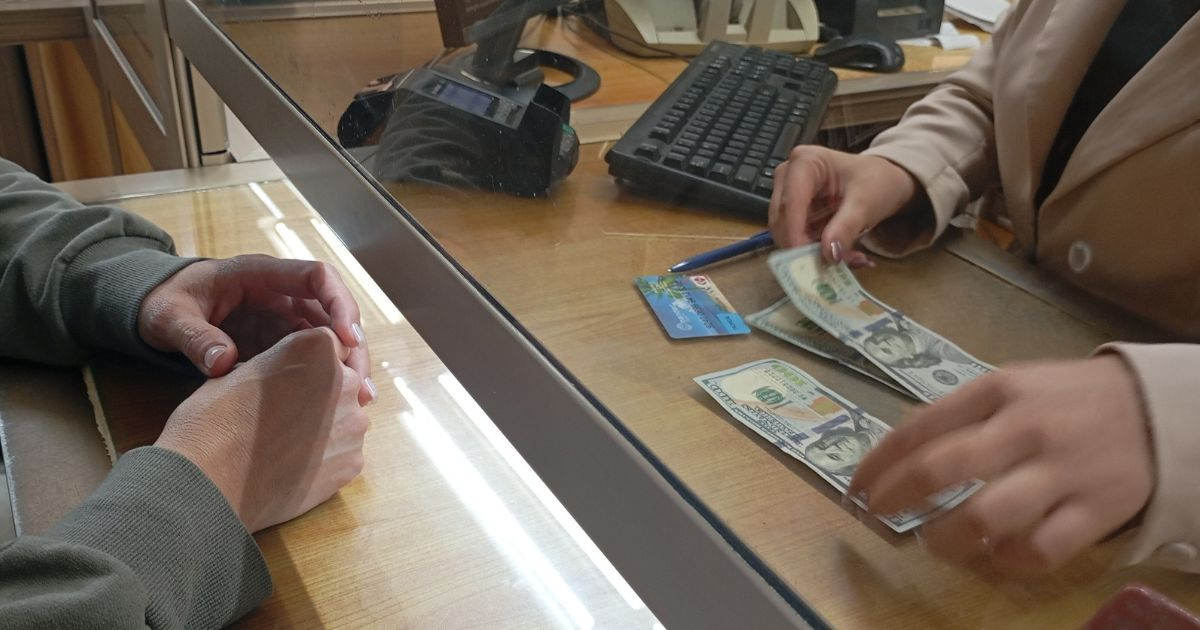
Fincimex announced this Tuesday that remittances sent from abroad can be received in cash in US dollars directly at the Currency Exchange offices (Cadeca).
The regime presented the measure as an expansion of options for Cubans receiving money from abroad.
The announcement, made through the entity's Facebook profile, comes amid a 70% collapse in formal remittances compared to 2019, with the main channels for sending money from the United States being blocked or more expensive.
These are the seven key points to understand what really changes and what remains the same.
1. What exactly did Fincimex announce?
Fincimex announced that remittances sent from abroad can now be received in cash in US dollars at the offices of the Currency Exchange (Cadeca).
The entity clarified that if the remittance was sent to be paid in cash, it would only be paid in that manner. This is not a new sending channel, but rather a new physical currency collection point.
2. What is the Classic Card and how does it work?
When cashing out at Cadeca, beneficiaries can deposit all or part of the money onto the Clásica card, a prepaid card that can only be recharged in dollars, managed by Fincimex and CIMEX.
It costs four dollars, is used in state-owned stores such as CIMEX, Tiendas Caribe, and Trimagen, and offers discounts ranging from 4% to 10%.
It does not allow online purchases or withdrawals in dollars; the balance can only be converted to Cuban pesos. From April 2025, it allows direct transfers between Classic cards in dollars.
3. Which shipping channels are suspended or restricted?
Western Union indefinitely suspended money transfers from the United States to Cuba in February 2025, following the sanctions imposed by the Trump administration against its Cuban partner Orbit S.A.
Since then, the formal channels from U.S. territory have practically closed. Formal remittances have fallen by 70% compared to 2019, when Cuba received more than 2,055 million dollars.
Now you will be able to receive money at Cadeca, but there are important details missing in the announcement from the Cuban State.
4. What is Orbit and why is it on the blacklist?
Orbit S.A. is a licensed remittance operator of the Central Bank of Cuba, operating from Europe and Canada, linked to GAESA.
The United States Department of State included it in the Cuba Restricted List effective March 10 of 2025, which prohibits direct financial transactions with entities linked to Cuban military, intelligence, or security services.
5. What is the new 1% tax in the United States?
As of January 1, 2026, the 1% tax on remittances approved in Trump's budget legislation is in effect. It taxes transfers made in cash, postal money orders, or cashier's checks from the United States to abroad, including Cuba.
It does not apply to bank transfers or credit or debit cards issued in that country, which further increases the cost of formal money transfers to the island and pushes towards informal channels.
6. What percentage of the economy does GAESA control?
Fincimex and CIMEX, the entities behind the Clásica card and Cadeca, belong to GAESA, the Cuban military conglomerate that controls approximately 40% of the island's economy and 95% of foreign currency financial transactions.
Their income exceeds 3.2 times that of the State Budget annually. Every dollar that comes through Cadeca or is deposited on a Classic card passes through structures controlled by the Armed Forces.
7. What real options are left for sending money to Cuba?
In the face of the collapse of formal channels, Cuban families are turning to mules, cryptocurrencies, and transfers to third countries. The new announcement gives hope to many Cubans who could receive remittances.
However, Fincimex's statement does not detail key aspects such as: the remittance companies responsible for this service, the applied commissions, the exchange rates to be used, or the exact procedure for sending money from abroad. Omitting these details has raised questions among potential users of the service.
From abroad, it is also possible to top up the Classic card through platforms like Tocopay.com, available since 2024.
GAESA, for its part, has opened 85 stores that accept only cash dollars, with margins of 240% and prices up to four times higher than those of major U.S. chains, consolidating its control over every dollar that enters Cuba.
Filed under: