
Related videos:
The decision didn’t begin at sea. It started much earlier, in silence, with the accumulated weight of a life that no longer offered any escape.
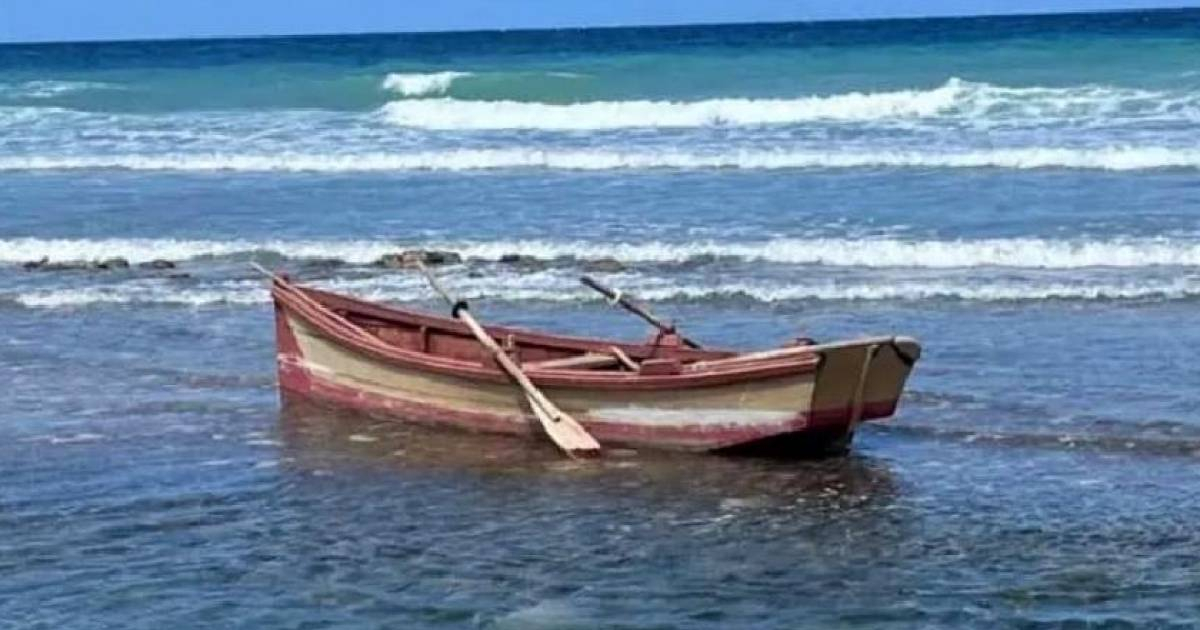
For days, a group of men worked hidden among the mangroves in the interior of Cuba, assembling a precarious boat piece by piece with whatever they could find: wood, scraps of metal, fiberglass, and a recycled engine. Each plank placed was also a gamble. Every move carried the risk of arrest.
It was not their first attempt. They had already failed seven times, and in doing so, had lost money, time, and opportunities. But, above all, they had accumulated a certainty: staying was no longer an option.
The account, reported by Cayman Compass, reconstructs the journey from the perspective of one of the migrants, who chose to be directly involved in every step of the process, from funding to construction, in order to prevent another failure.
The departure happened at night, in a hurry. The authorities were already searching for them. The vessel wasn't even fully ready when they pushed it towards the river, dragging it by hand through obstacles and shallow waters. They couldn't start the engine. They could only move forward in silence.
At dawn, they reached the sea, and that's where the worst began.
The boat crashed against a coral and was seriously damaged. Out of control and with no clear direction, they had to jump into the open water to avoid losing everything. They swam, pushed, and repaired as best they could. Even one of them, who didn't know how to swim, jumped in as well.
When they managed to regain their course, the sea changed. Storms began to raise waves that surrounded them completely. The engine failed shortly afterward. A minimal error, a damaged part, was enough to leave them practically without propulsion.
In the midst of darkness, they improvised a candle. They navigated with a portable GPS, rationing food and water, taking turns to sleep, and constantly bailing out the water that kept coming in.
Fatigue began to break them down.
Some panicked. Others tried to stay calm. The tension was not only physical; it was mental, emotional, collective. There was no room for fear, only for moving forward.
For days, they moved forward like this. Without guarantees. Without certainties. They passed close to dry land at one point, but could not reach it. Seeing it and being unable to arrive was yet another blow.
By the fourth day, exhaustion was complete. The body barely responded. The mind oscillated between hope and resignation. Then the strongest storm arrived.
The waves lifted the vessel and let it fall uncontrollably. Some were convinced they would not survive. But they endured. And finally, land appeared. Grand Cayman.
The arrival brought immediate relief: water, food, outstretched hands from the shore. But it also marked the beginning of another uncertainty. Because the journey did not end there. It was simply changing its setting.
From the sea to an unknown migration system. From the struggle to survive to the struggle to be able to stay. And behind it all, the weight of the decision made: leaving behind family, home, the life built. That is the true breaking point.
Because stories like this are not isolated. They are part of a reality that is once again becoming tense in the Caribbean. In the Cayman Islands, authorities are watching with increasing concern what might come next.
Vice Governor Franz Manderson recently warned about the possibility of a massive exodus of Cubans if the crisis on the island worsens, especially given the risk of an energy collapse that could further deepen shortages and power outages.
“How are we going to manage… if thousands of Cubans arrive in a short period of time?”, the official asked, recalling that in 1994 more than a thousand migrants arrived at the archipelago during another crisis.
Today, that scenario is back on the table.
While contingency plans are being developed in the offices, pressure is mounting in Cuba. For many, uncertainty is no longer a future possibility, but a daily reality.
And when life becomes unbearable, the sea —once again— emerges as the only way out.
Even if it means risking your life in an improvised boat. Even if it means leaving everything behind.
Filed under: