
Related videos:
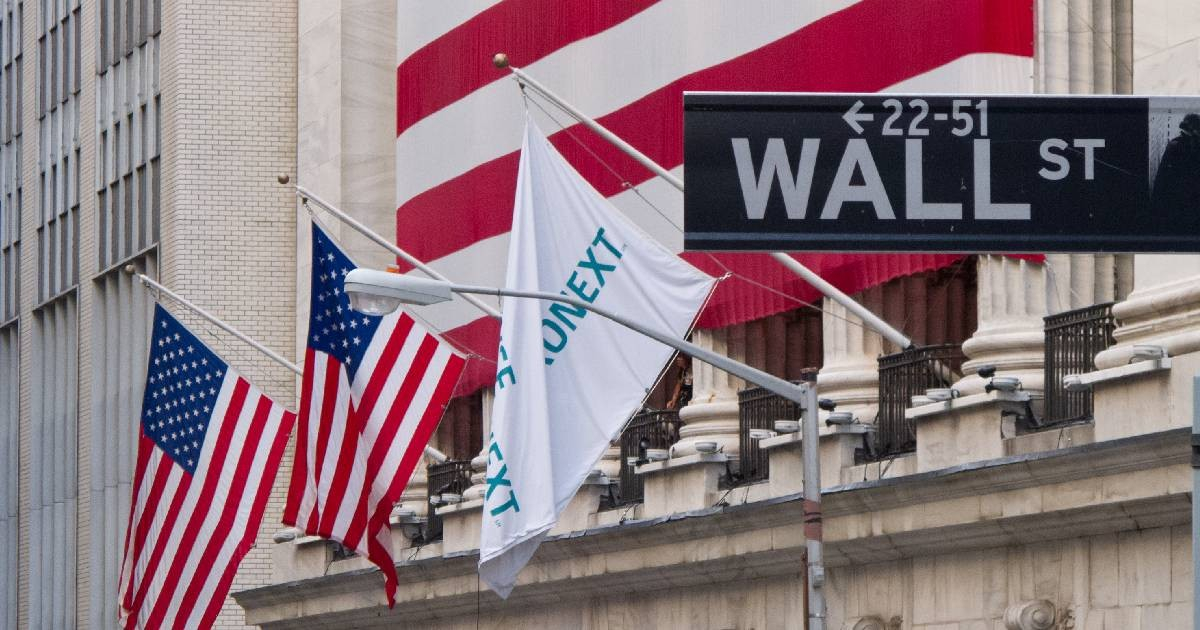
Wall Street started strongly this Wednesday after President Donald Trump announced on Tuesday night a two-week ceasefire with Iran, an agreement that includes the reopening of the Strait of Hormuz and sparked a relief rally in global markets.
The Dow Jones Industrial Average rose more than 1,300 points, or 2.9%, reaching 47,880 points, its highest level in over a month. The S&P 500 gained 2.5% to reach 6,773 points, while the Nasdaq Composite surged 3.5%, making it the index with the largest increase of the day.
Trump published the announcement on Truth Social an hour and a half before his own ultimatum at 8 p.m. on Tuesday: "Agreement to suspend bombing and attacks on Iran for a period of two weeks. This will be a reciprocal CEASEFIRE! The reason is that we have already met and exceeded all military objectives, and we are very advanced in a definitive agreement for long-term PEACE with Iran."
The Iranian foreign minister Abbas Araghchi confirmed the acceptance of the agreement and specified that "during a period of two weeks, safe passage through the Strait of Hormuz will be possible through coordination with the Iranian Armed Forces."
Oil prices plummeted with the prospect of the Strait reopening, through which 20% of the world's crude supply passes. Brent crude fell by more than 16% to $93 per barrel, while U.S. benchmark crude (WTI) dropped nearly 18% to $94, both falling below the $100 mark for the first time in weeks, down from levels of $110 during the conflict.
The drop in oil prices reduced inflation expectations and dragged down the yield of the 10-year Treasury bond, which fell nine basis points to 4.25%. The dollar index declined by 1.2% below 100, erasing all gains accumulated since March 3rd.
The French CAC 40 rose by 4.5%, the German DAX nearly 5%, and the British FTSE 100 by 2.9%. In Asia, the Nikkei 225 in Japan closed up 5.4% at 56,308 points. US airlines benefited from the drop in fuel prices: Delta and United increased by more than 12%, and American Airlines rose by 10%.
However, analysts warned about the fragility of the agreement. Jorge León, head of geopolitical analysis at Rystad Energy, noted that "prices dropped from 110 to 95 dollars, which is a significant decline, but if you look at the absolute level, prices remain at 95 dollars per barrel. I think the market is becoming skeptical about a fragile ceasefire. I don’t think this is over."
Tim Waterer, chief analyst at KCM Trade, agreed that "the ceasefire lasts only two weeks, and the markets will be very attentive to see if maritime traffic through the Strait of Hormuz normalizes as promised and if the fragile truce can pave the way for a more lasting peace agreement."
The positions of both sides remain very far apart on key issues: Washington demands the complete dismantling of Iran's nuclear program, while Tehran insists on the recognition of its right to enrich uranium. Formal negotiations were scheduled to take place in Islamabad starting April 10.
Filed under: