
Related videos:
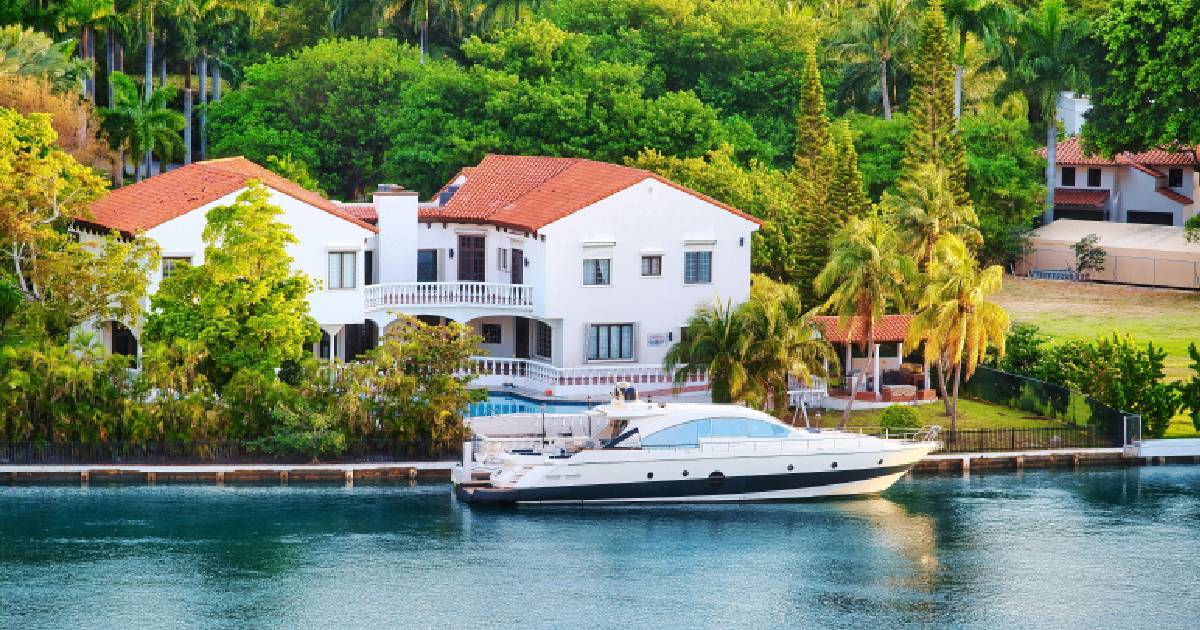
The influx of billionaire tech and finance moguls fleeing from California and New York to Florida has created a problem that not even their vast wealth can solve: there isn't enough space in the ports to dock their megayachts.
The coastal corridor that runs from Miami to Palm Beach has become the new economic and political epicenter of the United States, driven by two powerful engines: the absence of a state income tax in Florida and the presence of Donald Trump at Mar-a-Lago, which has made being close to the president strategically valuable.
The names are well-known.
Jeff Bezos owns the Koru, a 125-meter long sailing yacht with three masts measuring 70 meters each, which cost him 500 million dollars.
Sergey Brin, cofounder of Google, owns the Dragonfly, measuring 142 meters and costing 450 million dollars, the largest private yacht owned by a U.S. citizen.
Mark Zuckerberg was not satisfied with just one: he purchased two superyachts, the Launchpad and the Wingman, for a total of about 330 million dollars, as recently detailed in a post by the site Xataka.
The three have mansions in Florida. And all three face the same problem: they don't fit on the dock.
The Koru of Bezos could not dock at Port Everglades alongside other luxury yachts and had to share space with oil tankers, paying around 2,400 dollars per day.
The Dragonfly by Brin docked at Museum Park in downtown Miami.
Premium dockage in South Florida has become so scarce that some are priced at up to half a million dollars a year just for the access rights, and certain spaces are sold for as much as a million dollars even before the boats are built.
As reported by Fortune, the South Florida is bursting at the seams.
The response from some ultra-wealthy individuals has been to build their own private ports.
Ken Griffin, founder of the hedge fund Citadel and a resident of Florida since 2022, obtained in November 2025 the approval from the Miami Beach Planning Board to build a private marina on Terminal Island.
The project includes six deep-water docks for superyachts over 91 meters, a crew pavilion with a gym and sauna, a pool, a lounge, and space for 300 guests.
The reason is simple: their superyacht Viva, measuring 94 meters, does not fit in the dock of their mansion on Star Island.
Neisen Kasdin, legal representative of Griffin and former mayor of Miami Beach, described the project as an extension of his residence where his larger boats can be docked.
Number of millionaires on the rise in Miami
Behind this nautical competition lies a geographical redistribution of American economic power.
Miami now has more than 38,800 millionaire residents, according to the World's Wealthiest Cities Report 2025 by Henley & Partners.
Between 2014 and 2024, the number of millionaires in the Greater Miami area increased by 94%, the largest percentage increase in the entire country.
The fiscal background is crucial.
Bezos officially moved to Miami in November 2023, saving an estimated 610 million dollars in capital gains taxes.
Larry Page and Sergey Brin left California before January 1, 2026: the wealth tax that California plans to vote on in the fall would have cost them $13 billion and $12 billion, respectively.
The saturation of the docks is just the tip of the iceberg.
The massive influx of extreme wealth is driving up the real estate market, making basic services more expensive, and displacing middle- and low-income residents.
The report from Henley & Partners warns that the success of this capital attraction strategy presents the challenge of maintaining equitable access to urban life.
Meanwhile, Florida's port infrastructure—with options like Island Gardens Deep Harbor, capable of accommodating vessels up to 170 meters, or the 40 million dollars renovation of the Port of Palm Beach in 2022—continues to be inadequate for a fleet of megayachts that keeps growing.
Filed under: