
Related videos:
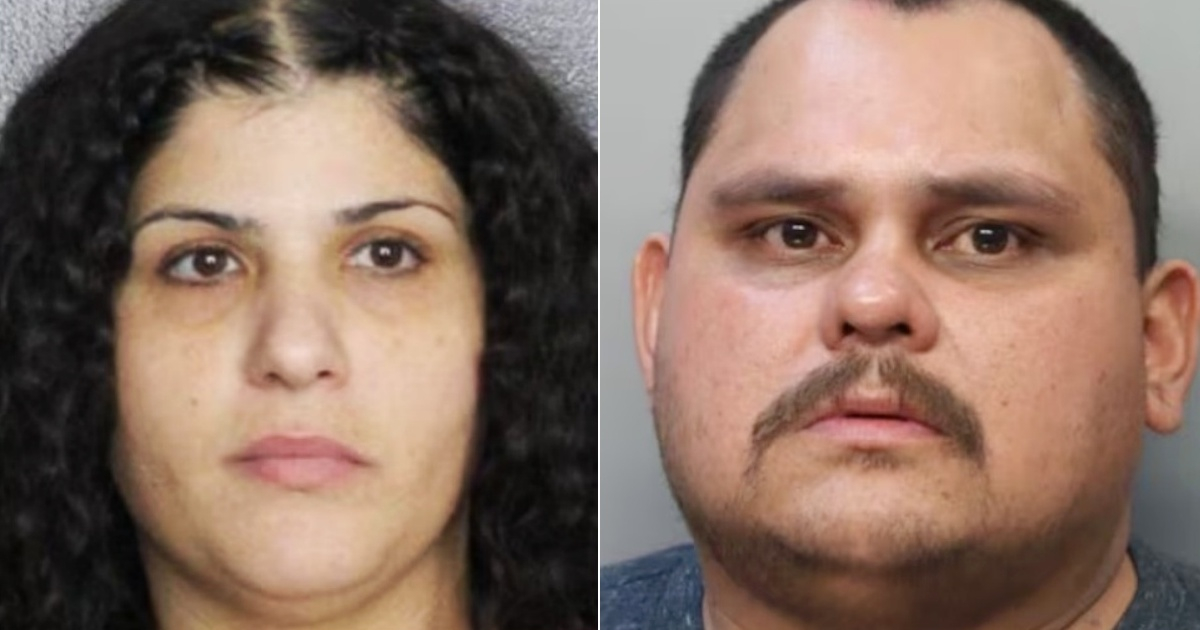
A man and a woman linked to the Sinaloa Cartel have recently been sentenced to long prison terms for the murder of the Cuban Julio González, which took place in November 2022 in a hotel room in Miami Springs.
The U.S. Attorney's Office for the Southern District of Florida reported that Tsvia Kol (37 years old) and Jimmy Sánchez (38) received sentences of 230 months (19 years) and 330 months (27 years) in prison, respectively, after pleading guilty to using a firearm to cause death and participating in a drug trafficking conspiracy.
According to a statement from the authorities, the crime was directly linked to a missing shipment of methamphetamine.
Kol and Sánchez "murdered a man from Miami in connection with a missing package that contained approximately 5 kilos of methamphetamine," valued at around $90,000.
Both believed that the victim had stolen the drugs, but in reality, the authorities had seized them.
A deadly trap in a hotel near the airport
The victim, identified as Julio González, 46 years old and a resident of Hialeah Gardens, was summoned to a room at the Aladdin hotel, a establishment located a short distance from Miami International Airport.
According to the investigation, the accused planned the meeting as an ambush.
"The defendants armed themselves, laid a trap for the victim, and committed a murder over a missing package of drugs that had already been seized by the authorities," explained federal prosecutor Jason A. Reding Quiñones.
Inside the room, the situation escalated quickly.
González managed to call 911 in a desperate attempt to seek help.
"The recording of the 911 call captured the sounds of a fight and gunshots," details the official statement.
The hotel’s security cameras recorded Kol and Sánchez fleeing after the shooting.
The victim's body was not discovered until the following morning.
Sánchez admitted to having fired the weapon, while Kol acknowledged his role as an accomplice, even handing the weapon to the attacker inside the room.
The deputy prosecutor A. Tysen Duva emphasized that "drug trafficking is a dangerous business that too often ends in death."
In the same vein, Reding Quiñones was even more emphatic: "This started as a drug deal that went wrong and ended in an execution."
The FBI also emphasized the brutality of the case. For drug enforcement authorities, the crime reflects a recurring reality.
“Drug trafficking and violence, unfortunately, go hand in hand,” stated Miles Aley, special agent in charge of the DEA in Miami.
Links to the Sinaloa Cartel
Investigations cited by local media indicate that Kol was "a well-known high-ranking member of the Sinaloa cartel," with a background in an organization dedicated to drug trafficking and money laundering. She was even identified as the ex-wife of another prominent member of the criminal group.
The case also revealed a prior coordination before the crime: Sánchez traveled from California to Miami on the night of the murder, after being summoned by Kol to carry out the plan.
The victim, who according to testimonies was involved in receiving packages, came under suspicion within the criminal network. Less than two weeks after the seizure, he was summoned to the hotel where he would lose his life.
In one of the most disturbing signs of the case, González had warned about the danger he was facing.
Days before the crime, she posted an image of Kol on social media along with a message: "If something happens to me, it's her."
Federal justice and deterrent message
The case was investigated by multiple agencies, including the FBI, the DEA, the Postal Inspection Service, and local authorities in South Florida.
According to the prosecutors, the convictions aim to send a clear message. “The prison sentences reflect the seriousness of that violence,” stated Reding Quiñones, who emphasized the need to “keep violent criminals off the streets and protect our community.”
From the Postal Inspection Service, they also emphasized the nature of the crime: “In this case, the accused decided that the contents of a package were worth more than the life of the victim. It is a decision they will pay for.”
Filed under: