
Related videos:
The health authorities of Santiago de Cuba acknowledged this week a concerning deterioration in the hygienic and epidemiological conditions in the province, with levels of infestation by the Aedes aegypti mosquito significantly above the average of the last five years, inadequate environmental sanitation, and the distribution of unchlorinated water to a large part of the city.
The recognition took place on April 9, during the Provincial Health Council convened by the Provincial Center for Hygiene, Epidemiology and Microbiology (CPHEM) and the Provincial Department of Health Promotion and Disease Prevention, reported the official newspaper Sierra Maestra.
One of the most serious problems acknowledged at the meeting is that the Quintero water treatment plant, which supplies more than 60% of the water to the provincial capital, releases approximately 3,240 cubic meters per minute of unchlorinated water during power outages, due to generator failures related to fuel shortages.
The chlorination systems also experience breaks, which forces reliance on manual application as an alternative, the source indicated.
The authorities also acknowledged that they have been unable to carry out fumigation or focus control due to issues with fuel supply, despite having completed larviciding in the early months of the year, they assured.
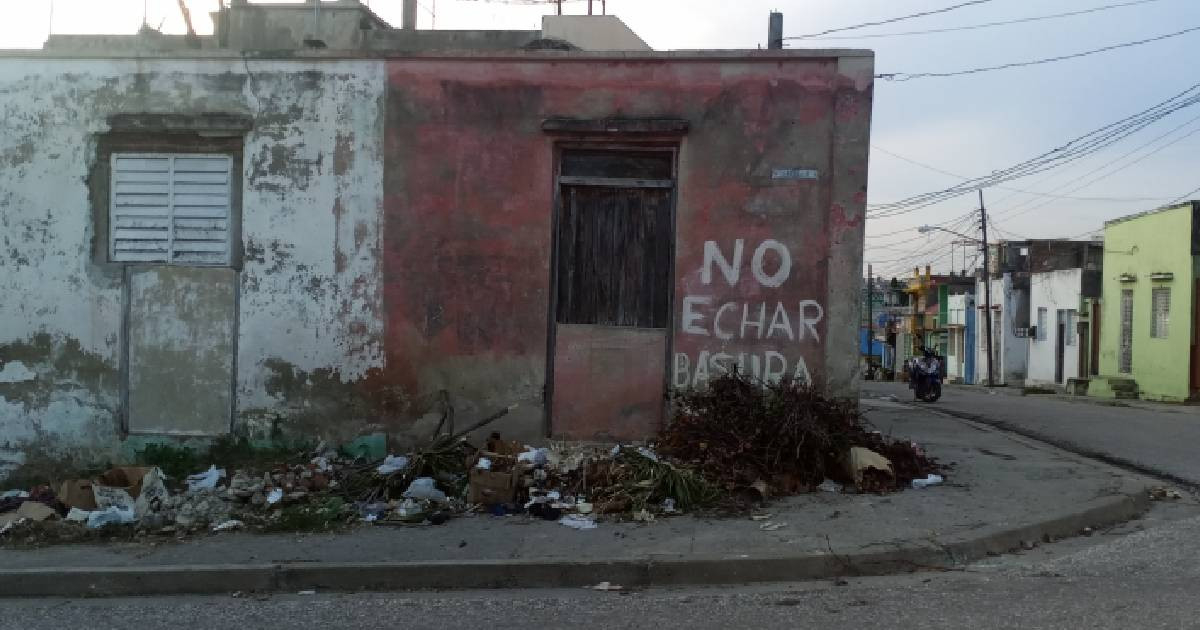
The environmental sanitation was rated as inadequate, with water leaks, blocked pits, and overflows that persist without a solution in various areas of the province.
Despite the described situation, the authorities assured that "the epidemiological situation of the province remains stable" and that "arboviral diseases, acute diarrheal diseases, and acute respiratory infections are within the endemic corridor of the Caribbean in safety."
In the Council, concerns were also raised about the global increase in tuberculosis, a disease that has surpassed AIDS as a cause of death and is notably present in Santiago de Cuba and Havana.
It was also reported that 322 samples were taken to detect cholera so far in 2026, all with negative results.
The official admission comes in a context of accumulated health crisis. In January 2026, independent journalists
In March, residents of the Vista Hermosa neighborhood reported flooding with sewage that had entered more than 10 homes for over two months, with no solution from the authorities.
On April 7, independent journalist Yosmany Mayeta Labrada reported that the "La Colonia Española" children's hospital in Santiago de Cuba lacked distilled water, preventing complementary examinations for hospitalized children.
The United Nations Children’s Fund (Unicef) has reported that 50 water supply systems in the province are still non-functional.
The crisis is part of a broader national decline, considering that 87% of the water supply system in Cuba relies on the National Electric System, which has experienced six total blackouts in a year and a half, and whose deficit soared to more than 1,800 megawatts following the shutdown of the Antonio Guiteras thermoelectric plant on April 6.
Filed under: