
Related videos:
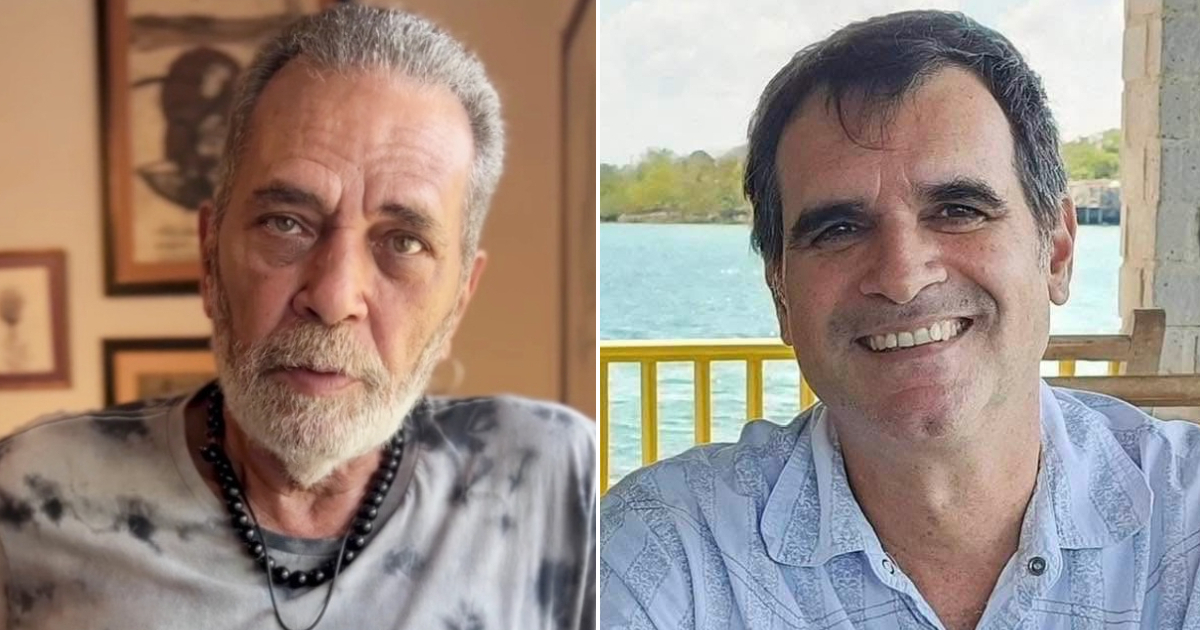
The Cuban actor Luis Alberto García Novoa reacted on Facebook to the expulsion of professor Abel Ernesto Tablada de la Torre from the José Antonio Echeverría Technological University of Havana (CUJAE), a decision that has sparked debate both within and outside the academic community.
In his post, the actor described what happened with a powerful expression: “SHAME! SHAME! A THOUSAND TIMES SHAME!!!”
In the same text, García questioned the sanction against the academic and defended the right to express critical opinions without facing professional reprisals. "Civility cannot be condemned. Nor stigmatized. Nor persecuted. Never. Ever," he wrote.
The actor also defended debate as an essential part of public life and rejected the idea that differences in opinion should be punished with administrative measures. “Ideas that are not shared can be scrutinized against others. Ideas are not bombs; they don’t attack with bullets. They don’t kill,” he stated.
In another part of his message, he added: “DEBATE should be revered, not hit with a bat.” He also questioned the legitimacy of punishing opinions expressed publicly and responsibly. “Confusing decency and adherence to truth expressed in signed public opinions with stances of betrayal or apostasy is a mistake of immeasurable proportions,” he stated.
He also warned about the impact these practices have on respecting the country's own laws. "The Constitution loses its luster and is reduced to a 'charter', because by disregarding it and overriding it, they strip it of its capital letters and its very purpose," he wrote.
At the end of his message, the actor also shared the report from the Observatory of Academic Freedom regarding the expulsion of Professor Tablada, which explains that the academic was removed from teaching at the José Antonio Echeverría Technological University, and calls for solidarity in response to what they describe as a violation of academic freedom in Cuba.
The actor's reaction occurs shortly after architect Abel Ernesto Tablada de la Torre was removed from teaching at the Faculty of Architecture of CUJAE after posting critical reflections on his Facebook profile about the country's situation and the university system.
In a message directed to his students, the teacher explained that some of those reflections "had not been to the liking of the University administration."
Among its most discussed publications is a text titled The University and Resilience, where it describes the challenges faced by Cuban universities, including power outages, transportation issues, low salaries for teachers —which it placed between 10 and 15 dollars a month— and material shortages that affect both professors and students.
"Excessive resilience can lead to accepting as normal conditions that should not be prolonged for so long," she wrote.
The expulsion of the teacher has also provoked reactions within the university community itself. Students from the Faculty of Architecture sent a letter to the rector of the institution expressing their dissatisfaction with the non-renewal of the teacher's contract.
The document argues that the measure is disproportionate and that punishing an educator for personal opinions expressed on social media contradicts the principles that should govern a higher education institution.
They also noted that the reason for the decision is not related to the professor's professional performance or ethical conduct in the classroom.
Tablada de la Torre is an architect and a tenured professor who has spent many years engaged in teaching and research, focusing on bioclimatic design and the restoration of the historic center of Havana. His career includes academic stays at foreign universities and participation in specialized events.
The case has also drawn attention due to a familial connection: the professor is the brother of diplomat Johana Tablada, a Cuban government official who has denied the existence of political repression on the island for years.
The expulsion has rekindled the debate about the limits of critical thinking within Cuban universities and the actual latitude that professors and researchers have to publicly question the situation in the country.
In his post, García emphasized that expressing different opinions should not lead to sanctions or loss of employment. “For thinking differently, whether by kilometers, meters, or millimeters, a human being should not end up in prison, mistreated, or fired from the job that sustains them,” he wrote.
It is not the first time that the actor has publicly spoken out on issues related to freedom of expression or the repression against critical voices in Cuba. In February, following the arrest of young Kamil Zayas Pérez, a member of the independent project El4tico, García stated on social media: “It is terrible to imprison ideas, whatever they may be.”
Days later, he also reacted to the arrest of historian and activist Alina Bárbara López Hernández in Matanzas, in a message directed to the State Security that ended with a single word: “Stop.”
The actor has also questioned the official discourse that criminalizes critical thinking. In another post, he responded to a statement made by an official who said on state television that “to doubt is to betray,” a phrase he described as “one of the most fascistic statements I have heard in years”.
The expulsion of Professor Abel Tablada, the student protests, and the reactions from public figures such as Luis Alberto García have once again brought academic freedom and the right to express critical opinions within Cuban institutions to the forefront of the debate.
Filed under: