
Related videos:
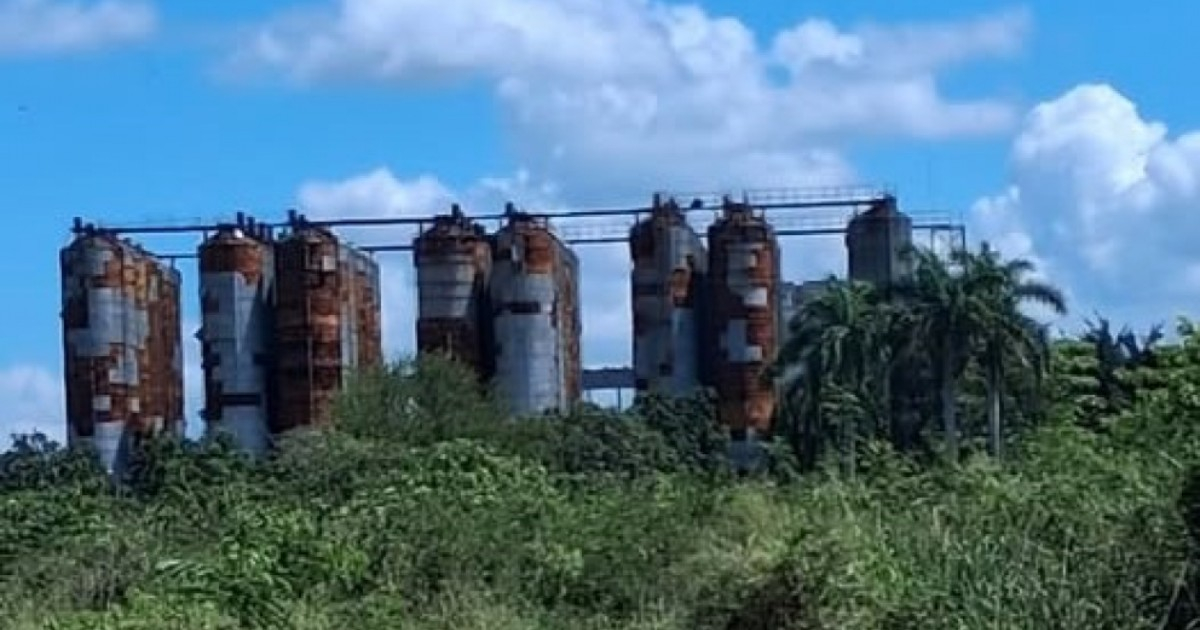
A photograph showing the current state of the Tínima brewery in Camagüey has sparked a wave of outrage among Cubans both on and off the Island, in light of the complete neglect of what was once one of the province's most emblematic industrial projects.
The image, posted on the Facebook group "Maravilloso Malecón", shows between six and eight large industrial silos or tanks with severe rust and advanced deterioration, tropical vegetation that has invaded the facility, deteriorated dirt paths, and scattered debris.
The factory was inaugurated on December 23, 1985, by Fidel Castro, who described it as "the most modern and beautiful brewery in Cuba, built with solidarity and heroism in record time." Constructed with technology from the former German Democratic Republic, it reached a production level of up to 500,000 cases per month in 1989, becoming a symbol of industrial pride for Camagüey.
Its name was chosen by the people through a popular vote as a tribute to local identity. It had three bottling lines for 350 ml and 500 ml bottles, with a potential capacity of one million hectoliters per year.
Decades of state negligence have reduced that emblem to ruins. The deterioration is not just aesthetic: on July 12, 2022, an ammonia leak at the plant forced the evacuation and hospitalization of 12 students from the Máximo Gómez Báez pre-university, adjacent to the facility. The incident highlighted years of underinvestment.
Those escapes have been described as "sporadic but a danger that has threatened students for decades," directly attributed to a lack of maintenance.
The comments from Cubans on the post reflect a mix of nostalgia, outrage, and political denunciation. "I can't believe that's the Tínima brewery, I can't believe it, I lived in Camagüey when that brewery was founded," wrote an internet user. "These are the results of the Revolution's achievements," sarcastically remarked a Cuban from Germany.
An engineer was more straightforward: "Everything is like this, destroyed. Cuba neither produces nor delivers to see if anyone makes it produce." A person from Avila pointed to the political background of the neglect: "The more misery, the easier it is to control the flock we have been turned into."
Another internet user who visited the plant in its last years of operation recalled: "What a crime, I visited it several times, it was already in its final days of operation. The barrel area was very outdated." A resident of Havana summarized the logic behind the collapse with a rhetorical question: "Is there any place that can last without repairs or maintenance, while only its leaders focus on political meetings, blaming someone for their incompetence, and applauding nonsense?" "They destroyed the entire country," another person concluded.
In November 2024, during the Havana International Fair, an agreement was announced between the Cuban company ALIMCOR S.A. and the Spanish brewery Damm to relaunch the Tínima brand, restore the plant, and create at least 300 direct jobs.
Damm would have even recovered the original recipes of the classic and strong beer. However, at the time of the announcement, the agreement was "in the final stages of processing," and there is no evidence that it has progressed in any concrete way, while images of rusting silos and invasive weeds continue to circulate on social media, fueling the public's skepticism.
The Tínima case is not an isolated one.
The industrial collapse in Cuba affects everything from sugar mills - like the Primero de Enero, which in August 2025 was operating without power, without salaries, and without a harvest - to public transportation, where Havana terminals house dozens of dismantled and rusted buses with only 35% of the planned services executed.
Filed under: