
Related videos:
Sandro Castro, grandson of Fidel Castro, finds himself at the center of controversy once again after sharing on social media an AI-generated image of himself drinking beer alongside Barron Trump, son of U.S. President Donald Trump.
In the image, he is seen drinking a Cristal beer while his "companion" has another drink.
"Consort, what you need to take is Cristachch," is the lighthearted message that accompanies the photo.
The publication has been interpreted by many as yet another provocation amid the severe crisis that Cuba is experiencing.
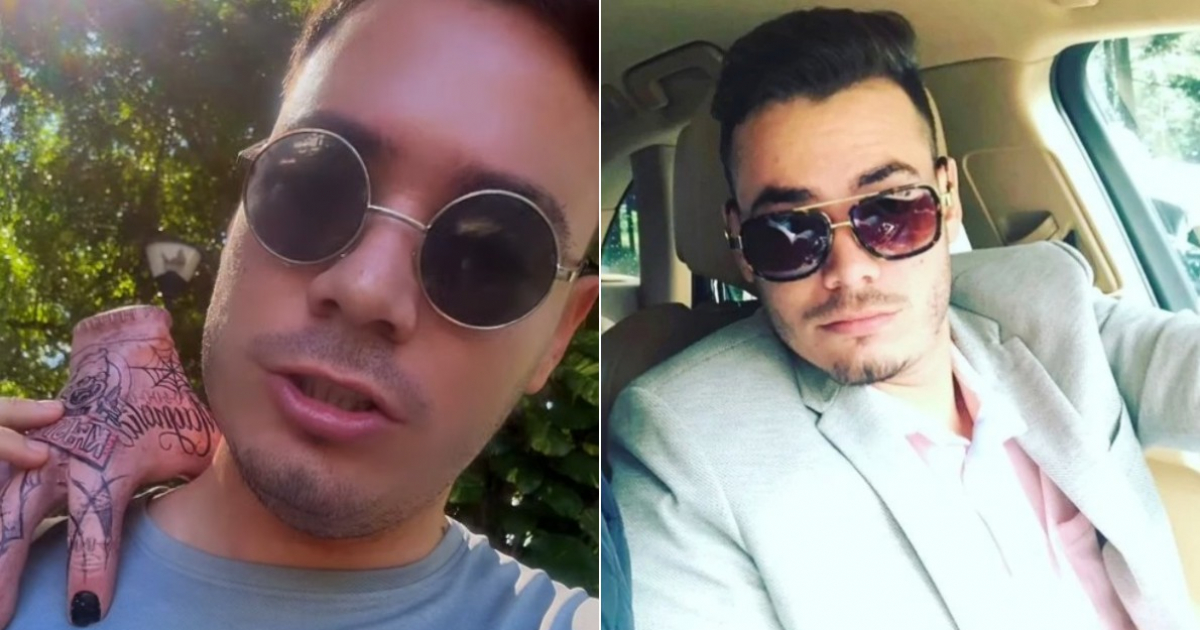
Previously, Castro had released a video in which, with his usual eccentric style, he interacts with a toy shaped like a hand that he calls "Magnolia," and sarcastically comments on the energy crisis, the lack of fuel, and rumors regarding humanitarian aid.
With a mocking tone, Sandro says, "Oh, are little boats coming? Damn, Magnolia, thanks for the hopes. Just look, in Cuba hope was eaten by a goat," he says, trivializing a situation that affects millions of Cubans.
This is not the first post by Sandro in which he includes a member of the Trump family.
Last week, he shared a video featuring himself alongside an impersonator of Donald Trump who suggested the idea of "buying Cuba."
In the sketch, the character suggested transforming the Malecón in Havana into a kind of "Riviera for billionaires," an evident contrast with the precariousness experienced by the country.
The young man responded to the proposal and joked about the everyday limitations of the country, such as issues with phone coverage, the lack of transportation, and the scarcity of resources.
The impunity of the sons and grandsons of dad in Cuba
This type of publication has been interpreted by many Cubans as a sign of disconnection from the reality of the country, where blackouts, food shortages, and a lack of basic services are part of daily life.
While a large part of the population faces extreme difficulties, the grandson of the former Cuban leader projects an image of carefreeness and privilege.
On social media, numerous users have criticized the tone of his content, considering it a mockery of the suffering of the people. His videos do not generate humor but rather anger, especially since they come from someone connected to one of the most powerful families in the country.
Others point out that their behavior demonstrates an impunity that is not accessible to the average citizen.
They claim that anyone else making similar comments or addressing the reality of the country with that level of exposure could face legal or repressive consequences.
A history of provocations and contradictions
Sandro Castro has built a digital presence based on absurd humor, provocation, and ambiguous references to the national situation.
Beyond the humorous appearance, these posts have been interpreted in various ways. Some see in them subtle criticisms of the system, especially when comments have been made about institutions like the Electric Union or when it has suggested mockery toward the ruler Miguel Díaz-Canel.
However, that possible interpretation does not eliminate the discomfort caused by their actions.
While millions of Cubans face prolonged blackouts, food shortages, and a collapsed economy, Fidel Castro's grandson is seen on social media playing with characters, drinking beer, and posting fictional images with international figures.
That duality—between supposed criticism and evident frivolity—is precisely what irritates many citizens the most. For them, Sandro Castro does not represent a genuine critical voice, but rather the reflection of a system where some can afford to turn the crisis into a spectacle.
Even those who try to find hidden messages in his posts acknowledge that his figure embodies a deep contradiction: while the country is sinking, he builds a digital narrative where the collapse becomes content.
Filed under: