
Related videos:
With the success of the Artemis II mission still fresh, NASA is already focused on Artemis III, the next stage of the program aimed at returning humans to the lunar surface for the first time since 1972, reported AP.
The Orion capsule successfully landed on April 10 in the Pacific Ocean, near San Diego, California, after nearly ten days of mission and a lunar flyby that set a new record for the maximum distance reached by humans: 406,773 kilometers from Earth, surpassing the historical mark set by Apollo 13.
Now the United States space agency is focusing its efforts on Artemis III, set to launch in mid-2027, although with radically different objectives than those originally announced.
On February 27, NASA Administrator Jared Isaacman confirmed that Artemis III will not conduct a lunar landing, but will instead focus on rendezvous and docking tests in low Earth orbit with commercial lander vehicles: SpaceX's Starship HLS and Blue Origin's Blue Moon.
The mission will also evaluate the AxEMU spacesuit, developed by Axiom Space, and will test the propulsion, life support, and communication systems of the landing modules before attempting to land on the Moon.
The role of Artemis III is comparable to that of Apollo 9 in 1969, which served as a crewed test of the lunar module in Earth orbit before the historic landing of Apollo 11.
The first crewed lunar landing of the program has been redefined as Artemis IV, tentatively scheduled for 2028, heading to the lunar south pole, where the presence of water ice opens the possibility of establishing permanent bases in the future, according to a statement from NASA.
Isaacman also announced that NASA plans to increase the cadence of Artemis missions, with at least one lunar landing expected each year starting in 2028, evaluating SpaceX and Blue Origin as landing module providers based on launch frequency.
Preparations for Artemis III are already underway: the lower segment of the core of the SLS rocket is in the Vehicle Assembly Building at the Kennedy Space Center, and the RS-25 engines arrived this April.
The crew of Artemis III has not been selected yet; NASA will announce the details closer to the launch date in 2027.
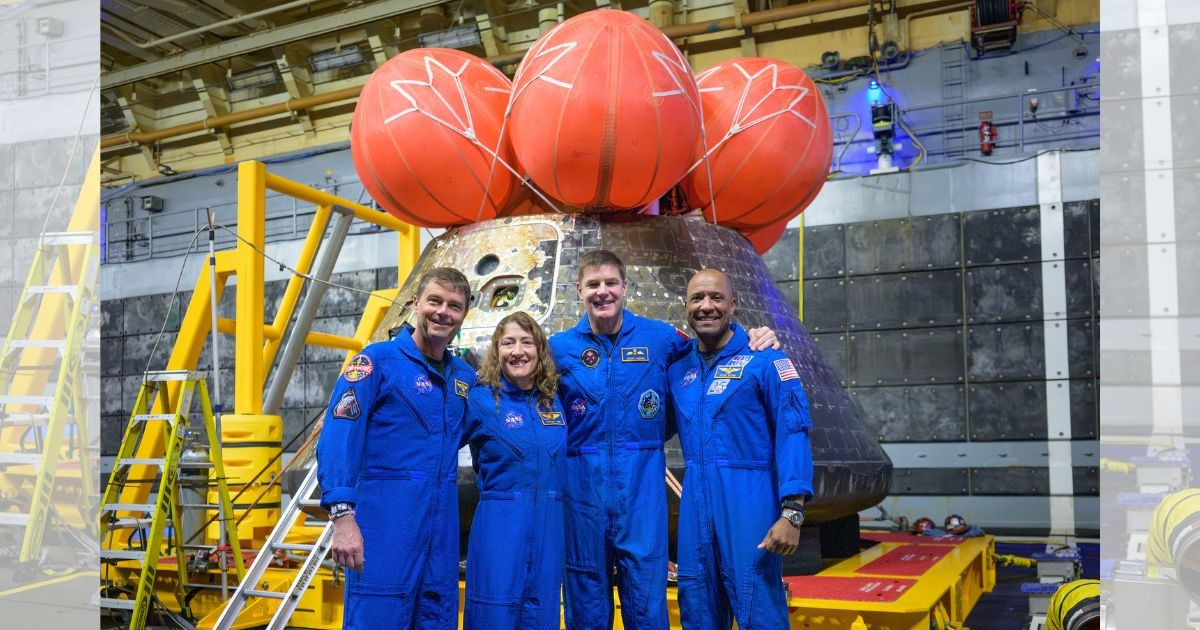
Artemis II, which launched on April 1 from launch pad 39B at the Kennedy Space Center with astronauts Reid Wiseman, Victor Glover, Christina Koch, and Jeremy Hansen, was the first crewed mission beyond low Earth orbit in over 53 years, since Apollo 17 in December 1972.
Isaacman summarized the ambition of the program when announcing the changes in February: "NASA will standardize vehicle configurations and plans for at least one lunar landing annually starting in 2028."
Filed under: