
Related videos:
The NASA requested on Thursday that the public avoid the landing area of the four astronauts from the Artemis II mission, scheduled for tonight at 8:07 PM Eastern Time in the Pacific Ocean, due to the risk posed by the debris from the Orion spacecraft during reentry.
The landing is expected to occur "a couple hundred miles" off the coast of San Diego, California, although the space agency has set an estimated range of 2,000 nautical miles (3,704 kilometers) in the Pacific for the impact zone.
Jeff Radigan, the lead flight director for Artemis II, issued a warning during a press conference: "We are working closely with the Department of Defense to recover the capsule, and it is a fairly large exclusion zone. So I would advise the public, please, to avoid the area. There are a lot of debris falling, and we are working with our recovery forces to ensure that they do not fall on anyone."
The remains of the spacecraft, such as parachutes and fragments of the service module, begin to descend 42 minutes before splashdown, when the crew module separates from Orion's service module.
After the landing, the recovery teams will need to wait between 30 and 45 minutes to approach the capsule, until the debris no longer poses a danger.
Branelle Rodríguez, head of the Orion Program for Artemis II, noted that "everything looks very good from the vehicle's perspective," and NASA anticipates favorable weather conditions in the area.
The capsule will enter the Earth's atmosphere at a speed of 25,000 miles per hour (40,233 kilometers per hour), after having covered more than 400,000 miles (643,000 kilometers) in ten days of the mission.
The recovery operation includes the ship USS John P. Murtha of the Navy, two Marine helicopters, seven monitoring aircraft, C-17 military planes from the Air Force ready for contingencies, and logistical support from Pearl Harbor base.
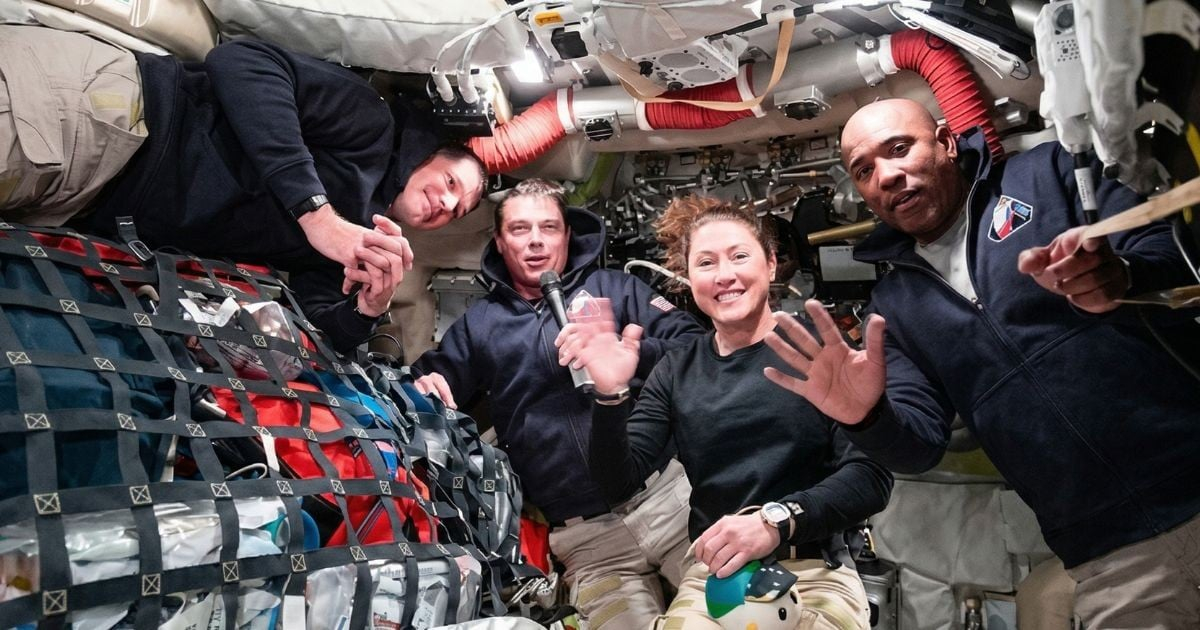
According to NASA, the four crew members —Reid Wiseman, Christina Koch, and Victor Glover from NASA, and Jeremy Hansen from the Canadian Space Agency— spent their last day in space preparing the spacecraft for their return.
Artemis II, launched on April 1 from platform 39B at the Kennedy Space Center aboard the SLS rocket, is the first crewed flight around the Moon in more than 50 years, since Apollo 17 in December 1972.
Last Sunday, the mission set a new historical record for maximum distance from Earth, reaching 252,757 miles (406,773 kilometers), surpassing the mark set by Apollo 13 in 1970.
After the water landing, the astronauts will be transported to the USS John P. Murtha for medical evaluations before flying to the Johnson Space Center in Houston.
NASA warned that the crew will take weeks to make statements to the press, as they must first undergo medical evaluations and spend time with their families.
Filed under: