
Related videos:
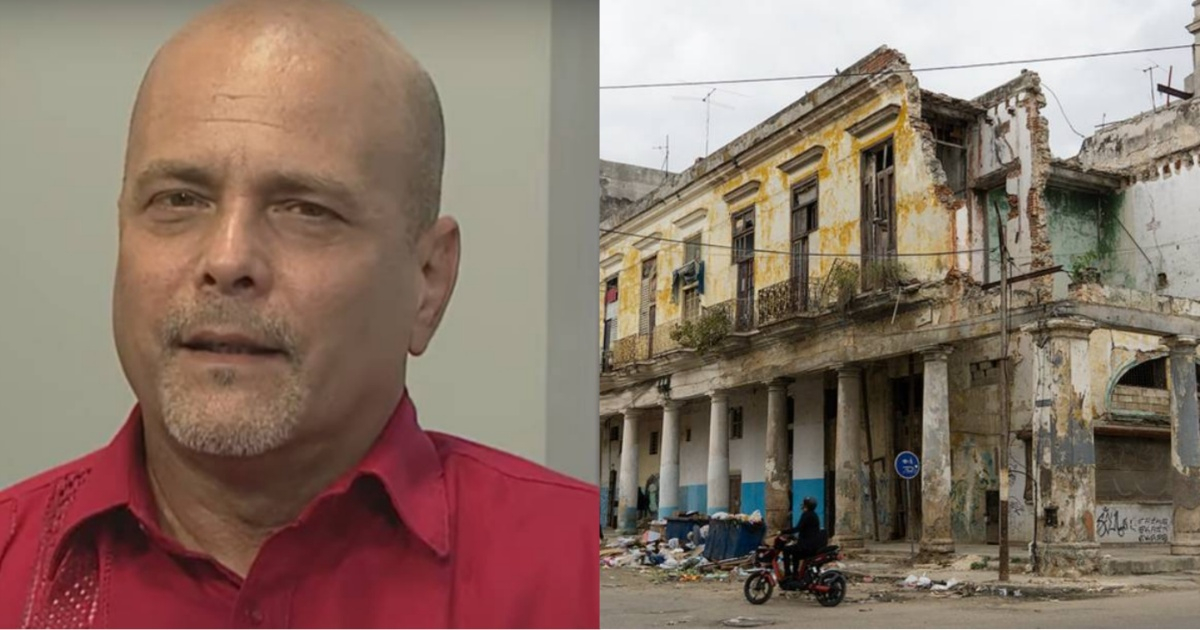
Gerardo Hernández Nordelo, national coordinator of the Committees for the Defense of the Revolution (CDR) and former spy for the Cuban regime, posted a photo of the National Capitol of Havana on his X account this Saturday, accompanied by the text "Beautiful Havana," sparking a wave of outrage among Cubans both on the island and abroad.
The post, which includes the hashtags #CDRCuba and #CubaNoSeRinde, also states that the city is "forbidden for citizens of #USA due to their government's 'embargo' against #Cuba," in a propaganda attempt that produced the opposite effect of what was intended.
The image shows the golden dome of the Capitolio —recently restored and home to the National Assembly— under a clear blue sky, a postcard that starkly contrasts with the reality faced by thousands of Havana residents daily.
While Hernández celebrates the architecture of the capital, Havana is experiencing an unprecedented crisis: daily blackouts lasting more than 15 hours, continuous collapses of residential buildings, a transportation collapse, and shortages of food and medicine.
Cubans quickly responded to the post, highlighting the stark contrast between the postcard image of the Capitol and the daily reality of a city in ruins, where electricity is a luxury and buildings are collapsing.
"Wow, yes, the Americans have a jealousy that, for God’s sake," said a Cuban.
"It seems that Havana is not very attractive; there are hundreds of thousands of Havana residents who have moved to other countries," added another.
In January of this year, two buildings partially collapsed in Old Havana in less than 24 hours, on Muralla and Teniente Rey streets. In March, authorities demolished the building of the Higher Institute of Design (ISDI) in Central Havana, built in 1860, after years of neglected abandonment.
The Communist Party officially recognized in January the collapse of basic services, housing, and infrastructure in the capital, while the streets of Old Havana appeared almost empty even during Holy Week, in an image that some compared to the worst moments of the pandemic.
"Everything is at a standstill here," described the situation in the capital a source quoted by Infobae earlier this month.
Tourism, one of the few sectors that the regime showcases as a front, fell by 30% in the first two months of 2026 compared to the previous year, with 112,642 fewer visitors in January and February.
Cubans wasted no time in responding to the post, highlighting the stark contrast between the postcard image of the Capitol and the everyday reality of a crumbling city, where electricity is a luxury and buildings are collapsing.
The publication follows a pattern in which each propaganda message ends up amplifying popular discontent. In recent weeks, the official had shown a Cuban sleeping on cardboard in Miami to attack capitalism, had joined defamation campaigns against independent artists, and had posed with a Soviet PKM machine gun proclaiming that "our people desire peace, but they will not be surprised by war."
The regime uses restored monuments like the Capitol as a showcase while the population lives without electricity, without water, and with crumbling buildings, a direct consequence of 67 years of communist dictatorship that have brought the Cuban capital to its worst state in decades.
Filed under: