
Related videos:
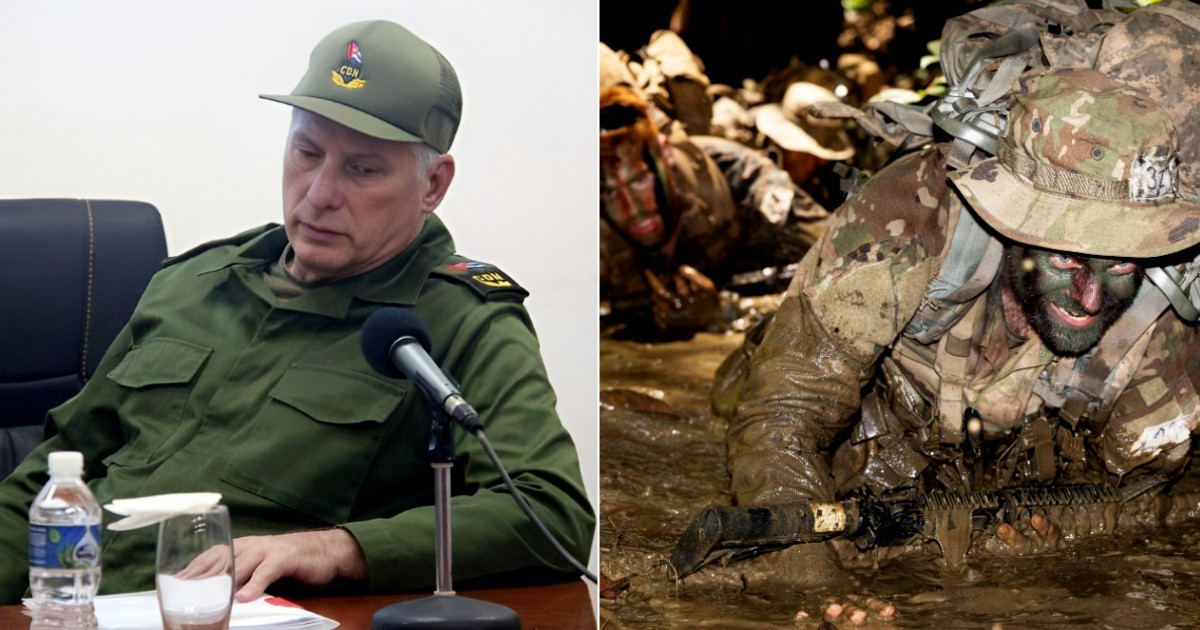
The Cuban leader Miguel Díaz-Canel issued a direct warning to the United States by stating that the island would respond with a guerrilla warfare strategy if a military intervention occurs.
In an interview granted to Newsweek in Havana —the first with a U.S. media outlet since 2023—, Díaz-Canel stated that although his government advocates for dialogue, it is prepared to confront a potential attack.
We will always work for peace, but if there is military aggression, we will fight and defend ourselves, declared the leader, who insisted that the response would involve “the participation of the entire people.”
The ruler appealed to the doctrine of "total people's war," a historical strategy of the regime, and warned that any military action by Washington would result in "immense losses" for both nations.
The loss of human lives and material destruction would be incalculable, he stated, while emphasizing that there is no justification for a military aggression by the United States.
Rising tensions
The statements come in a context of increasing tension between both countries, marked by recent warnings from President Donald Trump, who has hinted that Cuba could be the next target of an intervention following military operations in Venezuela and Iran.
Since January, the island has been facing a severe energy crisis exacerbated by restrictions on oil supply, which has intensified blackouts, shortages, and social unrest.
The U.S. government has justified its measures by considering that Cuba poses a threat to its national security, pointing to its ties with countries like Russia, China, and Iran. Cuban authorities reject these accusations.
Internal crisis and external pressure
The tightening of sanctions has contributed to the rise in food prices and the shortage of medicines, amid an economic downturn that directly affects the Cuban population.
In this scenario, Díaz-Canel himself acknowledged that there are ongoing conversations between officials from both countries, although he admitted that the dialogue is "difficult."
"I believe that dialogue is possible, but it must be respectful, equal in terms, and based on international law," he stated.
The ruler also dismissed concerns for his personal safety, despite recent precedents in Venezuela and Iran, where U.S. military actions led to the downfall of their respective leaders.
"I am not concerned about my personal safety. The direction of the revolution is collective."
Nevertheless, he insisted that his government is seeking a diplomatic solution to avoid a direct confrontation, although he acknowledged that Washington's recent actions are generating distrust among Cubans.
Filed under: