
Related videos:
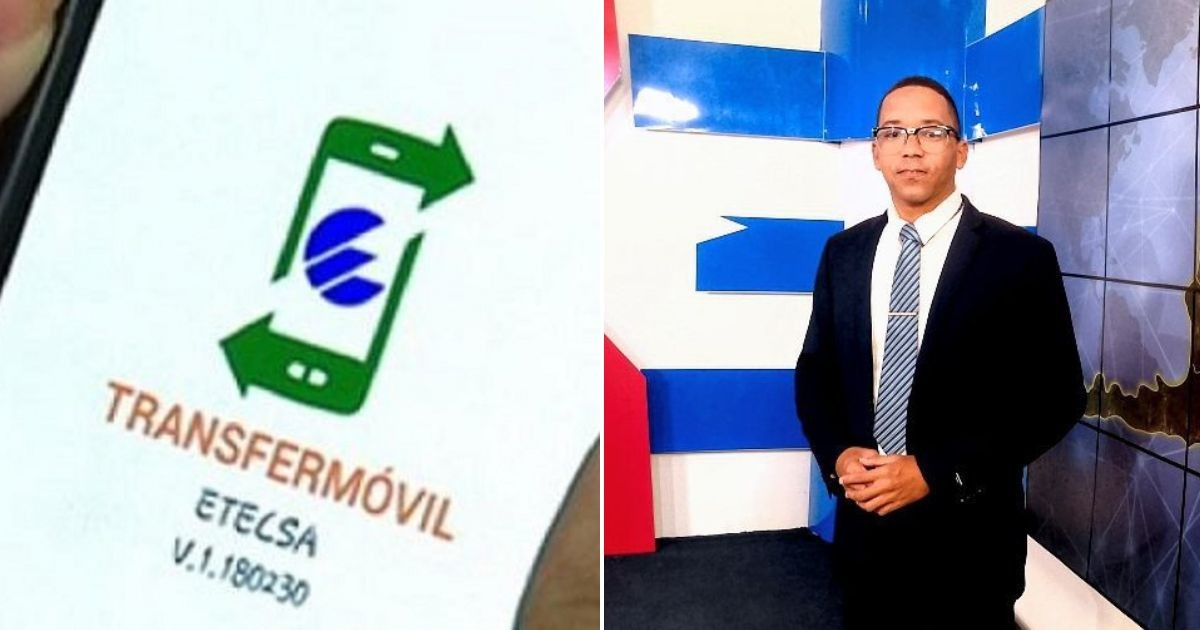
José Yaser Centray Soler, former general director of CMKC Radio Revolución —the official state broadcaster of Santiago de Cuba—, published a personal chronicle on Facebook where he recounts his experience of failing to make an electronic payment during a Saturday shopping trip in the city center.
The text, titled "Condensed Denial!", holds particular value due to its source: it is not an anonymous citizen who denounces the chaos of digital payments, but rather an official from the regime's media apparatus who, personally, stumbles upon a reality that the government has been trying to downplay for years.
Centray Soler describes a pilgrimage through the streets of Enramadas and Aguilera, and the neighborhood of Sueño, where he encountered a series of refusals and excuses to not accept digital payments.
The first response she received when she picked up the phone was blunt: "Condensed milk is not sold via transfer."
In another store, the situation didn't improve: "I can sell you just one by transfer, the others in cash," they said. When asked why, the response was brief: "These are the rules."
Later, a sales assistant informed him that they were having "problems with Transfermóvil" and only accepted EnZona. When he opened the app and was about to pay, the same employee stopped him: "We're not accepting today. The card is full."
The journey was filled with all sorts of excuses: "The QR is malfunctioning," "I'm using a family member's card," "I charge a ten percent fee" and "I have no data, the connection is poor."
Only at the old store El Volga, at the corner of Santo Tomás and Maceo, was I able to complete a transfer without any issues. "That a place accepts transfers shouldn't surprise us," he wrote. "It should be as natural as the sun rising in the east. Yet, here we are: celebrating what should be obligatory."
The author cites the current regulations that render everything they experienced illegal: the Resolution 111/2023 of the Central Bank of Cuba mandates the acceptance of electronic payments for transactions exceeding 5,000 Cuban pesos, and the Decree-Law 91/2024 establishes fines ranging from 200 to 60,000 CUP, as well as suspension and closure for those who fail to comply.
Despite this, Centray Soler notes that "laws are written in ink, and the reality in Santiago is something else," and publicly asks: "Where are the inspection bodies? The public officials who should ensure that this has a real solution, once and for all?"
The author also identifies practices that constitute tax evasion, such as using family members' cards to collect payments or charging fees for digital payments, and is categorical in his conclusion: "There is no justification for denying digital payment. Those who do so are offenders, not legal entrepreneurs."
The phenomenon is neither new nor exclusive to Santiago. Until September 2025, state inspections across the country identified 26,538 deficiencies in 84,963 inspected entities, with 15,240 fines imposed totaling over 71 million pesos, along with 269 closures and 122 commercial withdrawals, reported Granma.
In Santiago, the crisis worsens due to power outages that disable terminals, the chronic shortage of cash at ATMs, and the widespread distrust in platforms like Transfermóvil and EnZona.
The complaint from Centray Soler comes days after CubaDebate itself addressed the same issue on a national scale, and this is not the first time the director of CMKC has acted as a whistleblower: in May 2025, he had already published about the shortage of rice, gas, and coal in the city.
Filed under: