
Related videos:
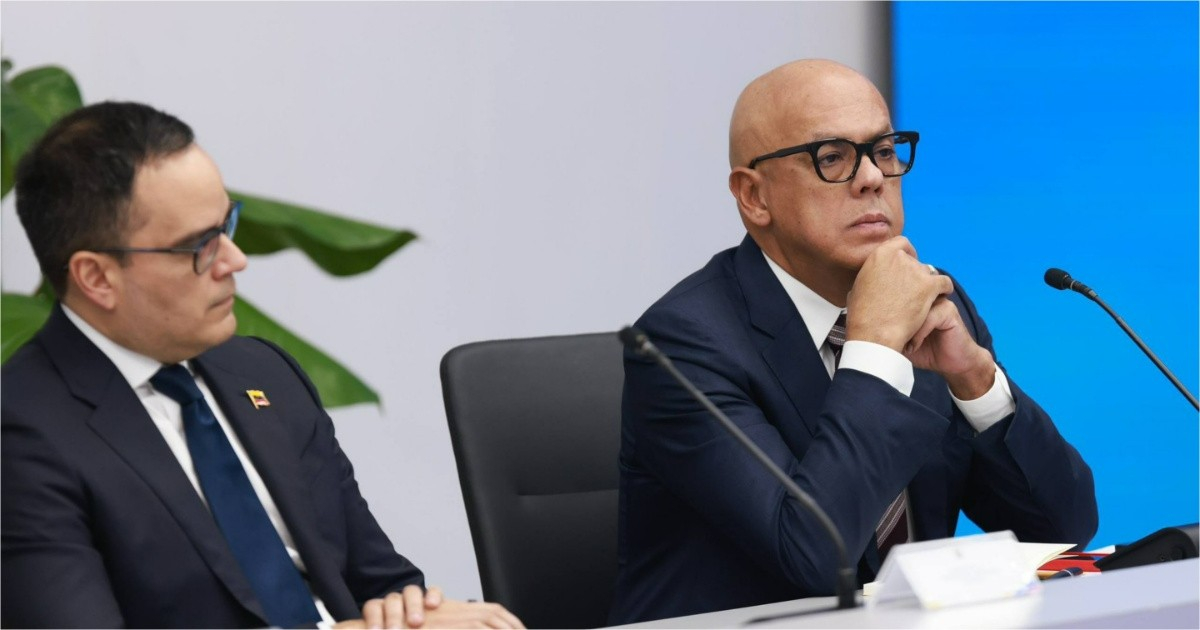
Jorge Rodríguez, president of the National Assembly of Venezuela and brother of interim president Delcy Rodríguez, categorically denied in an exclusive interview with El País that there had been any betrayal by the political or military leaders of Chavismo in the capture of Nicolás Maduro, which took place on January 3, 2026.
I am sure that it does not concern political leaders and military commanders," said Rodríguez, who also serves as the person in charge of political dialogue between chavismo and Washington.
As the main argument, Rodríguez pointed out that the then Vice President Delcy Rodríguez worked with Maduro until eight o'clock in the evening on January 2, that he personally spoke by phone with the former president at ten o'clock that same night, and that Diosdado Cabello maintained constant contact with him during those hours.
"If a natural event were to have occurred as indicated, it would surely be known by now," he added.
The interview takes place 100 days after the U.S. operation that overthrew Maduro, called "Operation Absolute Resolution," carried out in the early hours of January 3 by Delta Force with the support of the CIA, which stormed the Fuerte Tiuna complex in Caracas, leaving over 120 dead.
Maduro and his wife Cilia Flores remain detained at the Metropolitan Detention Center in Brooklyn, New York, facing charges of narco-terrorism with a potential life sentence.
Rodríguez's version stands in stark contrast to that of analysts and former officials: a former investigator from the DEA stated in January 2026 that the Rodríguez brothers themselves negotiated with Washington since the fall of 2025, betraying Maduro due to political ambition, and that Delcy "negotiated thinking that Trump was inviting her to a party and ended up invited to a funeral."
In the interview, Rodríguez systematically avoids the most sensitive questions: he refrains from setting timelines for elections, dismisses the idea that Venezuela is "under tutelage" by Estados Unidos despite acknowledging that Washington has made "suggestions" regarding laws such as those on hydrocarbons, and subtly threatens that María Corina Machado could be detained if she returns to the country.
Regarding the opposition leader, winner of the Nobel Peace Prize 2025, Rodríguez was particularly harsh: "I don't want to be insulting, but Mrs. Machado is turning out to be quite talkative, as if she hasn't learned anything."
Chavismo, which for decades pursued opponents, imprisoned innocents, and destroyed the Venezuelan economy, now presents itself as the architect of a "new political era", hastily reforming laws to attract foreign investment that it previously ideologically blocked.
Rodríguez acknowledged in the interview that there were prisoners who "shouldn't have been there" and that both he and his sister apologized, although at least 187 military personnel accused of rebellion are still incarcerated according to data from April 9.
Regarding the presidential elections, the Chavista leader was evasive: The most important thing right now is the economy", he responded, without providing timelines or concrete commitments.
Filed under: