
Related videos:
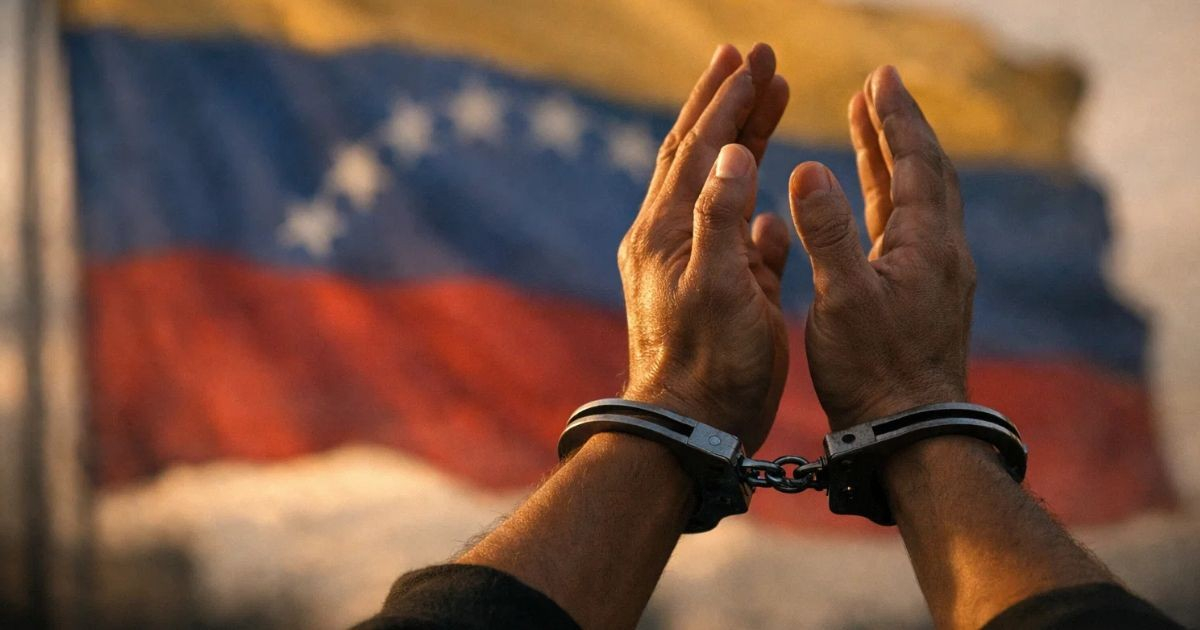
At least 187 Venezuelan military officers accused of rebellion remain incarcerated despite the Amnestylaw for Democratic Coexistence approved in February under intense pressure from Washington, as revealed this Thursday by The Wall Street Journal.
The law was promulgated on February 19, 2026, by interim President Delcy Rodríguez, who took office after the capture of Nicolás Maduro by U.S. special forces on January 3 in Caracas.
Although the text addresses political crimes committed between 1999 and 2026, it explicitly excludes military rebellion, conspiracy, terrorism, and treason against the homeland, precisely the charges that weigh on the majority of dissident military personnel imprisoned by chavismo.
The gap between the official discourse and verified reality is vast.
The deputy Jorge Arreaza reports more than 8,146 releases as of March 26, but Foro Penal - an organization that provides free legal assistance to political prisoners - only verifies 743 actual releases since January 8, of which only 187 can be directly attributed to the amnesty.
At the end of March, Foro Penal reported 490 political prisoners still detained: 303 civilians and 187 military personnel.
Gonzalo Himiob, Vice President of Foro Penal, warned last Saturday in statements to EFE that the releases have slowed down in recent weeks, questioning the actual political will of the interim government.
Analysts and media such as El Nacional describe the excluded military personnel as hostages of the revolution, held by Chavismo to maintain control over the Armed Forces and preserve the loyalty of the state's security apparatus, even without Maduro at the helm.
The most emblematic case is that of Josnar Baduel, son of former Defense Minister Raúl Isaías Baduel—who died in prison as a political prisoner—sentenced to 30 years in 2023 for his involvement in Operation Gideon. His sister reported that he was "convicted without evidence and without the record of his arrest being included in the case file." Baduel remains excluded from the amnesty and claims to have been tortured at El Helicoide with broken ligaments, hernias, and electric shocks.
Also still imprisoned is Captain Juan Caguaripano, who led the uprising at Fuerte Paramacay in Valencia in August 2017. His wife, Irene Olazo, has publicly criticized the exclusion as discriminatory, unconstitutional, and incompatible with any genuine process of national reconciliation.
The law was born in a context of direct pressure from Washington. According to statements from President Donald Trump, Marco Rubio contacted Delcy Rodríguez after the capture of Maduro, and she replied: "We will do whatever you need".
However, chavismo negotiated a way out that would allow it to show gestures of openness without relinquishing control over those it considers its most dangerous adversaries within the Armed Forces themselves.
Foro Penal has documented 18,944 political detentions in Venezuela since 2014, which illustrates the scale of the systematic repression that the amnesty barely touches on the surface.
María Corina Machado was straightforward in denouncing the selectivity of the measure: "Denying amnesty selectively is repression", she stated in March, adding that the regime "aims to prolong terror to break the morale of those fighting for democracy and Freedom in Venezuela."
Filed under: