
Related videos:
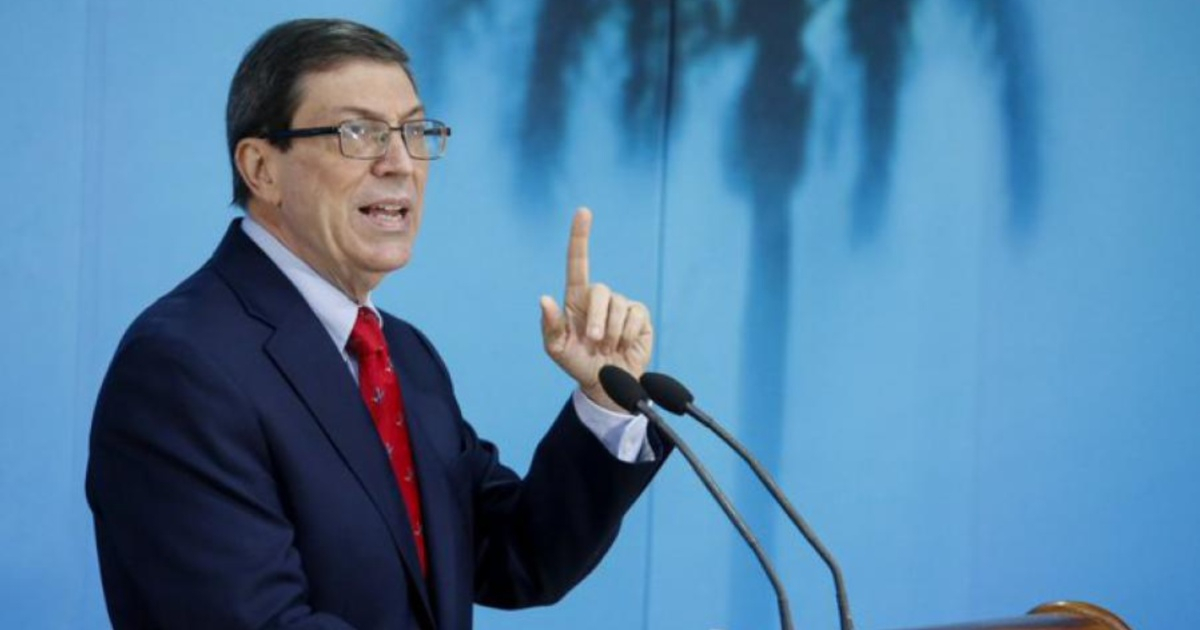
The Cuban Foreign Minister Bruno Rodríguez Parrilla accused the U.S. government this Tuesday of issuing contradictory statements regarding the supply of oil to Cuba, with the aim of "creating confusion to continue preventing the entry of fuels into Cuban territory."
In a message posted on his account on the social network X, Rodríguez described Washington's measures as a "energy blockade" of extraterritorial reach that "intimidates, pressures, and extorts those who trade sovereignly with Cuba."
"Cuba has the full right to trade fuel with any country, without restrictions, conditions, or objections contrary to international trade freedom," the foreign minister wrote, adding that "every country has the right to export fuel to Cuba and develop trade relations without the interference of a foreign power."
The complaint comes in a context of ambiguous energy policy from the Trump administration towards the island.
On January 29, Trump signed Executive Order 14380, which declared the Cuban regime an "unusual and extraordinary threat" and imposed tariffs of up to 50% on countries that supply oil to the Cuban state.
Under that pressure, México suspended its oil shipments to Cuba —which accounted for 44% of Cuban imports— and Venezuela had already cut its supply of between 26,000 and 35,000 barrels per day, following the capture of Nicolás Maduro in early January.
However, at the end of March, the Trump administration allowed the arrival of the Russian tanker Anatoly Kolodkin — sanctioned by the U.S., the European Union, and the United Kingdom — with about 730,000 barrels of crude oil at the Matanzas terminal.
The White House spokesperson, Karoline Leavitt, justified the operation for humanitarian reasons and clarified that there was no change in the sanctions policy: "Each case will continue to be assessed individually for humanitarian or other reasons."
At the same time, Leavitt warned that Washington "reserves the right to confiscate vessels if it is legally applicable that they are heading to Cuba and violate the sanctions policy."
This duality—blocking the Cuban State while allowing exceptions at the discretion—is precisely what Rodríguez describes as contradictory.
The ambiguity deepens with another aspect: on February 25, the Bureau of Industry and Security of the Department of Commerce formally authorized the export of fuel to the Cuban private sector. Between February and March, more than 2.5 million dollars worth of gasoline and fuel oil were exported from the United States to Cuba under that license.
The Secretary of State Marco Rubio acknowledged that this dual strategy is entirely designed to place the private sector and private Cubans in a privileged position, conditioning any economic relief on a total change of the government system in Cuba.
Rodríguez's tweet comes two days after President Miguel Díaz-Canel stated on the NBC program "Meet the Press" that Cuba is open to foreign investment in oil exploration and drilling and that the country "will be pleased to welcome American companies that want to come and participate."
Filed under: