
Related videos:
The Cuban president Miguel Díaz-Canel declared that Cuba is open to receiving U.S. investment in oil exploration and drilling, while warning that the country will resist any military invasion with a total mobilization of its armed forces and its people.
According to Bloomberg, the statements were made in an interview on the Meet the Press program from NBC, in which Díaz-Canel combined conciliatory and defiant stances in response to pressure from the Trump administration.
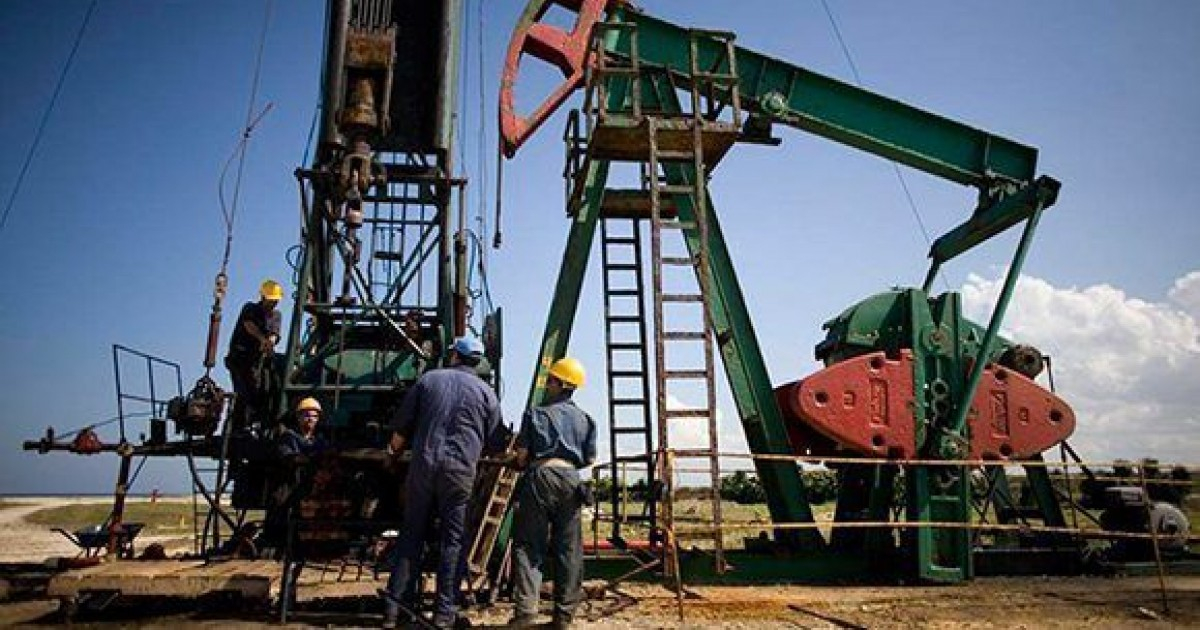
"We are exploring new reserves and we are open to foreign investment in Cuba in oil exploration and drilling," affirmed the leader.
"Cuba will be happy to welcome American companies that want to come and participate," he emphasized.
The statements come amid an unprecedented energy crisis for the island.
Cuba produces only about 40,000 barrels of oil per day, compared to a demand of between 90,000 and 110,000 barrels, a deficit that became drastically aggravated after the capture of Venezuelan President Nicolás Maduro in January 2026, which cut off the supply of between 25,000 and 35,000 barrels per day that Venezuela had been sending to the island for two decades.
This blow was compounded by the suspension of Mexican shipments on January 27, under pressure from Washington, and by Executive Order 14380 signed by Trump on January 29, which declared the Cuban regime an "extraordinary threat" and imposed tariffs on third countries supplying oil to Cuba.
The U.S. exceptionally allowed, at the end of March, a Russian shipment of approximately 730,000 barrels of crude oil to arrive in Cuba. Trump justified the decision by stating that he preferred to let the oil pass "because the Cuban people needed it."
However, Díaz-Canel acknowledged in the interview that this shipment barely covers a third of the monthly needs of the country, which has led the government to devise an "energy transition strategy" that includes renewable sources and energy conservation.
In diplomatic terms, Cuba and the U.S. confirmed discussions on March 13, 2026.
Since then, the regime released at least 20 confirmed political prisoners according to the organization Justicia 11J and announced the pardon of 2,010 inmates on April 2, although organizations like Prisoners Defenders and Human Rights Watch indicated that none of the pardoned individuals were political prisoners.
The regime also offered to open its economy to investments from Cubans living abroad.
Díaz-Canel denied having spoken with Secretary of State Marco Rubio and rejected that the U.S. had demanded the release of political prisoners, the calling of multiparty elections, or the recognition of labor unions and a free press.
Rubio, for his part, has made any economic relief conditional on a complete change of the government system on the island.
Trump and his allies are aiming to replace Díaz-Canel, whom they deem incapable of leading a political and economic transition, which would make him the second Latin American leader displaced by the Trump administration after Maduro.
In light of this possibility, the Cuban leader turned to the doctrine of the "War of All the People" as a warning.
"There is no enemy that cannot be defeated," he said, adding, "Every Cuban man or woman has a mission, a purpose, a place to defend, and they will have their own place in the defense."
Filed under: