
Related videos:
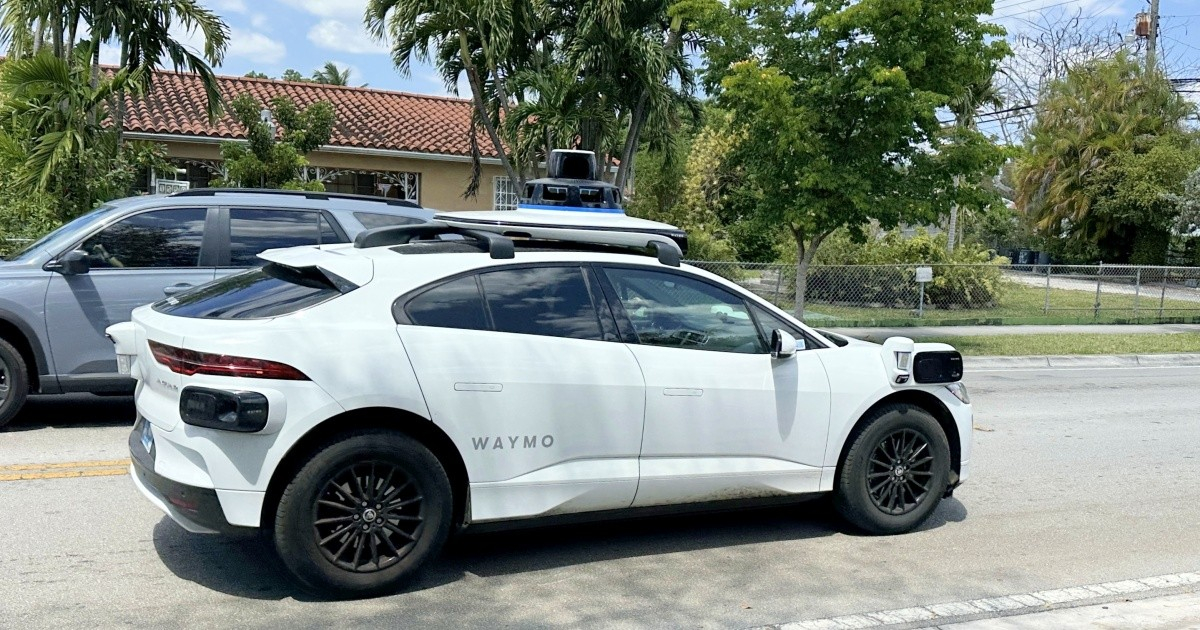
Waymo, the autonomous vehicle company subsidiary of Alphabet, launched its robotaxi service to the general public in Miami this Wednesday, without the need for a waitlist, marking a milestone in the history of autonomous transportation in the United States.
The service had been available in a limited capacity since January 22, 2026, initially for about 10,000 users on the waiting list and then for over 100,000 registered individuals.
Now, any resident or visitor can request a ride directly from the company's app.
Miami is the sixth city in the United States where Waymo operates commercially, after Phoenix, San Francisco, Los Angeles, Atlanta, and Austin.
The service area covers approximately 100 square miles of Miami-Dade County, including Brickell, Downtown Miami, Wynwood, Little Havana, Coral Gables, Coconut Grove, Miami Beach, and Bal Harbour.
As a central highlight of this total opening, robotaxis will begin to include highway routes in Miami, including Interstate 95, the Dolphin Expressway (State Road 836), and the Palmetto Expressway (State Road 826).
According to the company's spokesperson, Sandy Karp, Waymo appears to be the first company to offer fully autonomous highway rides, without a human specialist inside the car, to passengers in the United States.
After its recent expansion to Miami Beach and Bal Harbour, Waymo offers a more convenient autonomous option for getting around Miami and attending the city's major events this spring.
This is what you need to know about traveling in driverless cars
Waymo started as a Google self-driving car project in 2009 and became an independent company in 2016.
Today, he leads the development of advanced autonomous vehicles.
According to spokesperson Sandy Karp, as she explained to NBC News in 2025, the company “seems to be the first to offer fully autonomous highway travel, without a human specialist inside the car, to passengers in the United States.”
This detail is crucial: it is not about driver assistance systems, but about vehicles where the driver simply does not exist.
How do robotaxis work?
The process of using a Waymo is similar to that of platforms like Uber or Lyft, but with one fundamental difference: there is no human driver.
The user requests the ride from the app. The system shows the nearest vehicle. Upon arrival, the car remains locked until the ride is confirmed.
Then, "the passenger door handles will deploy," indicating that the vehicle is ready.
Inside, the environment is familiar: steering wheel, mirrors, controls… even though no one uses them. The intention, according to the company, is to instill trust in the passenger.
The technological system is one of the most impressive features: the vehicle is equipped with "29 cameras, six radars, and five lidars," which allows it to have a complete perception of the environment in real-time.
Security: Figures that support the technology
One of the main concerns of the public is safety. Waymo has tried to respond with concrete data.
"Safety is our number one priority," said the representative of Waymo. "We have traveled over 127 million miles in fully autonomous mode," he added.
According to the company, that data translates to:
-10 times fewer accidents with serious injuries.
-5 times fewer accidents with injuries.
-5 times fewer collisions with airbag deployment.
-5 times fewer injuries to pedestrians.
Additionally, independent studies reinforce this trend, indicating that autonomous vehicles may have up to an 85% lower likelihood of causing injury accidents compared to human drivers.
Controversies and challenges
However, technology is not without its problems.
Since its opening to the public, incidents have been reported that have sparked debate:
In March, a robotaxi briefly blocked an ambulance during a shooting in Austin.
In December of last year, another vehicle drove near an active police scene in Los Angeles.
These episodes reflect that, although technology is advancing rapidly, it still faces complex real-world situations.
The arrival of Waymo not only signifies a technological advance but also clearly illustrates the gap between development models.
Waymo's expansion in Miami is not an isolated experiment, but rather part of a global race where the United States, China, and Europe are competing to lead in autonomous transportation.
With more than 250,000 weekly trips in various cities and millions of miles traveled, the question is no longer whether these vehicles will dominate the streets, but rather when they will do so on a large scale.
Miami, from now on, is part of that future.
Filed under: