
Related videos:
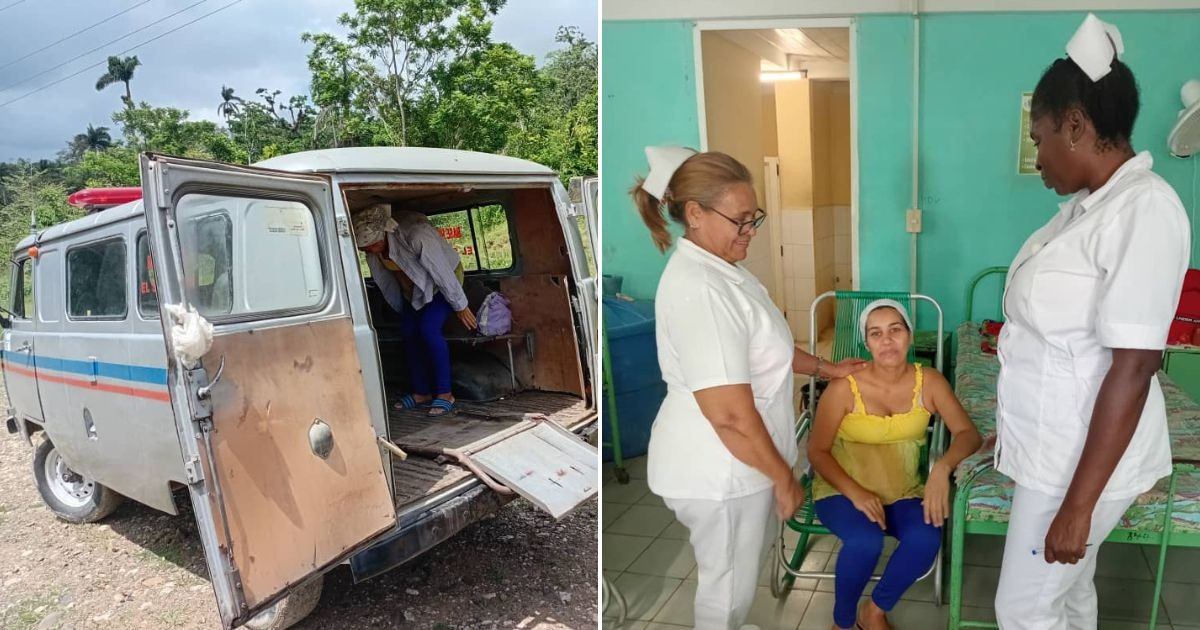
A medical team led by Doctor Yaciel Montoya Sierra, municipal health director of El Salvador, traveled for several hours through difficult access routes to rescue Yelenis Martínez Pantoja, a 26-year-old woman who is 26 weeks pregnant with a high-risk twin pregnancy, in the mountainous community of Oasis, in the municipality of El Salvador, Guantánamo province.
Yelenis lived in an area without proper roads, making it impossible for her to reach specialized care on her own.
After the transfer, the patient was admitted to the maternity home in Guantánamo, where she receives continuous care and specialized follow-up due to being a twin pregnancy, which is automatically classified as high risk and considered "valuable" by the Cuban healthcare system.
At the time of publication, Yelenis is stable and without risk, with the aim of successfully completing her pregnancy and returning home with her two babies.
The patient herself expressed her gratitude: "I am grateful that they came to get me considering my health condition and the mountainous situation where I live."
The operation was reported by journalist Daniel Martínez Balón and broadcast by Radio Guantánamo. The images show a Soviet-made UAZ-452 ambulance —with Cuban license plate B 242702— as the vehicle used for transportation, highlighting the deteriorating medical vehicle fleet in the region.
The municipality of El Salvador currently records 156 pregnant women, 55 of whom are at high risk. Thanks to these rescue and monitoring actions, maternal and infant mortality in the municipality remains at zero so far in 2026.
This rescue comes just a week after a similar operation in the same area: on April 8, a team from the Integrated Medical Emergency System of Guantánamo, the Cuban Red Cross, and the Maternal-Child Care Program transported another pregnant woman with twins from the community of El Dajao, also in the El Salvador municipality, using all-terrain vehicles.
Both cases reflect a recurring pattern in a province where more than 82% of the area is mountainous and many communities lack roads, electricity, and basic services.
The contrast with the national health situation is stark: the maternal mortality rate in Cuba reached 56.3 per 100,000 live births by July 2025, nearly double that of 2024, when it was 37.4, while infant mortality rose to 8.2 per 1,000 live births in the first half of that year, the highest level in 25 years, according to official data confirmed by the Minister of Public Health José Ángel Portal Miranda.
Filed under: