
Related videos:
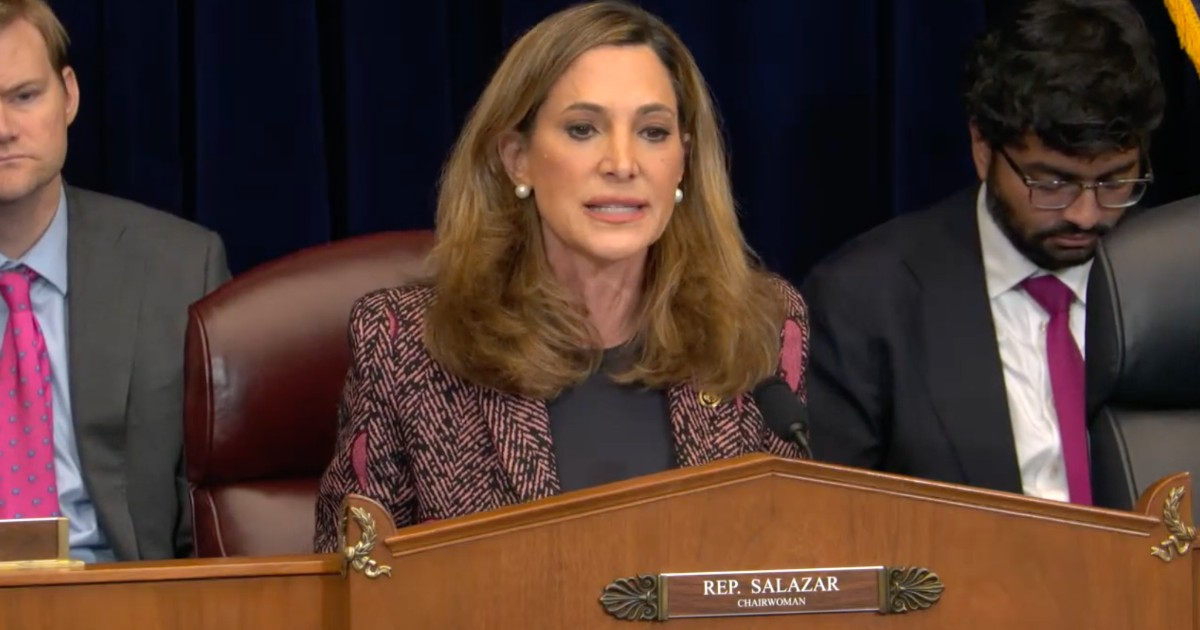
The congresswoman María Elvira Salazar made one of her most forceful statements about Cuba this Thursday during a hearing of the Western Hemisphere Subcommittee of the House Foreign Affairs Committee: "The communist regime in Cuba is on life support. Trump just needs to pull the plug."
Salazar, chair of the subcommittee and Republican representative for District 27 of Miami, stated these words during a hearing convened to examine U.S. foreign policy in Latin America and the outcomes of the capture of Nicolás Maduro on January 3.
"For the first time, the deeply entrenched Castro machinery is vulnerable. A system built on repression cannot be reformed. It can only be replaced," stated the congresswoman.
Salazar drew a direct parallel between Díaz-Canel and Maduro's fate, referencing the interview that the Cuban leader gave to NBC News, aired on April 12, in which he stated that "resigning is not part of our vocabulary".
"Just a few days ago, the main Cuban puppet known as Díaz-Canel stated on television that he was not stepping down from power, that he wasn’t going anywhere. Well, Maduro said the same a few months ago, and look where he is now," the legislator pointed out.
Additionally, he supported his argument with data on the wave of protests sweeping across Cuba: "More than 200 times in the last month, I am referring to the Cubans on the island. They even burned the headquarters of the Communist Party in a city called Morón".
The incident referred to took place on March 13 in Morón, Ciego de Ávila, when protesters vandalized and set fire to furniture at the municipal headquarters of the Communist Party during demonstrations against power outages lasting more than twenty hours a day. Cubalex documented at least 14 arrests following those protests, including the minor Jonathan David Muir Burgos, aged 16.
The Cuban Observatory of Conflicts recorded 953 protests and critical expressions in Cuba in January 2026 alone, the highest monthly figure ever documented.
Salazar attributed the current moment to a profound change in the psychology of the Cuban people: "Cubans have lost their fear. And even more importantly, they have lost the belief in the invincibility of the Castro regime, which has lived in the soul of every Cuban for the last 65 years."
The hearing also revealed bipartisan tensions regarding the management of the crisis. Ambassador Michael Kozak, a senior official in the Office of Western Hemisphere Affairs at the State Department, confirmed before Congress that Trump and Secretary Marco Rubio are overseeing direct conversations with the Cuban regime, although he declined to disclose details.
The Democratic representative Joaquín Castro (Texas) recalled that Trump declared on February 2 that the United States is negotiating "with the highest officials in Cuba" to achieve a regime change, while representative Debbie Wasserman Schultz warned that "secret negotiations resulting in hand-picking a successor from within the dictatorship" would be unacceptable.
The representative Jonathan Jackson (Illinois), who visited Cuba days before the hearing, provided a different perspective: "The Cuban people are on life support, not the Cuban government," describing hospitals experiencing power outages during surgeries and babies in incubators without electricity.
Salazar concluded his speech with a regional warning: "If Cuba ultimately falls, it will not be the end of something. It will be the beginning of everything for the Western Hemisphere".
Filed under: